

Understanding the Structure of International Cultural Exchange: A China-Germany Case Study
Cultural exchange between nations is a complex and multifaceted endeavor, built upon a foundation of shared experiences, mutual understanding, and a willingness to explore differences. It’s not merely about showcasing art or music; it’s about fostering deeper connections that can influence diplomacy, trade, and global perspectives. Examining the relationship between China and Germany offers a compelling case study of how these exchanges can flourish, creating a rich tapestry of shared activities that extend across various sectors. This analysis will explore the structure of such exchanges, highlighting key areas of interaction and the mechanisms that support their growth.
The foundation of any successful international cultural exchange lies in its structure. This structure is not a rigid blueprint but rather a dynamic framework that adapts to the evolving needs and interests of the participating countries. It encompasses institutional support, creative collaborations, and the organic growth of people-to-people connections. For China and Germany, this structure has become increasingly robust, demonstrating a commitment to nurturing a relationship that goes beyond political and economic ties. The recent interactions between the spouses of the Chinese and German presidents, as highlighted in recent reports, serve as a powerful symbol of this commitment, emphasizing the personal and cultural dimensions of their bilateral relationship.
The Pillars of China-Germany Cultural Exchange
The cultural exchange between China and Germany is built upon several key pillars, each contributing to a broader and more interconnected relationship. These pillars represent distinct but often overlapping areas where collaboration and understanding are actively cultivated.
Language and Education
One of the most fundamental aspects of cultural exchange is the promotion of language learning and educational partnerships. When people learn each other’s languages, they gain direct access to a culture’s literature, history, and way of thinking. Educational exchanges, such as student and teacher programs, further deepen this understanding by providing immersive experiences.
The Leibniz Confucius Institute in Hanover exemplifies this pillar through its diverse offerings. By running summer camps, remote language-partner programs, and speech contests, the institute actively encourages German students to engage with the Chinese language and culture. These initiatives are not just about academic learning; they are designed to create genuine connections and foster a lasting interest in China. The growing number of German students participating in these programs indicates a strong demand for deeper cultural understanding.
Similarly, the Burg Chinese Chorus, based in Bonn, demonstrates how educational and cultural activities can be intertwined. Bringing students and teachers to Yunnan for immersive experiences, like singing around a campfire at the Yi Torch Festival, allows them to learn Chinese songs and experience local culture firsthand. This hands-on approach to cultural learning is invaluable, moving beyond textbooks to create memorable and impactful experiences. Such programs help to demystify different cultures and build bridges of understanding from an early age.
Festivals and the Arts
Festivals and the arts serve as vibrant platforms for showcasing cultural heritage and fostering shared experiences. They offer accessible entry points for people to engage with different traditions, whether through music, dance, visual arts, or performance. These events often transcend language barriers, communicating emotions and stories through universal forms of expression.
The “Happy Chinese New Year” gala, hosted at Berlin’s Red Town Hall for 12 consecutive years, is a prime example of how cultural celebrations can become a staple in international exchange. With hundreds of guests attending to watch traditional Chinese dance, folk music, and martial arts, this event has become a significant cultural fixture in Germany. It provides a consistent opportunity for Germans to experience Chinese culture in a festive and engaging atmosphere.
Frankfurt’s Spring Festival temple fair brings elements like Chaoshan Yingge dance and Ansai waist drums to German streets, offering a taste of regional Chinese traditions. These events are crucial for showcasing the diversity within Chinese culture, moving beyond generalized perceptions. In Duisburg, the China Festival has successfully paired concerts and film screenings with activities like tai chi and pop-electronic music, demonstrating a modern approach to cultural fusion. This blend of traditional and contemporary elements appeals to a wider audience and highlights the dynamic nature of Chinese arts.
Furthermore, exhibitions featuring both German and Chinese artists, such as the one in Duisburg exploring technology and perception, are vital for fostering dialogue and mutual inspiration. By placing artists from different backgrounds in the same frame, these events encourage a deeper exploration of shared themes and differing perspectives. This collaborative approach to art not only enriches the cultural landscape but also strengthens the bonds between creative communities.
Tourism and Travel
Tourism plays a critical role in cultural exchange by allowing individuals to experience a country’s environment, lifestyle, and people directly. When people travel, they gain firsthand insights that can challenge preconceived notions and foster genuine appreciation. Facilitating travel, therefore, is a key component of building stronger international ties.
China’s efforts to promote cultural tourism, such as Gansu’s cultural tourism roadshow in Berlin, are instrumental in attracting German interest. Drawing in representatives from the travel industry helps to integrate Chinese destinations into German travel planning. The fact that one German agent has already organized 38 camper vans from Türkiye to China highlights the growing enthusiasm and the development of specific travel routes tailored to European interests.
The extension of China’s visa-free policy for German citizens through 2026 is a significant facilitator of two-way travel. Simplifying travel logistics removes a major barrier, making it easier for individuals to explore both countries. This policy change directly supports the growth of cultural tourism and people-to-people exchanges, encouraging more spontaneous and frequent travel. Easier travel means more opportunities for direct interaction, which is the bedrock of cultural understanding.
The development of cultural tourism is not just about sightseeing; it’s about creating opportunities for meaningful interactions. When tourists engage with local communities, sample local cuisine, and learn about daily life, they gain a richer and more authentic understanding of a culture. This direct experience is often more impactful than any other form of cultural engagement.
Institutional and Everyday Connections
Beyond formal programs and events, the structure of cultural exchange is also strengthened by institutional support and the organic growth of everyday connections. This includes government-backed initiatives, cultural centers, and the everyday interactions that occur between individuals living in or visiting each other’s countries.
The mention of “institutional, creative, and everyday” connections in the context of China-Germany exchange signifies a mature and well-rounded approach. It suggests that the relationship is no longer a series of isolated events but a connected ecosystem. This ecosystem is supported by formal agreements and policies, driven by creative collaborations, and sustained by the daily lives of people who interact across borders.
Government bodies often play a crucial role in facilitating these exchanges through funding, diplomatic support, and the creation of favorable policies. Cultural institutions, like museums, galleries, and universities, provide the infrastructure for showcasing art, hosting academic discussions, and organizing educational programs. These formal structures create a stable environment for cultural activities to thrive.
However, the most enduring aspect of cultural exchange often comes from everyday interactions. When people from different cultures live, work, or study together, they naturally learn from each other. These informal connections, built through shared experiences in communities, workplaces, and social settings, are vital for fostering genuine understanding and breaking down stereotypes. The increasing ease of travel and communication in the modern era further supports the growth of these everyday connections.
The Role of High-Level Engagement
While grassroots efforts and institutional programs are essential, high-level engagement between national leaders and their representatives can significantly amplify the impact of cultural exchange. These interactions often set the tone for bilateral relations and can unlock new avenues for cooperation.
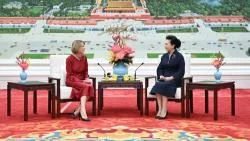
The meeting between Peng Liyuan, wife of Chinese President Xi Jinping, and Elke Budenbender, wife of German President Frank-Walter Steinmeier, serves as a powerful example of this. Their discussion over tea, focusing on the friendship between the two countries and Budenbender’s dedication to women and children’s rights, highlights the personal and humanitarian dimensions of their relationship. Such meetings underscore that cultural exchange is not just about art and music but also about shared values and mutual respect.
The viewing of a short film showcasing vibrant cultural and people-to-people exchanges during their meeting reinforces the importance of these connections. Peng Liyuan’s hope that the Chinese and German people will continue frequent exchanges, deepen mutual understanding, and forge closer bonds of friendship reflects a strategic vision for the relationship. This vision recognizes that strong cultural ties are a vital component of a stable and prosperous bilateral partnership.
Elke Budenbender’s response, thanking Peng Liyuan for her hospitality and acknowledging her contributions to cultural exchange, further validates the significance of these efforts. Her readiness to contribute to stronger cooperation and deeper friendship demonstrates a shared commitment from the German side. This mutual recognition and willingness to engage at the highest levels can create momentum for further cultural initiatives.
These high-level interactions can also influence policy decisions that support cultural exchange, such as visa policies or funding for cultural programs. When leaders publicly endorse and participate in cultural diplomacy, it sends a strong message about its importance to the broader public and to institutions involved in implementing exchange programs. This top-down support can significantly bolster bottom-up initiatives.
Mechanisms Supporting Exchange
The success of cultural exchange between China and Germany is underpinned by various mechanisms that facilitate interaction and collaboration. These mechanisms ensure that exchanges are not only frequent but also meaningful and impactful.
Institutional Partnerships and Agreements
Formal partnerships between cultural institutions, universities, and government agencies are crucial. These agreements provide a framework for joint projects, student exchanges, and collaborative research. They often involve funding commitments and establish clear objectives for the exchange programs. For instance, agreements between Chinese and German universities can lead to dual degree programs or joint research initiatives in fields like art history, linguistics, or cultural studies.
Cultural Centers and Institutes
Organizations like the Leibniz Confucius Institute act as vital hubs for promoting cultural understanding. They offer language classes, cultural workshops, and events that introduce the public to aspects of Chinese culture. These centers serve as bridges, connecting people from different backgrounds and providing resources for those interested in learning more. Their presence in Germany helps to embed Chinese culture within the broader German society.
Funding and Sponsorship
Financial support is essential for sustaining cultural exchange programs. This can come from government grants, private foundations, corporate sponsorships, and individual donations. Adequate funding allows for the organization of larger events, the support of artists and performers, and the provision of scholarships for students. Without consistent financial backing, many valuable exchange initiatives would struggle to operate.
Media and Digital Platforms
In the digital age, media and online platforms play an increasingly important role in facilitating cultural exchange. Websites, social media, and online streaming services can be used to share cultural content, promote events, and connect people across borders. CGTN’s reporting on China-Germany cultural exchanges, for example, helps to raise awareness and highlight successful initiatives to a global audience. Digital platforms can also host virtual exhibitions, online lectures, and collaborative projects, extending the reach of cultural exchange beyond physical limitations.
Visa Policies and Travel Facilitation
As mentioned earlier, government policies regarding visas and travel are critical. Simplified visa procedures and visa-free policies, like China’s for German citizens, directly encourage tourism and people-to-people contact. When travel is made easier and more affordable, more individuals are likely to visit each other’s countries, leading to increased cultural immersion and understanding.
Public Diplomacy and Outreach
Effective public diplomacy efforts are necessary to promote cultural exchange and engage the wider public. This involves communicating the value and benefits of cultural understanding to citizens, policymakers, and the media. Public outreach can take many forms, including awareness campaigns, cultural festivals, and educational initiatives. By highlighting successful exchanges and fostering a positive narrative around international cooperation, public diplomacy can build support for ongoing cultural initiatives.
The Interconnected Ecosystem of Exchange
The strength of the China-Germany cultural exchange lies in its development into a connected ecosystem. This means that the various components of exchange are not isolated but work together to create a synergistic effect.
For example, language programs offered by Confucius Institutes can lead to increased interest in studying Chinese arts or history at universities. This, in turn, can fuel participation in cultural festivals and lead to greater engagement with Chinese tourism. The success of a tourism roadshow might encourage more German travel agencies to develop specialized tours, which then increases the demand for language learning and cultural preparation.
This interconnectedness means that progress in one area can have a ripple effect across others. When cultural festivals showcase traditional music and dance, they can inspire young Germans to learn these art forms, potentially leading to the formation of new cultural groups or collaborations. The experience of attending a festival or participating in a language camp can spark a lifelong interest in China, leading individuals to pursue careers related to China or to become advocates for stronger bilateral ties.
The “rich and diverse” nature of these exchanges, as described in the provided research, is a direct result of this ecosystem. It’s not just one type of activity but a combination of educational, artistic, and personal interactions that create a comprehensive cultural dialogue. This holistic approach ensures that cultural exchange is not a superficial endeavor but a deep and meaningful engagement that benefits both nations.
Challenges and Future Directions
While the China-Germany cultural exchange is flourishing, like any international relationship, it faces potential challenges and opportunities for further growth.
One challenge can be maintaining consistent funding and political support for cultural programs, especially during times of shifting geopolitical priorities. Ensuring that cultural exchange remains a priority requires ongoing advocacy and demonstration of its tangible benefits. Another challenge can be navigating cultural differences and ensuring that exchanges are conducted with sensitivity and respect for diverse perspectives. Misunderstandings can arise, and effective communication and cultural competency are key to overcoming them.
Looking ahead, opportunities for deepening the exchange are abundant. Increased collaboration in digital arts and new media could open up innovative ways for artists to connect and share their work. Joint research projects in areas like cultural heritage preservation or the sociology of culture could yield valuable insights. Expanding exchange programs to include a wider range of participants, such as vocational trainees or community leaders, could further broaden the base of mutual understanding.
The continued development of tourism infrastructure and tailored travel experiences will also be important. As travel becomes more accessible, creating unique and authentic experiences that go beyond typical tourist routes can foster deeper connections. Furthermore, encouraging more German language learning in China and Chinese language learning in Germany, beyond specialized institutes, can create a more widespread foundation for direct communication and cultural appreciation.
The success of the China-Germany cultural exchange model offers valuable lessons for other international relationships. By focusing on a structured, multi-faceted approach that encompasses education, arts, tourism, and everyday interactions, nations can build robust and enduring cultural ties. The commitment demonstrated by both governments and citizens in fostering these connections is a testament to the power of culture to bridge divides and build a more interconnected world.
Conclusion
The cultural exchange between China and Germany stands as a robust model of how nations can build deep and lasting connections. It is a dynamic process, structured through a combination of formal institutional partnerships, vibrant artistic collaborations, accessible educational programs, and the organic growth of people-to-people ties. From language learning initiatives and lively festivals to facilitated tourism and high-level diplomatic engagement, every facet contributes to a rich and interconnected ecosystem of understanding. The ongoing efforts to promote these exchanges, supported by governmental policies and grassroots enthusiasm, underscore the profound impact that shared cultural experiences can have on strengthening bilateral relationships. As this exchange continues to evolve, it not only enriches the lives of individuals in both countries but also contributes to a more harmonious and interconnected global community.

Conversation
0 Comments