

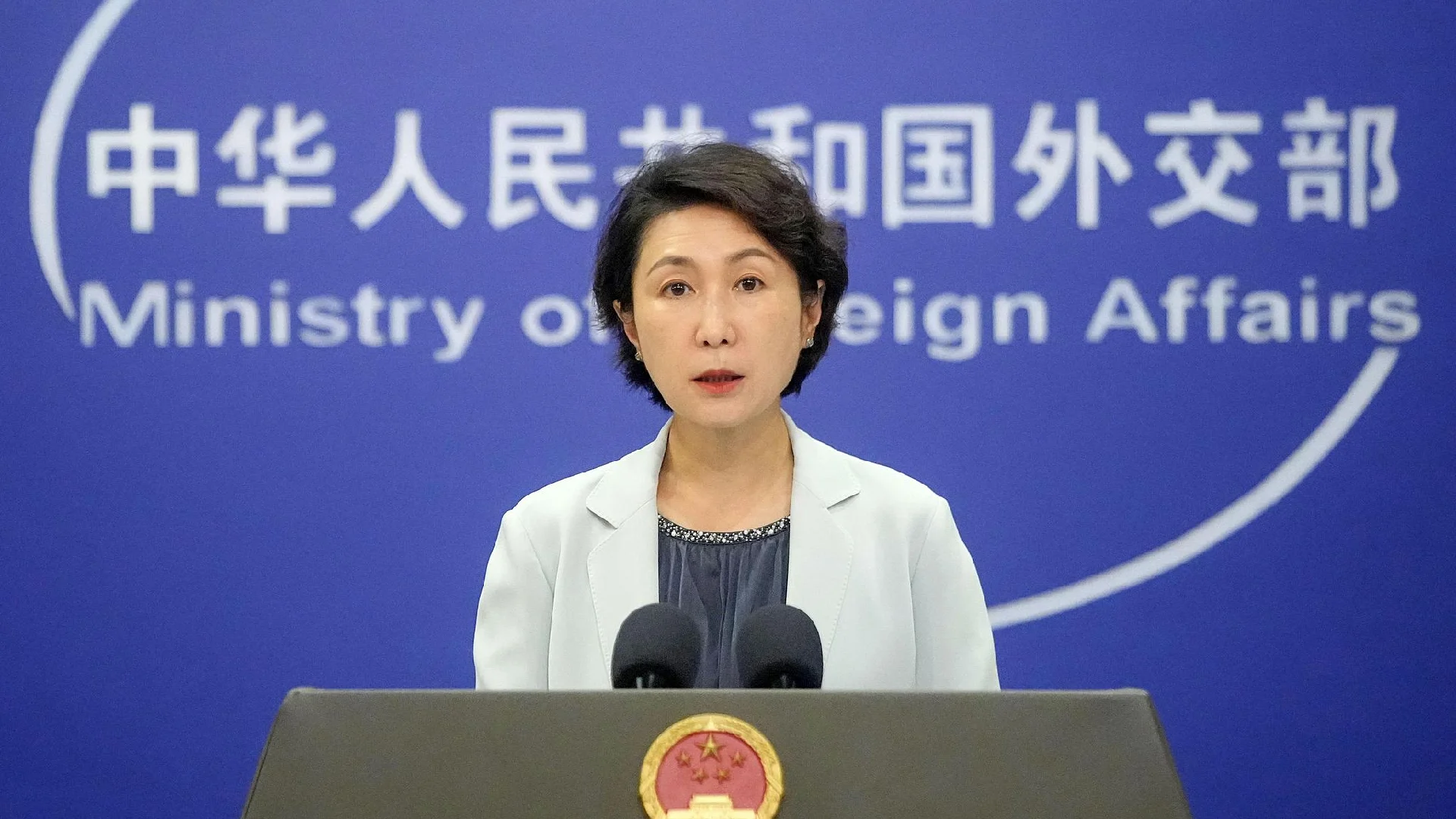
Understanding the Taiwan Question: A Comprehensive Analysis
The Taiwan question is a complex and sensitive issue with deep historical roots and significant geopolitical implications. At its core, it concerns the political status of Taiwan, an island off the coast of mainland China. The People’s Republic of China (PRC) views Taiwan as a province that must be reunified with the mainland, by force if necessary. Conversely, Taiwan, officially the Republic of China (ROC), has its own democratically elected government and considers itself a sovereign entity. This fundamental disagreement has shaped cross-strait relations for decades, influencing international diplomacy, trade, and security. Understanding the nuances of the Taiwan question is crucial for anyone seeking to grasp the dynamics of East Asian politics and the broader global landscape.
This analysis will explore the historical context, the current political landscape, the differing perspectives of Beijing and Taipei, and the international community’s stance on the Taiwan question. We will examine the “one-China principle” and its various interpretations, the economic ties between the mainland and Taiwan, and the potential implications of different scenarios for the region and the world. The aim is to provide a clear and balanced overview of this multifaceted issue, moving beyond simplified narratives to appreciate its depth and significance.
Historical Roots of the Taiwan Question
The origins of the Taiwan question can be traced back to the Chinese Civil War. Following World War II, the conflict between the Nationalist Kuomintang (KMT) led by Chiang Kai-shek and the Communist Party of China (CPC) led by Mao Zedong resumed. In 1949, the CPC emerged victorious on the mainland, establishing the People’s Republic of China. The defeated KMT government retreated to Taiwan, continuing to claim legitimacy as the government of all of China.
For decades, both sides maintained the “one-China” principle, asserting that there was only one sovereign state of China, with each government claiming to be its legitimate representative. However, their interpretations and the practical implications of this principle differed significantly. The PRC insisted that Taiwan was an inalienable part of China, while the ROC on Taiwan initially maintained its claim over the mainland.
Over time, Taiwan underwent significant political and economic transformation. From an authoritarian KMT rule, it gradually transitioned to a vibrant democracy with a distinct identity. This evolution led to a growing sentiment among many Taiwanese that they are separate from mainland China, further complicating the political equation. The historical narrative, therefore, is not static but has evolved alongside the political realities on both sides of the Taiwan Strait.
The Chinese Civil War and its Aftermath
The end of World War II in 1945 marked a temporary pause in the conflict between the KMT and the CPC. However, the underlying tensions remained, and by 1946, full-scale civil war had resumed. The KMT, despite receiving substantial aid from the United States, suffered a series of military defeats. Factors contributing to their downfall included widespread corruption, economic instability, and a failure to connect with the rural population.
In October 1949, Mao Zedong proclaimed the establishment of the People’s Republic of China in Beijing. The KMT government, led by Chiang Kai-shek, retreated to Taiwan, along with approximately two million soldiers and civilians. They established Taipei as their temporary capital and continued to operate under the banner of the Republic of China. This division created two distinct political entities, each claiming to be the rightful government of China.
The immediate aftermath saw both sides attempting to solidify their positions. The PRC focused on consolidating its control over the mainland, while the KMT on Taiwan, with strong backing from the United States, fortified its defenses and maintained its claim to represent all of China. This period of intense ideological and military standoff set the stage for the ongoing complexities of the Taiwan question.
Post-War Developments and Shifting Identities
In the decades following the civil war, Taiwan experienced remarkable economic growth, transforming from an agrarian society into an industrial powerhouse. This economic success, coupled with political liberalization, fostered a unique Taiwanese identity. As Taiwan democratized, its people increasingly asserted their right to self-determination, leading to a divergence from the KMT’s original claim of representing all of China.
The international community’s recognition of the PRC also shifted over time. In 1971, the United Nations General Assembly passed Resolution 2758, recognizing the PRC as the sole legal representative of China and expelling the representatives of the Republic of China. This led many countries, including the United States, to switch their diplomatic recognition from Taipei to Beijing. However, the U.S. maintained unofficial relations with Taiwan through the American Institute in Taiwan and continued to provide it with defensive capabilities under the Taiwan Relations Act.
These post-war developments, including Taiwan’s economic prosperity, democratization, and the evolving international landscape, have profoundly shaped the current understanding of the Taiwan question. The island’s distinct political system, thriving economy, and a population with a growing sense of separate identity are key factors that Beijing must contend with.
The “One-China Principle” and its Interpretations
The “one-China principle” is a cornerstone of the PRC’s foreign policy and its approach to the Taiwan question. However, its interpretation and application have been a source of contention and diplomatic maneuvering. At its most basic level, the principle asserts that there is only one sovereign state under the name “China,” and that Taiwan is an inalienable part of China.
The PRC insists that all countries establishing diplomatic relations with Beijing must acknowledge and accept this principle. This has led to a diplomatic stalemate for Taiwan, as most countries adhere to the “one-China principle” as interpreted by Beijing, which means they do not maintain official diplomatic relations with Taiwan.
However, different countries and entities have adopted varying interpretations of the “one-China principle.” For instance, the United States acknowledges the PRC’s position that there is “one China” and that Taiwan is part of China. However, the U.S. does not explicitly endorse the PRC’s claim of sovereignty over Taiwan. This nuanced approach allows the U.S. to maintain robust unofficial relations with Taiwan while adhering to its diplomatic commitments to Beijing.
Beijing’s Stance: Sovereignty and Reunification
The People’s Republic of China views Taiwan as a renegade province that must eventually be brought under its control. Beijing’s stance is rooted in its historical narrative of national unification and territorial integrity. The PRC government has consistently stated that the Taiwan question is an internal affair and that it reserves the right to use all necessary means, including military force, to achieve reunification.
Beijing’s policy towards Taiwan has been characterized by a combination of pressure and persuasion. On one hand, it has sought to isolate Taiwan diplomatically and economically, while on the other, it has promoted cross-strait exchanges and economic integration, hoping to foster a sense of shared destiny and eventual political union. The PRC often refers to the “1992 Consensus,” an understanding reached between the KMT and the CPC that there is only one China, but with different interpretations of what that China entails. However, this consensus is not recognized by Taiwan’s current ruling party, the Democratic Progressive Party (DPP).
The PRC’s ultimate goal is peaceful reunification, but it has not renounced the use of force. This has led to ongoing concerns about potential military conflict in the Taiwan Strait, particularly as China’s military capabilities grow and cross-strait tensions fluctuate.
Taipei’s Perspective: Self-Determination and Democracy
The government and people of Taiwan hold a different perspective on their political status. Taiwan, officially the Republic of China (ROC), has a democratically elected government, a vibrant civil society, and a distinct cultural identity. While the ROC constitution still technically claims sovereignty over mainland China, the prevailing sentiment in Taiwan is that it is a de facto independent state.
The current government in Taipei, led by the DPP, emphasizes Taiwan’s sovereignty and democratic values. It rejects the “one-China principle” as defined by Beijing and advocates for the right of the Taiwanese people to determine their own future. Public opinion polls consistently show a strong preference among Taiwanese for maintaining the status quo or moving towards greater independence, with very little support for immediate unification with the PRC.
Taiwan’s economic strength and its strategic location in the Indo-Pacific region make its political status a matter of international concern. The island plays a critical role in global supply chains, particularly in the semiconductor industry. Any disruption to Taiwan’s status quo could have far-reaching economic and security consequences.
International Interpretations and Diplomatic Maneuvers
The international community’s approach to the Taiwan question is complex and often involves navigating a delicate balance between recognizing the PRC and maintaining unofficial ties with Taiwan. Most countries officially adhere to a “one-China policy,” which acknowledges Beijing’s position but does not necessarily endorse its sovereignty claims over Taiwan.
The United States’ “one-China policy” is a prime example of this diplomatic balancing act. While the U.S. acknowledges the PRC’s claim, it also maintains robust unofficial relations with Taiwan, including arms sales for its self-defense under the Taiwan Relations Act. This policy allows the U.S. to engage with both Beijing and Taipei while seeking to maintain peace and stability in the Taiwan Strait.
Other countries also engage with Taiwan through trade offices and cultural exchanges, reflecting Taiwan’s growing international presence and economic importance. However, the PRC’s diplomatic pressure often limits the extent of these official interactions. The international community’s collective approach aims to deter conflict and maintain the status quo, but the underlying tensions remain a significant challenge.
Cross-Strait Relations: Economic Interdependence and Political Divergence
The relationship between mainland China and Taiwan is characterized by a striking paradox: deep economic interdependence alongside significant political divergence. For decades, Taiwan has been a major investor in the mainland, and trade between the two sides has grown exponentially. This economic integration has brought prosperity to both regions, but it has also created new complexities and vulnerabilities.
While economic ties have flourished, political dialogue has remained strained. Beijing continues to insist on the “one-China principle” as a prerequisite for any meaningful political engagement, a stance that Taipei, particularly under its current leadership, finds unacceptable. This political impasse has led to a situation where economic cooperation often proceeds without a clear political framework, creating a delicate and sometimes precarious balance.
The future of cross-strait relations hinges on navigating this complex interplay between economic realities and political aspirations. Understanding the dynamics of this relationship requires examining the flow of trade and investment, the cultural exchanges, and the underlying political sensitivities that continue to define the interactions between Beijing and Taipei.
Economic Ties: Trade, Investment, and Supply Chains
Taiwanese businesses were among the earliest foreign investors in mainland China, attracted by lower labor costs and a vast market. This led to a significant flow of capital and technology from Taiwan to the mainland, contributing to China’s economic rise. Today, mainland China is Taiwan’s largest trading partner and a major destination for Taiwanese investment.
The economic interdependence extends to critical global supply chains, most notably in the semiconductor industry. Taiwan Semiconductor Manufacturing Company (TSMC) is the world’s largest contract chip manufacturer, producing advanced semiconductors that are essential for everything from smartphones to advanced military equipment. The stability of these supply chains is of paramount importance to the global economy.
This economic entanglement creates a complex web of interests. While Beijing views economic ties as a means to foster closer relations and potentially influence Taiwan’s political future, it also recognizes the economic risks associated with any conflict. Similarly, Taiwan’s economy is deeply intertwined with the mainland, making any disruption to this relationship potentially devastating. This mutual economic dependence acts as a significant factor in managing cross-strait tensions, though it does not eliminate the political risks.
Cultural and Social Exchanges
Beyond economic ties, there are also significant cultural and social exchanges between Taiwan and mainland China. Millions of Taiwanese visit the mainland each year, and a growing number of mainland Chinese tourists visit Taiwan. These exchanges foster greater understanding and familiarity between people on both sides of the strait.
Family ties also play a crucial role. Many people in Taiwan have relatives on the mainland, and vice versa, a legacy of historical migration patterns. These personal connections often transcend political divides and contribute to a sense of shared heritage.
However, these exchanges also highlight the growing differences in societal values and political systems. Taiwan’s democratic society, with its emphasis on freedom of speech and civil liberties, stands in contrast to the political system on the mainland. These differences can sometimes lead to misunderstandings or friction during cross-strait interactions. Despite these divergences, the ongoing exchanges continue to shape perceptions and maintain a degree of human connection across the strait.
Political Standoff and Security Concerns
Despite economic integration and cultural exchanges, the fundamental political disagreement between Beijing and Taipei remains unresolved. The PRC’s insistence on the “one-China principle” and its refusal to rule out the use of force create a persistent security concern for Taiwan. Beijing views any move towards formal independence by Taiwan as a red line that could trigger military action.
Taiwan, in turn, has invested heavily in its defense capabilities, seeking to deter a potential invasion and ensure its security. The island’s strategic location and its role in global supply chains mean that any conflict in the Taiwan Strait would have profound international repercussions.
The United States’ commitment to Taiwan’s security, through arms sales and strategic ambiguity, adds another layer of complexity to the security landscape. The potential for escalation and the involvement of external powers make the Taiwan Strait a significant geopolitical flashpoint. Navigating this complex security environment requires careful diplomacy and a commitment to maintaining peace and stability.
International Perspectives and Geopolitical Implications
The Taiwan question is not merely a bilateral issue between Beijing and Taipei; it is a matter of significant international concern with far-reaching geopolitical implications. The island’s strategic location, its democratic system, and its critical role in the global economy mean that its status affects major global powers and international relations.
The United States, in particular, plays a crucial role in the region’s security dynamics. Its long-standing commitment to Taiwan’s defense, coupled with its strategic competition with China, makes the Taiwan Strait a focal point of geopolitical tension. Other countries in the Indo-Pacific region, such as Japan, South Korea, and the Philippines, also have a vested interest in maintaining peace and stability in the strait, as any conflict could disrupt regional trade routes and security arrangements.
The international community’s response to the Taiwan question reflects a complex interplay of diplomatic recognition, economic interests, and security considerations. Understanding these diverse perspectives is essential for grasping the full scope of the issue and its potential impact on global affairs.
The Role of the United States
The United States has historically played a pivotal role in the Taiwan question. Following the normalization of relations with the People’s Republic of China in 1979, the U.S. shifted its diplomatic recognition from Taipei to Beijing. However, it simultaneously enacted the Taiwan Relations Act, which commits the U.S. to providing Taiwan with the means to defend itself.
The U.S. policy of “strategic ambiguity” regarding whether it would intervene militarily in the event of a PRC attack on Taiwan has been a cornerstone of its approach. This ambiguity aims to deter Beijing from attacking while also discouraging Taiwan from declaring formal independence, which could provoke a PRC invasion.
In recent years, there have been discussions and debates within the U.S. about potentially shifting to “strategic clarity,” which would involve a more explicit commitment to Taiwan’s defense. This evolving U.S. stance, alongside its growing strategic competition with China, significantly influences the geopolitical calculus surrounding Taiwan. The U.S. also champions Taiwan’s participation in international organizations and its democratic model.
Regional Security Dynamics
Taiwan’s geopolitical position makes it a critical element in the security architecture of the Indo-Pacific region. Its proximity to major shipping lanes and its strategic location between East Asia and Southeast Asia mean that any instability in the Taiwan Strait could have severe consequences for regional trade and security.
Countries like Japan and South Korea, which rely heavily on maritime trade routes that pass through the region, have a direct interest in maintaining peace and freedom of navigation in the Taiwan Strait. Japan, in particular, views Taiwan’s security as directly linked to its own, given their geographical proximity.
The Philippines, with its own maritime disputes with China in the South China Sea, also closely monitors developments related to Taiwan. The Association of Southeast Asian Nations (ASEAN) generally advocates for peaceful resolution of disputes and adherence to international law, but individual member states often face pressure to align with either Beijing or Washington. The regional security landscape is thus heavily influenced by the Taiwan question, with potential flashpoints and alliances constantly being recalibrated.
Global Economic Impact
The potential for conflict in the Taiwan Strait carries immense global economic risks. Taiwan’s dominance in the semiconductor industry means that any disruption to its production could cripple global technology supply chains. The world’s reliance on TSMC for advanced chips makes Taiwan’s stability a matter of global economic security.
Beyond semiconductors, Taiwan is also a significant player in other industries, including electronics, machinery, and petrochemicals. A conflict could disrupt global trade flows, leading to shortages, price increases, and a potential global recession. The interconnectedness of the global economy means that a crisis in the Taiwan Strait would not be confined to the region but would have ripple effects worldwide.
Therefore, maintaining peace and stability in the Taiwan Strait is not just a regional concern but a global imperative. International efforts to de-escalate tensions and promote dialogue are crucial for safeguarding global economic prosperity and security.
The Future of Taiwan: Scenarios and Challenges
The future of Taiwan remains uncertain, with several potential scenarios shaping its trajectory. These scenarios range from peaceful reunification to continued de facto independence, or even armed conflict. Each path carries its own set of challenges and implications for Taiwan, mainland China, and the international community.
Beijing’s long-term goal of reunification, coupled with Taiwan’s democratic aspirations and growing sense of distinct identity, creates a persistent tension. The actions of both sides, as well as the responses of international powers, will play a critical role in determining which scenario unfolds.
Understanding these potential futures requires considering the various factors at play, including the evolving political landscape in Taiwan, China’s increasing military and economic power, and the shifting dynamics of international relations. The challenges ahead are significant, and the choices made today will have lasting consequences.
Peaceful Reunification vs. Continued Status Quo
One potential scenario is peaceful reunification, where Taiwan voluntarily integrates with mainland China under mutually agreed terms. However, given the current political climate and the strong desire for self-determination among the Taiwanese population, this scenario appears highly unlikely in the near future. Beijing’s definition of reunification often involves Taiwan accepting the “one-China principle” and its political system, which is incompatible with Taiwan’s democratic values.
A more probable scenario, at least in the medium term, is the continuation of the status quo. This involves Taiwan maintaining its de facto independence, with its own government, economy, and democratic system, while not formally declaring independence. This approach has allowed for a degree of stability, though it is constantly challenged by Beijing’s assertive stance and its refusal to rule out force. The status quo is a delicate balance that relies on deterrence and careful management of cross-strait relations.
The Risk of Conflict
The most concerning scenario is armed conflict. Beijing has repeatedly stated that it reserves the right to use force to achieve reunification, particularly if Taiwan declares formal independence or if foreign intervention is perceived as a threat. The increasing military capabilities of the People’s Liberation Army (PLA) and ongoing military exercises in the Taiwan Strait have heightened concerns about the possibility of a conflict.
A military conflict in the Taiwan Strait would have devastating consequences, not only for Taiwan and China but also for the entire global economy and international security. The potential for escalation involving other major powers, such as the United States, makes this scenario particularly dangerous. Preventing such a conflict remains a top priority for the international community.
Taiwan’s Agency and International Support
Taiwan is not a passive actor in this complex equation. Its democratic government and its people have agency in shaping their future. The strength of Taiwan’s democracy, its economic resilience, and its strategic importance all contribute to its ability to resist external pressure.
International support, particularly from the United States and other democratic nations, plays a crucial role in deterring aggression and maintaining Taiwan’s security. While the nature and extent of this support may vary, it remains a significant factor in the geopolitical balance. Taiwan’s active engagement in international forums and its efforts to build partnerships with like-minded countries also contribute to its international standing.
Ultimately, the future of Taiwan will be determined by a combination of internal dynamics within Taiwan, Beijing’s policies, and the evolving international geopolitical landscape. Navigating these complexities requires careful diplomacy, a commitment to peace, and a deep understanding of the historical, political, and economic factors at play.
Conclusion
The Taiwan question is a multifaceted issue with profound historical, political, economic, and geopolitical dimensions. It is a testament to the enduring complexities of national identity, sovereignty, and international relations in the 21st century. The core of the dispute lies in the differing claims of sovereignty over Taiwan, with the People’s Republic of China viewing it as an inalienable part of its territory and Taiwan, the Republic of China, asserting its de facto independence and democratic self-governance.
The historical legacy of the Chinese Civil War continues to shape the present, with both sides adhering to variations of the “one-China principle,” albeit with vastly different interpretations. Beijing’s unwavering commitment to reunification, potentially by force, stands in stark contrast to Taiwan’s democratic aspirations and its population’s desire for self-determination. This fundamental divergence fuels ongoing tensions and security concerns in the Taiwan Strait.
Economically, the relationship between mainland China and Taiwan is characterized by deep interdependence, with significant trade and investment flows. This economic integration, however, does not bridge the political divide and, in some ways, creates new vulnerabilities. Taiwan’s critical role in global supply chains, particularly in the semiconductor industry, underscores the global stakes involved in maintaining peace and stability in the region.
The international community, led by the United States, navigates this complex landscape through a delicate balance of diplomatic recognition, security commitments, and economic engagement. The potential for conflict in the Taiwan Strait carries immense global economic and security risks, making its peaceful resolution a paramount concern for nations worldwide.
The future of Taiwan remains uncertain, with scenarios ranging from continued status quo to peaceful reunification or, most concerningly, armed conflict. Taiwan’s agency, its democratic resilience, and the support it receives from international partners will all play a crucial role in shaping its destiny. Ultimately, a peaceful and mutually acceptable resolution to the Taiwan question will require sustained dialogue, mutual respect, and a commitment to de-escalating tensions, ensuring stability not only for the people of Taiwan and mainland China but for the entire global community.


Conversation
0 Comments