

Vivo X Fold6 Review: A Foldable That Excels in Photography and Multitasking
Foldable phones have long aimed to justify their premium price tags by offering a unique blend of smartphone portability and tablet-like screen real estate. The Vivo X Fold6 appears determined to make that argument stick, presenting a device that feels premium, boasts impressive hardware, and includes a standout camera system. With its expansive displays, powerful chipset, and a design that refines rather than reinvents, the X Fold6 aims to be more than just a novelty. This analysis explores whether Vivo has successfully crafted a foldable that excels in everyday use, particularly in its photography capabilities and multitasking potential.
Vivo X Fold6 Design and Build Quality
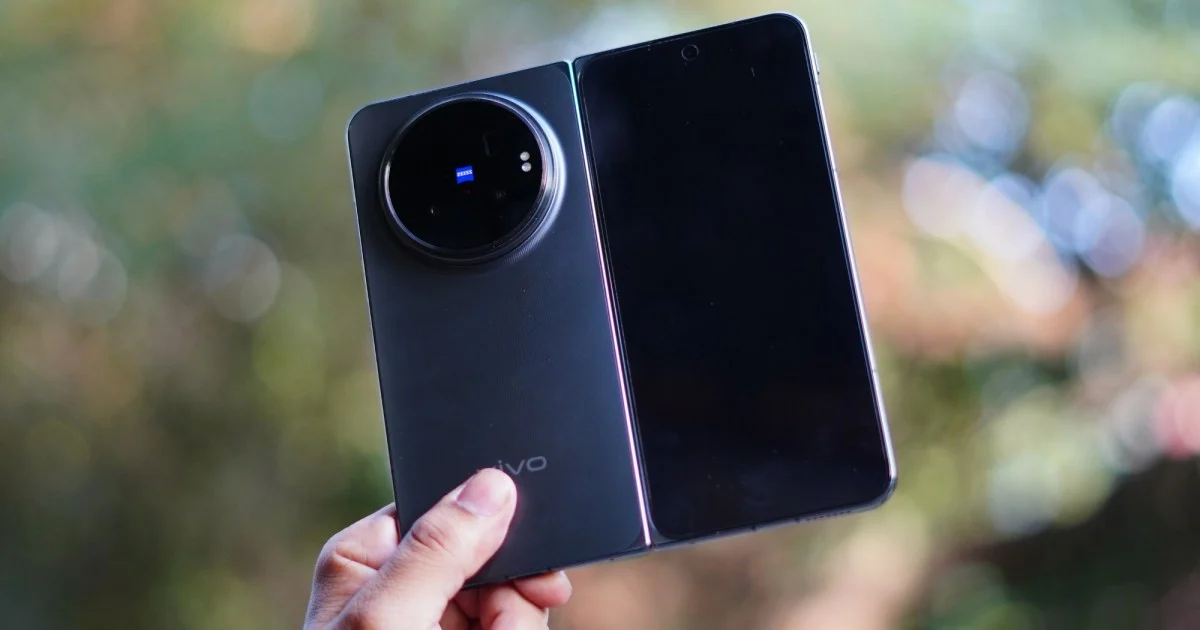
Vivo has opted for a refined approach with the X Fold6, maintaining a visual identity close to its predecessor while incorporating subtle yet significant improvements. The most striking feature remains the large circular camera module on the rear, which protrudes noticeably. While this design choice might seem excessive, it houses substantial photographic hardware. The module now includes two LED flashes and has a chamfered edge that matches the rear panel’s color, giving it a purposeful, albeit not subtle, aesthetic.
The handset’s geometry has been softened, with both displays featuring more rounded corners that complement the flat metal frame. This design aligns the X Fold6 with current smartphone trends, creating an attractive look that prioritizes refinement over radical change. The internal display measures 8.02 inches, slightly smaller than the previous model, but its revised proportions offer a marginally larger overall display area. The resolution has increased, resulting in a sharper image, though the difference may not be immediately apparent to the average user.
A more impactful adjustment is the aspect ratio of the internal screen, which is closer to a square. This provides more horizontal space for multitasking, desktop-style websites, and split-screen applications, enhancing productivity. However, traditional video formats still leave significant portions of the screen unused. The cover display, at 6.51 inches, is also smaller on paper but features a more conventional 20:9 aspect ratio instead of the previous tall 21:9 format. This wider layout makes widescreen videos and 4:3 content occupy more screen area, improving the browsing experience and providing more breathing room for text-heavy websites.
Vivo highlights the narrow bezels around both screens, with symmetrical borders on the main display contributing to a cleaner appearance. The crease on the internal panel is shallower than before, though it remains visible under certain lighting conditions. Weighing 228 grams, the X Fold6 is slightly heavier than its predecessor, making it noticeable in a pocket when folded. However, the weight distribution is well-managed, and the phone feels balanced in hand, aided by the rounded corners and flat-edge metal frame.
The construction combines an aluminum frame with glass on the front and a glass-reinforced plastic back. Durability details are worth noting: the X Fold6 lists IP58/IP59 resistance, which may indicate a reduction in maximum immersion depth compared to the X Fold5’s IP58/IP59+ rating. The new model does claim operation in temperatures as low as -20°C, which is a useful feature for users in colder climates. The hinge operates smoothly and feels robust, with Vivo even mentioning underwater folding capabilities, though this should be approached with caution.
The international version is available in Horizon Blue and Prism Black. Controls are standard, with a custom button for mode switching and volume rocker and power button on the opposite side. The power button doubles as a fast and reliable side-mounted fingerprint sensor. While functional, the dual under-display sensors on previous models offered a more premium feel. Overall, the X Fold6’s design is a successful refinement, offering welcome improvements in ergonomics and usability, though minor concerns about durability specifications and button comfort exist.
Design score: 9/10
Vivo X Fold6 Display
The quality of the displays is paramount for any foldable phone, and the Vivo X Fold6 largely delivers on this front. The 8.02-inch internal OLED panel boasts a resolution of 2504 x 2312 pixels, equating to approximately 424 pixels per inch, ensuring crisp text and images. Vivo claims a peak luminance of 5,000 nits, an increase from the previous generation, which contributes to comfortable outdoor viewing even in bright sunlight. Measurements exceeding 1,500 nits confirm its strong performance in various lighting conditions.
The inner screen utilizes Samsung Display’s M14 OLED technology, a mature and capable panel that, while not the absolute latest, offers excellent image quality. The smaller 6.51-inch exterior screen also features a claimed maximum of 5,000 nits. Interestingly, this is a decrease from the 5,500 nits advertised for the previous model’s outer panel, a specification change that warrants further investigation if peak brightness is a critical factor.
Motion handling is handled by LTPO technology, allowing both panels to dynamically adjust their refresh rates between 1Hz and 120Hz. Users can choose between Smart Switch, Standard, and High settings to optimize fluidity for scrolling, animations, and games, while conserving power when static content is displayed. The LTPO implementation, using an 8T1C backplane, helps regulate pixel behavior, potentially improving grayscale stability and reducing brightness variations, while also contributing to energy efficiency.
HDR support is comprehensive, with both panels compatible with HDR10+, Dolby Vision, and HDR Vivid. The device can decode a wide range of HDR formats, and Widevine L1 certification ensures high-resolution playback from streaming services. While the lower advertised peak brightness for the exterior panel and the underlying technology of the inner screen might raise questions, the displays are technically capable, offering detailed imagery, adaptive motion, and broad HDR compatibility. The real test lies in their consistent performance in daily use, which appears to be strong.
Display score: 9/10
Vivo X Fold6 Software
A foldable phone’s software is critical to realizing the potential of its unique form factor. Vivo appears to understand this with the X Fold6’s international edition, which runs Android 17 with the OriginOS 7 Fold interface. This version includes Google’s applications and Play services preinstalled, simplifying the setup process. Vivo also promises five major Android upgrades and seven years of security patches, offering good long-term support.
OriginOS 7 features a visually appealing design with translucent menus and glass-inspired effects. More importantly, it offers practical usability enhancements. For instance, the notification panel can be summoned from various positions on the unfolded display, a small but appreciated convenience for two-handed use.
The multitasking system is a highlight. Multi-Split Screen allows up to four applications to run simultaneously, with adjustable window sizes. Supported applications remain functional, enabling seamless switching between tasks like watching videos and messaging. This feature truly capitalizes on the eight-inch display.
Origin Workbench presents another useful multitasking mode, keeping one application prominent while providing quick access to up to four others. While these secondary applications may not be fully active, switching between them is remarkably efficient. Users can transition between Workbench and Multi-Split Screen using gestures or by partially folding the device, a system that becomes intuitive with practice.
Vivo also provides features for saving previous application arrangements and launching multiple apps together from the home screen, streamlining workspace setup. Cross-application tools, such as text extraction via OCR and translation across 16 languages, further enhance productivity. The software can also identify information from business cards and directly add it to contacts or the dialer.
While the system may require some initial experimentation, OriginOS 7 Fold genuinely enhances the folding form factor, making it feel like a distinct advantage rather than a mere gimmick. The software effectively leverages the larger screen for productivity and multitasking.
Software score: 8/10
Vivo X Fold6 Benchmarks and Performance
The Vivo X Fold6 makes a notable departure from its predecessors by adopting MediaTek’s Dimensity 9500 Super chipset instead of Qualcomm’s offerings. Manufactured on TSMC’s 3nm N3P process, the CPU features a core configuration designed for high performance, including a primary ARM C1-Ultra core running at up to 4.21GHz. Graphics are handled by the Mali-G1 Ultra MC12 GPU. The “Super” branding’s distinction from the standard Dimensity 9500 is not immediately clear from specifications alone, suggesting potential optimizations or marketing differentiation.
In daily use, the X Fold6 performs admirably, handling everyday tasks with ease. Gaming experiences are generally positive, with titles like PUBG Mobile running smoothly at 60fps, offering a larger view of the battlefield on the unfolded screen. Zenless Zone Zero, a graphically demanding game, also performs well at high settings, typically staying around 60fps, with the large inner display enhancing the visual experience. Heat management during gaming is also commendable, with temperatures usually remaining comfortable.
Synthetic benchmarks reveal strong peak performance. Geekbench 7 scores show 1,866 points in single-core and 6,654 in multi-core testing, with the GPU achieving 13,897 points. AnTuTu Benchmark 12.0.3 further reinforces this, yielding a total score of 3,679,598. These numbers indicate ample processing power for demanding applications and multitasking.
However, sustained performance testing reveals a significant drawback. During a 15-minute CPU throttling test, performance dropped to 53% of its peak level. While ordinary tasks are unlikely to replicate these conditions, prolonged gaming or intensive processing could lead to noticeable performance degradation. A 47% reduction in performance under stress is a considerable compromise, especially for a flagship device.
Graphics testing shows more encouraging results, with 3DMark Steel Nomad Light yielding 3,123 points and averaging 23.14fps, with moderate temperature increases and battery consumption.
Comparing the X Fold6 to its competitors, its AnTuTu score is competitive, surpassing some rivals. However, Geekbench results show it trailing behind Samsung and Oppo in CPU performance. While the X Fold6 delivers impressive peak performance, its sustained CPU capabilities and thermal consistency under heavy load present an area for improvement. For users engaging in extended gaming or heavy workloads, this throttling could be a concern.
Benchmark and performance score: 8/10
Vivo X Fold6 Cameras
The camera system is a significant upgrade and a compelling reason to consider the Vivo X Fold6. The primary camera features a 200-megapixel Samsung HPB sensor, larger than the one found in the X Fold5. It is complemented by a 50-megapixel periscope telephoto lens with 3x optical zoom and a 50-megapixel ultrawide camera with autofocus. Two front-facing cameras, one on each display, complete the setup.
In outdoor shooting, the main camera excels at preserving intricate textures, rendering details like foliage and buildings crisply without overprocessing. Vivo’s default “Refined” profile can sometimes result in images lacking contrast and with pale colors, but switching to the “Vivid” profile significantly improves color saturation and exposure control, producing more engaging photographs. The dedicated 200-megapixel capture mode is less consistently beneficial, sometimes producing artificial-looking surfaces.
The primary camera handles 2x magnification well, maintaining clarity. The 3x optical zoom on the telephoto lens delivers pleasing contrast, accurate exposure, and excellent facial detail, making it ideal for portraits. While Vivo offers tighter 85mm and 100mm portrait framing options, these can lose definition in low light. Zooming to 6x yields surprisingly good results, sometimes surpassing the telephoto’s full-resolution captures. However, at 10x, computational reconstruction becomes more apparent, leading to inconsistencies in fine patterns.
The ultrawide camera captures detailed scenes with good color reproduction and highlight recovery. Its autofocus is useful for close-up subjects, though the phone may occasionally use a digitally zoomed ultrawide image when the main camera struggles with short-distance focus.
Low-light performance is strong, with the main camera producing detailed photos with reliable white balance and attractive colors. The “Vivid” mode can be slightly oversaturated but remains preferable. The dedicated Night mode offers minimal improvement over the standard mode, suggesting the latter already handles low-light conditions effectively. The telephoto lens also performs respectably in low light, though sharpening becomes more noticeable. The ultrawide maintains good contrast and color, but shadows can lack definition. The front-facing cameras are adequate for video calls and casual selfies, but for better self-portraits, using the rear cameras with the cover screen as a viewfinder is recommended.
Overall, the X Fold6’s camera system is a major strength. It delivers excellent everyday photography, dependable portraits, capable low-light images, and useful zoom performance. While the default color profile could be improved, switching to “Vivid” makes a substantial difference. For a foldable, this camera system is genuinely enjoyable to use.
Camera score: 9/10
Vivo X Fold6 Battery Life & Charging
Battery technology in smartphones often involves impressive specifications, but practical endurance is what matters most. The Vivo X Fold6 is equipped with a 6,900mAh battery in its international configuration (7,000mAh in China), utilizing a dual-cell design with silicon-anode technology for improved energy density and longevity. Vivo also describes the battery as a third-generation semi-solid-state design, emphasizing reliable performance in low temperatures.
Vivo claims the X Fold6 offers a significant improvement in battery life over its predecessor. In daily usage, the battery provides a full day of use with moderate activity, including calls, browsing, social media, and occasional gaming, with some charge remaining for the next day. While this is a positive outcome, it doesn’t quite reach the expectation of a day and a half of usage.
Charging is handled by 80W wired FlashCharge, utilizing USB Power Delivery with PPS. Using the bundled 100W Vivo adapter and a high-current cable, a full charge takes approximately 60 minutes. The device reaches 30% in 15 minutes and 70% in 30 minutes. While respectable for a flagship foldable, it is not the fastest charging available on the market. The inclusion of 40W wireless charging adds convenience for topping up the battery.
The X Fold6 addresses a common weakness in foldables by offering a substantial battery capacity and a measurable improvement in endurance. However, it doesn’t represent a revolution in battery life or charging speed. It provides reassuring longevity for most users but may not satisfy those demanding extraordinary battery performance or the fastest possible charging times.
Battery score: 8/10
Should You Buy?
The Vivo X Fold6 presents a compelling case for those considering an expensive foldable phone. It successfully combines impressive engineering with practical usability, making it a strong alternative to conventional flagship devices. The hardware is a standout feature: the two displays are excellent, the hinge operates with precision, and the crease is as discreet as can be expected. Despite its weight and the prominent camera housing, the phone is well-balanced and comfortable to handle. The wider exterior screen enhances usability when the device is folded.
Performance from the Dimensity 9500 Super chipset is generally swift for everyday tasks. However, sustained performance under heavy loads is a concern, as CPU throttling significantly reduces peak performance during prolonged intensive use. While the phone feels responsive for quick tasks, extended gaming sessions or heavy processing could expose its thermal limitations.
Battery life is good, offering a full day of use with some to spare, and represents a welcome improvement. Charging takes about an hour, which is acceptable but not class-leading. The 40W wireless charging is a convenient addition.
The software experience is where the X Fold6 truly shines. OriginOS 7 Fold is designed with the foldable form factor in mind, offering genuinely useful multitasking features like Multi-Split Screen and Origin Workbench. These tools make the large internal screen highly productive, rivaling Samsung’s software capabilities in many aspects.
The cameras are arguably the phone’s strongest asset. The 200-megapixel main sensor captures excellent detail in various lighting conditions, and the telephoto and ultrawide lenses are also highly capable. Portraits and rear-camera selfies are particularly impressive. While the front cameras are less remarkable, the overall photographic prowess is a significant advantage.
However, the X Fold6 is not without its compromises. The large camera bump is visually dominant, sustained performance needs improvement, and charging and battery endurance are merely good, not exceptional.
Ultimately, the Vivo X Fold6 is an excellent choice for those who prioritize photography and genuinely utilize a large screen for multitasking. Its impressive cameras, polished displays, and clever software make it a practical device rather than just a novelty. It offers the flexibility of a tablet in a smartphone form factor.
For users who demand sustained peak performance for gaming or require the absolute longest battery life and fastest charging, other options might be more suitable. The thermal throttling, average charging speeds, and bulky camera island are compromises to consider.
For most users, however, the X Fold6 makes a strong case. It may not win every specification battle, but it performs remarkably well in everyday use. If the $1,499 price point fits your budget, the Vivo X Fold6 is a compelling option that should be high on your shortlist. It’s important to remember that even at this price, compromises are inevitable.
Why Not Try
The Vivo X Fold6 is available through import channels in the US, starting at $1,499 for variants with 12GB to 16GB of RAM and 512GB/1TB of storage. This positions it in direct competition with other high-end foldables.
-
Samsung Galaxy Z Fold8 Ultra ($2,099): Samsung offers superior raw performance and a longer software update promise. However, the Vivo X Fold6 counters with better cameras, stronger battery life, and more competitive multitasking software. While Samsung leads in software longevity, Vivo offers a more compelling hardware package for enthusiasts, albeit at a higher price.
-
Honor Magic V6 ($1,499) and Oppo Find N6 ($1,755): The Honor Magic V6 is a close rival, featuring excellent displays and a powerful Snapdragon 8 Elite Gen 5 chipset. Its battery also demonstrated longer endurance in testing. However, the Vivo X Fold6 leads in camera performance and multitasking features. The Oppo Find N6 also offers impressive hardware and battery life from a smaller cell, but its camera system doesn’t quite match Vivo’s.
-
Motorola Razr Fold ($1,899): The Motorola Razr Fold, while more expensive, offers double the storage and excels in battery life, making it a battery-life champion. The trade-off is a less powerful chipset and a simpler camera setup. It provides strong value, but may not match the overall performance and camera capabilities of the X Fold6.
The X Fold6 justifies its premium price with capable cameras and genuinely useful multitasking features. It’s essential to prioritize these aspects when considering a purchase.
How We Tested
The Vivo X Fold6 was used as a daily driver to evaluate its design, displays, software, cameras, battery life, and overall performance. Specific attention was paid to its multitasking capabilities and gaming performance on the large inner display.
For synthetic benchmarks, Geekbench 7.1.0 was used to measure CPU and GPU performance, while AnTuTu Benchmark 12.0.3 assessed overall system performance. A 15-minute CPU throttling test with 20 threads was conducted to evaluate sustained performance. Graphics performance was tested using 3DMark Steel Nomad Light.
Temperature, battery consumption, and frame rates were monitored during testing. Gaming sessions included PUBG Mobile and Zenless Zone Zero to gauge performance under demanding workloads. These results reflect real-world usage and testing conditions.
FAQs (Frequently Asked Questions)
Does the Vivo X Fold6 have a good display?
Yes, the Vivo X Fold6 features an 8.02-inch inner LTPO AMOLED display and a 6.51-inch cover screen, both with up to 120Hz adaptive refresh rates. They offer bright, colorful, and sharp visuals, making them suitable for various activities. The crease is present but generally unobtrusive during normal use.
Is the Vivo X Fold6 good for gaming?
The Vivo X Fold6 offers a good gaming experience, though with limitations. Games like PUBG Mobile run at 60fps, and Zenless Zone Zero performs well at high settings, typically around 60fps with occasional drops. Temperatures remain manageable during gaming. However, sustained performance under prolonged gaming sessions can be affected by CPU throttling.
Does the Vivo X Fold6 support a stylus?
Stylus support has not been confirmed for the Vivo X Fold6, and there are no official accessories available. It is not recommended for users who prioritize stylus-based note-taking or drawing.
How good are the Vivo X Fold6’s cameras?
The camera system is a major strength, featuring a 200MP main camera, a 50MP 3x optical zoom telephoto, and a 50MP ultrawide with autofocus. The main and telephoto cameras produce detailed and well-exposed images in various lighting conditions. The ultrawide is also capable, and using the rear cameras for selfies is a significant advantage.
How long does the Vivo X Fold6 battery last?
The global version has a 6,900mAh battery with 80W wired and 40W wireless charging. In testing, it comfortably lasted a full day and a bit beyond with regular use. A full charge takes approximately one hour.
Can the Vivo X Fold6 replace a tablet?
For many tasks, yes. The 8.02-inch inner display provides ample space for media consumption, browsing, and multitasking. OriginOS 7 Fold’s software features, like Multi-Split Screen, enhance productivity on the larger screen, making it a capable device for mobile work.
Is the Vivo X Fold6 available globally?
The international version is available through various import websites that ship to the United States, priced at $1,499. Availability, warranty, and after-sales support may vary by region.
What is the biggest weakness of the Vivo X Fold6?
The most significant weakness is sustained performance, as the CPU throttles considerably under prolonged heavy loads. Battery life is good but not exceptional, and the selfie cameras are less impressive. These are factors to consider given the device’s premium price.


Conversation
0 Comments