

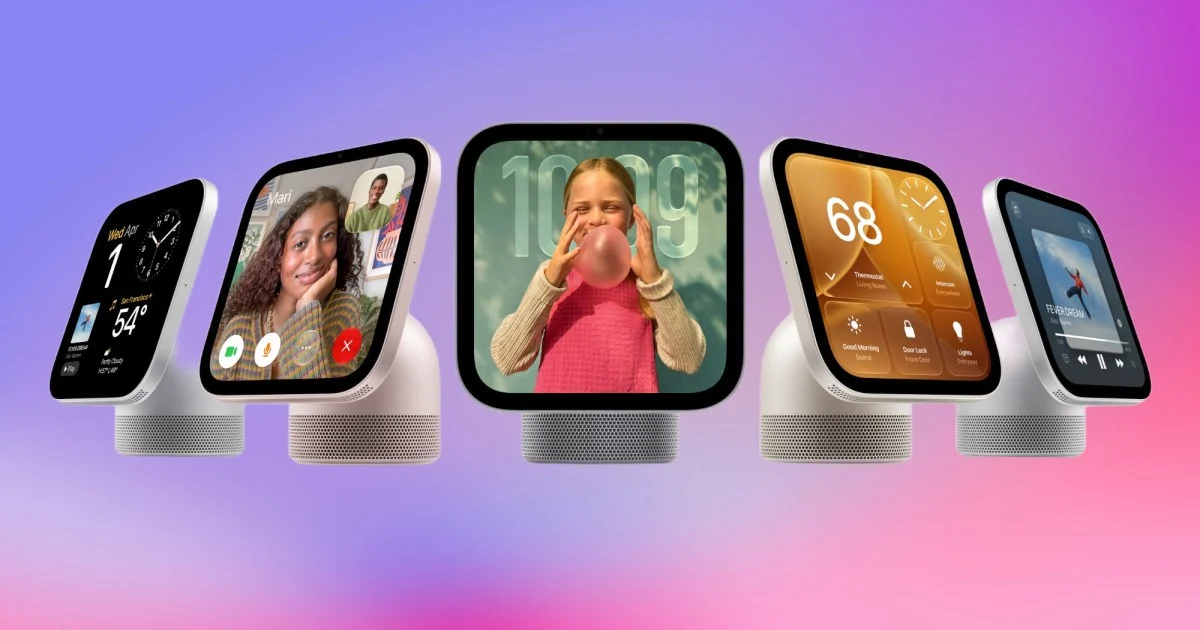
The future of smart home technology is taking a fascinating turn, with companies exploring ways to make our devices more interactive and responsive. One of the most intriguing developments is the concept of a robotic smart display, a device that can physically move and orient itself to better serve its user. This idea, once confined to science fiction, is now on the horizon, promising a new level of engagement with our digital assistants and home management systems.
At the forefront of this innovation is Apple, a company known for pushing the boundaries of consumer electronics. Reports suggest that Apple is working on a sophisticated smart display that goes beyond static screens. This device, potentially named “HomeView Ultra” or “HomeView Max,” is envisioned as a smart display mounted on a motorized arm. This arm would allow the screen to swivel and follow users around a room, ensuring it always faces the person speaking or interacting with it. This capability could transform how we experience video calls, access information, and control our smart homes, making the interaction feel more natural and personalized.
This robotic smart display concept draws inspiration from familiar imagery, like the animated Pixar lamp, but translates it into a functional home device. Instead of physical movement, the focus is on the screen’s ability to reorient itself. This is achieved through advanced sensors and cameras, likely incorporating technologies similar to Apple’s Face ID system, to detect user presence and direction. The goal is to create a device that not only responds to voice commands but also actively anticipates user needs by positioning itself optimally. This proactive approach could lead to a more seamless and intuitive user experience, blurring the lines between a passive appliance and an active participant in the home environment.
The development of such a device is not a sudden leap but rather an evolution of Apple’s smart home strategy. The project reportedly began as a more straightforward video-calling device with a screen that could track movement. However, the vision expanded to incorporate more artificial intelligence, turning a simple communication tool into a more capable, robot-like assistant. This evolution highlights a broader trend in smart home technology: the move towards devices that are not just connected but also intelligent and adaptive. The potential for this robotic smart display to integrate with other smart home functions, such as controlling lights or responding to environmental cues, further underscores its ambitious scope.
The journey from concept to consumer product is often long and complex, and this robotic smart display is no exception. While prototypes have reportedly been in development for some time, the final release hinges on software advancements, particularly in AI capabilities. The estimated price point also suggests this will be a premium product, reflecting the advanced technology and engineering involved. For consumers, this development raises questions about privacy, cost, and the ultimate utility of a screen that can move. However, it also signals an exciting future where our smart home devices become more dynamic and integrated into the fabric of our daily lives.
The Evolution of Smart Displays: From Static Screens to Robotic Companions
Smart displays have become a common fixture in many homes, offering a convenient way to access information, manage tasks, and control smart home devices. Initially, these devices were characterized by their static screens, displaying information and responding to voice commands. However, the market is now seeing a push towards more dynamic and interactive experiences. The concept of a robotic smart display represents a significant leap forward in this evolution, moving beyond passive information delivery to active engagement with the user and their environment.
The standard smart display, like Amazon’s Echo Show or Google Nest Hub, typically features a fixed screen that provides visual feedback to voice commands. While useful for displaying weather forecasts, recipes, or video calls, their interaction is limited by their stationary nature. Users must position themselves in front of the device to see the screen clearly, and the device itself cannot adjust to their location. This limitation becomes more apparent as smart displays take on more complex roles, such as acting as central hubs for home automation or providing personalized assistance.
Apple’s reported work on a robotic smart display, potentially called HomeView Ultra or HomeView Max, aims to overcome these limitations. The core innovation lies in its motorized arm, which allows the nine-inch screen to swivel and follow users. This feature is designed to ensure that the display is always oriented towards the person interacting with it, whether they are in the same room or moving around. This dynamic positioning can significantly improve the user experience, especially during video calls, where maintaining eye contact and clear visuals is crucial. It also means that information displayed on the screen is more likely to be seen by the intended user, enhancing privacy and convenience.
The technology behind this robotic movement is sophisticated. It involves a combination of cameras, sensors, and AI algorithms to detect user presence, identify who is speaking, and control the motorized arm. This allows the device to not only track movement but also to anticipate user needs. For instance, if a user walks into a room, the robotic display could automatically turn towards them, ready to receive commands or display relevant information. This level of responsiveness transforms the smart display from a reactive tool into a more proactive assistant.
This development is part of a broader trend in the smart home industry towards creating more intuitive and human-like interactions. As AI capabilities advance, devices are becoming better at understanding context, personalizing responses, and anticipating user behavior. A robotic smart display embodies this trend by physically adapting to the user’s presence and actions. This could lead to a more natural and less intrusive way of interacting with technology in our homes, making smart devices feel less like gadgets and more like helpful companions. The potential applications extend beyond simple convenience, touching on areas like accessibility for individuals with mobility issues or enhanced security features.
The journey of the smart display from a simple digital photo frame with voice control to a potentially mobile and intelligent robotic device highlights the rapid pace of innovation in consumer technology. Each iteration builds upon the last, incorporating new features and capabilities that aim to make our lives easier and more connected. The robotic smart display, with its ability to move and orient itself, represents a significant step in this ongoing evolution, promising a future where our smart home devices are not just smart, but also remarkably aware of our presence and needs.
Understanding the Technology Behind a Robotic Smart Display
The concept of a robotic smart display, where a screen can move and orient itself, relies on a sophisticated interplay of hardware and software. At its heart is the ability to perceive the environment, track users, and execute precise physical movements. This integration of sensing, processing, and actuation is what differentiates it from traditional static smart displays and opens up new possibilities for user interaction.
The primary sensing component is the camera system. This is not just for video calls but also for environmental awareness and user tracking. Advanced computer vision algorithms are employed to detect the presence of people, identify individuals, and determine their location and orientation within the room. Technologies like Apple’s Face ID, which uses infrared projectors and cameras to create a 3D map of a user’s face, could be adapted for this purpose. This allows the device to recognize who is speaking and where they are, enabling the screen to turn towards them. Beyond visual tracking, other sensors might be integrated, such as infrared (IR) projectors or depth sensors, to improve accuracy in various lighting conditions and to create a more robust understanding of the surrounding space.
The “robotic” aspect comes from the motorized arm. This mechanical component is engineered to provide smooth, controlled movement of the screen. The arm needs to be capable of rotating on at least one axis, and potentially more, to allow for a wide range of motion. The precision of this movement is critical; it must be responsive enough to track a person’s subtle shifts in position without being jarring or distracting. The design of the arm also needs to consider stability, ensuring the device remains steady as the screen moves. The power requirements and the noise generated by the motor are also important engineering considerations for a device intended for home use.
Underpinning these hardware capabilities is a powerful processing unit, likely incorporating artificial intelligence (AI) and machine learning (ML) capabilities. The AI algorithms are responsible for interpreting the data from the sensors, making decisions about how to move the screen, and managing other smart display functions. This includes voice recognition, natural language processing, and the execution of commands. For a device that actively tracks users, the AI must be adept at real-time processing to ensure seamless interaction. The ability to learn user preferences and adapt its behavior over time would further enhance the user experience, making the device more personalized and intuitive.
The integration of these technologies allows for a range of advanced features. The screen can automatically adjust its angle to optimize viewing for whoever is speaking, enhancing the experience of video calls and making it easier to consume content. The device could also potentially act as a security camera, using its tracking capabilities to monitor a room when not in active use. Furthermore, its awareness of user presence could trigger other smart home actions, such as turning on lights when someone enters a room. The development of such a device requires a deep understanding of robotics, computer vision, AI, and user interface design, all working in concert to create a truly next-generation smart home product.
Potential Use Cases and Benefits of a Robotic Smart Display
The introduction of a robotic smart display promises to unlock a new level of utility and convenience in the smart home. By enabling the screen to move and orient itself, these devices can offer more dynamic and personalized interactions, going beyond the capabilities of traditional static displays. The benefits span across communication, entertainment, home management, and even accessibility.
One of the most immediate benefits is the enhancement of video communication. With a screen that can follow the user, video calls become more natural and engaging. Instead of the camera being fixed or requiring manual adjustment, the robotic display can ensure the speaker remains centered in the frame, maintaining eye contact with the person on the other end. This creates a more personal and immersive experience, making remote conversations feel closer to in-person interactions. For families and friends who are geographically separated, this could significantly improve the quality of their connections.
Beyond communication, entertainment and content consumption can also be improved. Imagine watching a video or following a recipe; the screen can automatically adjust its angle to provide the best view as you move around the kitchen or living room. This hands-free adjustment means less fumbling with device positioning and more focus on the content itself. For interactive applications, such as educational programs or games, the ability of the screen to orient towards the user can make the experience more engaging and responsive.
The robotic capabilities also open up new avenues for smart home control and automation. The device’s awareness of user presence and location can be leveraged to trigger actions. For example, as a user enters a room, the robotic display could turn towards them and present relevant information, such as the day’s schedule or the current weather. It could also be programmed to initiate specific smart home routines, like dimming the lights for movie watching or adjusting the thermostat. This proactive approach makes interacting with the smart home more seamless and intuitive, reducing the need for explicit voice commands for every action.
Furthermore, a robotic smart display could serve as an advanced security feature. Its ability to track movement within a room could be used for motion detection and surveillance. When not in active use, it could function as a discreet security camera, alerting users to any unusual activity. The directional tracking could even allow it to focus on specific areas or individuals, providing more detailed monitoring than a static camera.
Accessibility is another significant area where a robotic smart display could make a difference. For individuals with mobility challenges, the ability of the screen to automatically orient itself can be invaluable. It reduces the need for physical manipulation of the device, making it easier for them to engage with digital content, communicate with others, and control their environment. This enhanced usability can contribute to greater independence and a better quality of life.
The potential benefits of a robotic smart display are vast, touching upon nearly every aspect of how we interact with technology in our homes. By making smart displays more dynamic, responsive, and aware of their surroundings, these devices move closer to becoming truly integrated and helpful members of the household. The combination of advanced sensing, precise mechanics, and intelligent software creates a platform for a more intuitive, engaging, and personalized smart home experience.
Potential Challenges and Considerations for Robotic Smart Displays
While the prospect of a robotic smart display is exciting, its development and widespread adoption are likely to face several challenges and require careful consideration of various factors. These range from technical hurdles and cost implications to privacy concerns and user acceptance. Addressing these issues will be critical for the success of such innovative devices.
One of the primary technical challenges lies in the reliability and durability of the motorized components. A device that physically moves parts of itself is inherently more prone to mechanical failure than a static one. The motor, gears, and articulation points must be designed to withstand frequent use over many years without wearing out or malfunctioning. Ensuring smooth, quiet operation is also important for a device intended for use in a home environment, where noise can be disruptive. The precision required for accurate user tracking and screen orientation also demands sophisticated engineering and calibration.
The cost of incorporating such advanced technology is another significant factor. The sophisticated sensors, powerful processors, AI capabilities, and the motorized arm itself all contribute to a higher manufacturing cost. As indicated by early reports, these devices could carry a premium price tag, potentially around $1,000 or more. This high cost could limit the market to early adopters and affluent consumers, making it difficult for the technology to achieve mass-market penetration. The value proposition needs to be exceptionally strong to justify such an investment for the average household.
Privacy is perhaps one of the most significant concerns associated with any device that incorporates cameras and sensors capable of tracking user movements. A robotic smart display, by its very nature, is designed to be aware of who is in the room and where they are. This raises questions about how this data is collected, stored, and used. Users will need to be assured that their privacy is protected and that the device cannot be easily exploited for surveillance. Clear policies on data handling, robust security measures, and transparent controls for users over camera and microphone access will be essential for building trust. The potential for misuse, either by the manufacturer or by malicious actors, needs to be thoroughly addressed.
User acceptance and the perceived utility of a moving screen are also important considerations. While the technology offers potential benefits, some users may find a screen that moves to be distracting or even unsettling. The “uncanny valley” effect, where human-like but not perfectly human behavior can cause discomfort, might come into play. The design needs to be intuitive and unobtrusive, ensuring that the robotic movement enhances rather than detracts from the user experience. Educating consumers about the benefits and functionalities of such a device will be crucial in overcoming any initial reservations.
The integration with existing smart home ecosystems and standards is another area that requires attention. For a robotic smart display to be truly useful, it needs to work seamlessly with other smart devices and platforms. Ensuring compatibility with various protocols and services will be vital for its adoption. Furthermore, the software experience needs to be polished and reliable. As noted in some reports, software development, particularly in AI features, can be a bottleneck. A buggy or slow interface can quickly diminish the appeal of even the most advanced hardware.
Finally, the ethical implications of increasingly autonomous and aware home devices need ongoing discussion. As these devices become more sophisticated, questions arise about their role in our lives and the potential for over-reliance. Developers and manufacturers must consider these broader societal impacts and strive to create technology that is beneficial and responsible. Navigating these challenges will require a balanced approach, focusing on innovation while prioritizing user safety, privacy, and trust.
The Future Landscape of Smart Home Devices
The development of a robotic smart display signifies a pivotal moment in the evolution of smart home technology. It points towards a future where our connected devices are not merely passive tools but active, adaptive participants in our daily lives. This shift from static, reactive devices to dynamic, responsive ones is reshaping expectations and opening up new possibilities for how we interact with technology in our homes.
The trend towards more intelligent and personalized experiences is evident across the smart home sector. We are moving beyond simple voice commands and pre-programmed routines towards devices that can learn, anticipate, and adapt to individual user needs and preferences. This is driven by advancements in artificial intelligence, machine learning, and sensor technology. As these fields continue to mature, we can expect to see even more sophisticated capabilities emerge in smart home products.
The concept of a robotic display is just one facet of this broader transformation. We may see other devices gain enhanced mobility or the ability to reconfigure themselves to suit different tasks. Imagine smart speakers that can adjust their sound projection based on room acoustics or smart furniture that can change its form to serve different purposes. The integration of robotics and AI into everyday household items is likely to become more common, leading to homes that are more responsive and tailored to their inhabitants.
Furthermore, the increasing sophistication of smart home devices will likely lead to a more unified and seamless ecosystem. As devices become more aware of each other and their environment, they can work together more effectively to create a truly integrated smart home experience. This could involve devices communicating and coordinating actions without direct user intervention, leading to a home that manages itself intelligently and efficiently. The focus will shift from managing individual devices to orchestrating a cohesive smart environment.
The role of AI will continue to expand, moving beyond simple task execution to more complex decision-making and predictive capabilities. Smart home systems may become capable of proactively identifying potential issues, optimizing energy consumption, and even offering personalized recommendations for health and well-being. This level of intelligence will require robust data processing and sophisticated algorithms, raising important questions about data security and user privacy that will need to be continuously addressed.
However, this future is not without its challenges. As mentioned earlier, cost, privacy, and user acceptance will remain critical factors. The ethical considerations surrounding increasingly autonomous and aware home devices will also require ongoing dialogue and careful regulation. The industry will need to strike a balance between innovation and responsibility, ensuring that these advancements genuinely benefit consumers and enhance their quality of life without compromising their fundamental rights and well-being.
In conclusion, the robotic smart display is a harbinger of a more dynamic, intelligent, and integrated smart home future. It represents a significant step towards creating living spaces that are not only connected but also perceptive and adaptive. As technology continues to evolve, we can anticipate a landscape where our homes are increasingly capable of understanding and responding to our needs in ways that were once the stuff of science fiction. The journey ahead promises to be exciting, filled with innovation that will redefine our relationship with the technology that surrounds us.
Conclusion
The exploration into the realm of robotic smart displays, spearheaded by companies like Apple with concepts like the HomeView Ultra or Max, marks a significant evolution in smart home technology. Moving beyond the static screens of current devices, these future iterations promise a more interactive, responsive, and personalized user experience. The ability of a screen to physically orient itself towards the user, driven by advanced AI, computer vision, and sophisticated robotics, opens up a new chapter in how we communicate, consume content, and manage our homes.
While the technical hurdles, potential costs, and significant privacy considerations are substantial, the benefits are equally compelling. Enhanced video calls, more intuitive content consumption, proactive smart home control, and improved accessibility are just some of the advantages these devices could offer. As the technology matures and these challenges are addressed, robotic smart displays have the potential to become central, dynamic hubs within our living spaces, making our homes more intelligent and attuned to our needs. The ongoing development in this area signals a future where our smart devices are not just tools, but truly integrated companions in our daily lives.



Conversation
0 Comments