

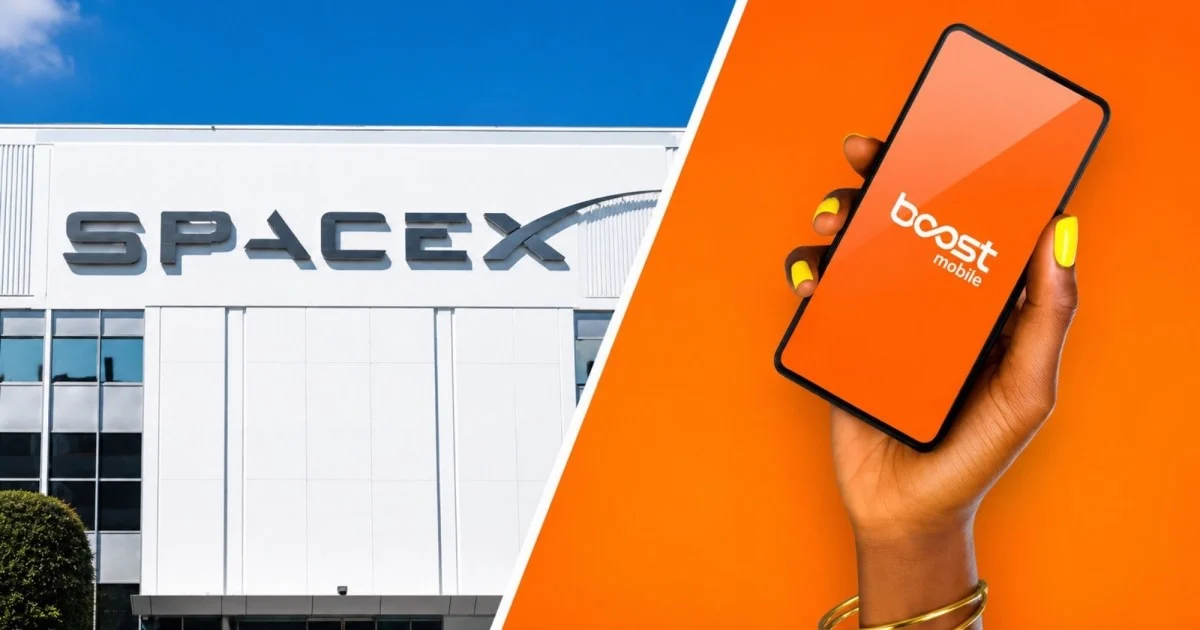
SpaceX’s Bold Leap into the Wireless Market: Analyzing the Boost Mobile Acquisition Rumors
Elon Musk, the visionary behind SpaceX and Tesla, has consistently pushed the boundaries of what’s possible, from revolutionizing space travel to accelerating the transition to electric vehicles. Now, the ambitious entrepreneur appears to be setting his sights on another massive industry: telecommunications. Recent reports suggest that SpaceX is in discussions to acquire Boost Mobile, a move that could dramatically reshape the U.S. wireless landscape. This potential acquisition is not just about expanding SpaceX’s business empire; it represents a strategic play to integrate its groundbreaking satellite internet technology with established terrestrial cellular networks, aiming to offer a truly ubiquitous connectivity solution.
The U.S. wireless market, currently dominated by a few major players like Verizon, AT&T, and T-Mobile, is a multi-billion dollar industry. For SpaceX to enter this arena, it needs a viable strategy to overcome the existing infrastructure and customer base. The reported interest in Boost Mobile, a Mobile Virtual Network Operator (MVNO) that leases network capacity from larger carriers, offers a potential shortcut. By acquiring or partnering with Boost, SpaceX could gain access to a significant customer base and a framework for operating within the wireless sector. This move, if successful, could be a pivotal moment, not only for SpaceX’s ambitions in connectivity but also for the future of mobile communication, potentially paving the way for services that blend satellite and cellular technologies seamlessly.
The Strategic Rationale Behind a Boost Mobile Deal
SpaceX’s primary objective with its Starlink satellite constellation is to provide high-speed internet access to underserved and remote areas globally. While Starlink has made significant strides, it faces inherent limitations, particularly in dense urban environments and indoors, where satellite signals can be obstructed. Elon Musk himself has acknowledged that Starlink’s satellite signals are not yet robust enough to handle all indoor and urban coverage needs, which account for the majority of mobile phone usage. This is where a partnership or acquisition of Boost Mobile becomes strategically compelling.
By integrating Boost Mobile’s existing cellular infrastructure and customer base, SpaceX could create a hybrid network. This would allow Starlink to provide its satellite connectivity for areas where traditional cell towers are scarce, while Boost’s network would cover the urban and indoor spaces where most users spend their time. This dual-pronged approach addresses the coverage gaps of both technologies, offering a more comprehensive and reliable service than either could provide alone. The acquisition of Boost Mobile could therefore serve as the missing piece in SpaceX’s plan to offer a complete, end-to-end mobile communication solution, challenging the established giants in the process.
Understanding Boost Mobile’s Role in the Wireless Ecosystem
Boost Mobile operates as a Mobile Virtual Network Operator (MVNO). This means it does not own its own cellular network infrastructure. Instead, it leases network capacity from major carriers like AT&T and T-Mobile. This business model allows MVNOs to offer competitive pricing and specialized plans without the massive capital investment required to build and maintain a nationwide cellular network. Boost Mobile has historically targeted budget-conscious consumers and those seeking flexible, prepaid wireless plans.
The advantage for SpaceX in pursuing Boost Mobile lies in this existing infrastructure and customer base. A deal would provide SpaceX with immediate access to a network of cell towers and a significant number of subscribers. This would bypass the years of planning, regulatory hurdles, and billions of dollars typically required to build a new cellular network from scratch. However, there is a significant hurdle: Boost Mobile’s lease agreements with AT&T and T-Mobile are crucial. These agreements typically cannot be transferred to a new owner without the explicit consent of the original carriers. Therefore, the success of any SpaceX acquisition of Boost Mobile hinges on securing the approval of AT&T and T-Mobile, who could potentially block the deal.
The Technical Hurdles and Musk’s Vision for Connectivity
While the business and strategic aspects of a Boost Mobile acquisition are significant, the technical challenges are equally important. SpaceX is investing heavily in its Starlink satellite internet service, aiming to create a global broadband network. However, as mentioned, satellite signals have limitations. They can be affected by weather, physical obstructions like buildings and trees, and the sheer distance from the satellite to the user’s device. For mobile phone calls and data, especially in densely populated areas, terrestrial cellular networks have proven more effective and reliable.
Elon Musk’s vision likely involves a seamless integration of Starlink’s satellite capabilities with traditional cellular technology. This could manifest in several ways. For instance, future smartphones might be equipped with modems capable of switching between cellular and satellite signals automatically, ensuring the strongest available connection. SpaceX has already spent billions on acquiring wireless spectrum specifically for areas that satellites cannot reach, indicating a clear intent to bridge this gap. This spectrum acquisition, combined with a potential Boost Mobile network, could enable SpaceX to offer a service that provides coverage virtually anywhere, from the most remote wilderness to the busiest city center.
The Competitive Landscape and Potential Market Disruption
The U.S. wireless market is a mature and highly competitive space, dominated by Verizon, AT&T, and T-Mobile. These companies have vast networks, established customer loyalty, and significant resources. For SpaceX to enter this market, it needs a compelling differentiator. The integration of satellite and cellular technology offers precisely that. A service that promises uninterrupted connectivity, regardless of location, could be incredibly attractive to consumers, especially those who frequently travel or live in areas with spotty cellular service.
The potential for disruption is substantial. If SpaceX can successfully combine its satellite network with Boost Mobile’s existing infrastructure, it could offer a unique value proposition. This could force the incumbent carriers to re-evaluate their own strategies, potentially leading to increased innovation and better service offerings for consumers. Analysts have pointed to Musk’s track record with Tesla, where he disrupted the automotive industry, as evidence that he should not be underestimated. While some carrier executives have expressed skepticism about SpaceX’s ability to build out the necessary infrastructure quickly, Musk’s ambitious timelines and proven execution capabilities suggest that such skepticism might be misplaced.
Financial Implications and Spectrum Acquisition
The financial aspects of this potential deal are considerable. Acquiring Boost Mobile would involve a significant investment, though the exact figures are not yet public. Boost Mobile is part of EchoStar, a company with substantial assets in satellite communications. The reported discussions between Elon Musk and EchoStar chairman Charlie Ergen highlight the seriousness of these negotiations.
Furthermore, SpaceX’s recent $8 billion investment in wireless spectrum is a critical component of its mobile connectivity strategy. This spectrum is essential for building out terrestrial cellular capabilities, complementing Starlink’s satellite service. Owning this spectrum gives SpaceX more control over its network and allows it to develop services that are not dependent on leasing from other carriers. The combination of spectrum ownership, a potential Boost Mobile acquisition, and the Starlink satellite network creates a powerful trifecta for entering the wireless market. This strategic move underscores SpaceX’s long-term commitment to becoming a major player in global communications.
The Path Forward: Approvals and Integration Challenges
Even if SpaceX and EchoStar reach an agreement, the path forward is not without its challenges. As previously noted, the transfer of Boost Mobile’s network leases from AT&T and T-Mobile requires their approval. These major carriers might be hesitant to facilitate a new competitor entering their market, especially one backed by a company as ambitious as SpaceX. Regulatory approvals from bodies like the Federal Communications Commission (FCC) would also be necessary.
Beyond the regulatory and contractual hurdles, the technical integration of satellite and cellular networks presents its own set of complexities. Developing the hardware and software to seamlessly switch between these two distinct technologies will require significant engineering effort. SpaceX will need to ensure that the user experience is smooth and intuitive, with no noticeable degradation in service quality. The company’s history of tackling complex engineering challenges, however, suggests a strong capability to overcome these obstacles. Elon Musk has estimated that full phone coverage could be achieved in about half the time that Verizon’s CEO suggested, indicating confidence in SpaceX’s ability to execute rapidly.
Broader Implications for Global Connectivity and Mars
The ambition behind SpaceX’s potential foray into the wireless market extends beyond just the U.S. telecommunications sector. The development of a robust, integrated satellite-cellular network could have far-reaching implications for global connectivity. It could bring reliable internet and mobile services to remote communities, developing nations, and disaster-stricken areas where traditional infrastructure is lacking or has been destroyed.
Moreover, this endeavor aligns with Musk’s long-term vision of establishing human settlements on Mars. A communication network that can seamlessly operate across different environments and technologies on Earth would be invaluable for supporting a Martian colony. The ability to maintain communication links between Earth and Mars, as well as within a Martian settlement, requires advanced networking capabilities that blend satellite and terrestrial technologies. Therefore, the work SpaceX is doing in satellite internet and its potential expansion into mobile services are not just about improving connectivity on Earth; they are foundational steps towards enabling humanity’s future in space.
Conclusion: A New Era of Connectivity on the Horizon?
The prospect of SpaceX entering the U.S. wireless market through a potential acquisition of Boost Mobile is a development that warrants close attention. It represents a bold strategy to combine the strengths of satellite and cellular technologies, aiming to offer a truly ubiquitous connectivity solution. While significant hurdles remain, including securing carrier approvals and navigating complex technical integrations, the potential rewards are immense.
If successful, this move could disrupt the established telecommunications industry, drive innovation, and bring more reliable and widespread connectivity to consumers. It also serves as a testament to Elon Musk’s relentless pursuit of ambitious goals, pushing the boundaries of what is technologically and commercially feasible. The coming months will be critical in determining whether this strategic vision translates into a tangible reality, potentially ushering in a new era of global communication.


Conversation
0 Comments