

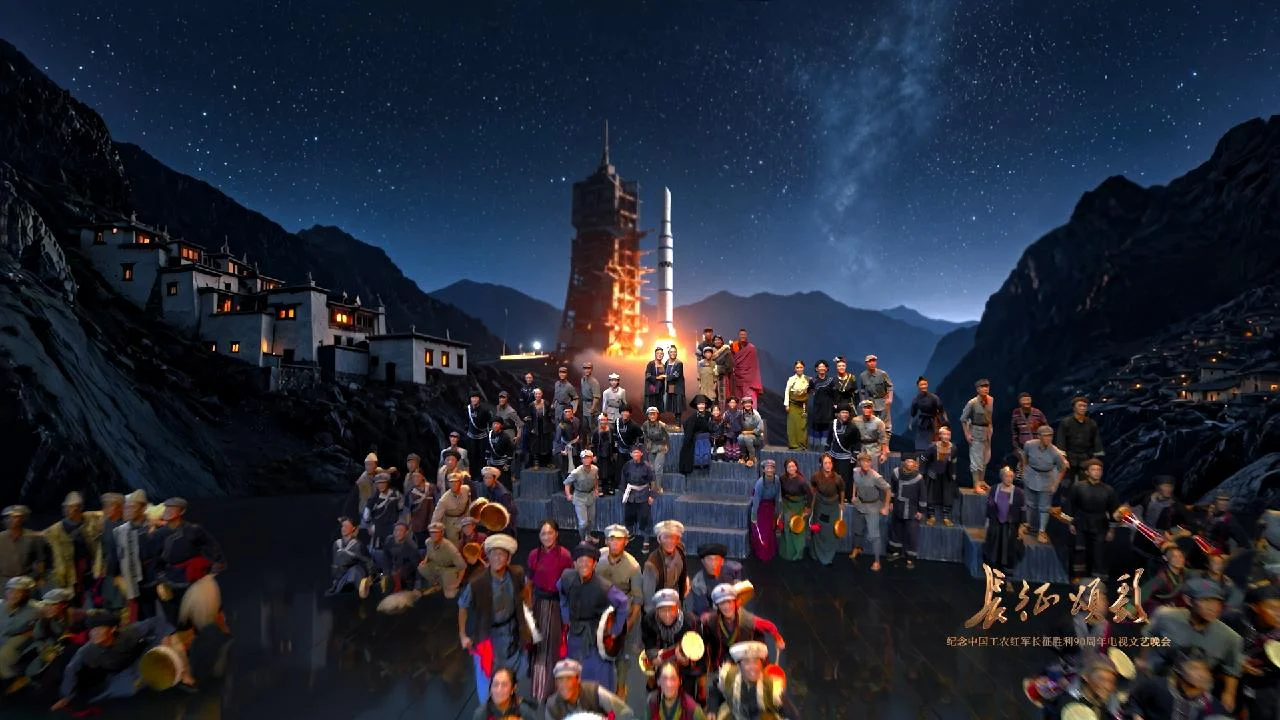
The Long March is a pivotal event in modern Chinese history, representing a strategic retreat by the Red Army from 1934 to 1936. This arduous journey, marked by immense hardship and sacrifice, laid the groundwork for future revolutionary successes. In recent times, technology has begun to play a role in how this history is remembered and presented. Specifically, artificial intelligence (AI) is being used to recreate historical moments, offering new ways to engage with the past. This analysis will explore how AI is being applied to historical narratives, focusing on the balance between technological innovation and historical accuracy.
AI’s Role in Historical Recreation
Artificial intelligence is transforming how we interact with historical events. Instead of static text or traditional reenactments, AI can generate dynamic and immersive experiences. This technology can recreate environments, reconstruct voices, and even simulate events, bringing history to life in unprecedented ways. The goal is not just to present facts but to evoke the feeling and context of the past, making it more accessible and understandable for contemporary audiences.
Recreating Performances with AI
One notable application of AI in historical recreation involves enhancing performances. For instance, in a TV gala commemorating the 90th anniversary of the Long March, actor Li Xuejian portrayed a Red Army cooking squad leader. Due to his hearing and speech impairments, Li performed without speaking, relying on written rehearsals. To overcome this, China Media Group’s (CMG) AI digital technology was employed. This technology used samples of Li’s past performances and guidance from a voice actor to restore his narration. Through multiple rounds of adjustment, the AI successfully recreated his voice, allowing his performance to be heard as intended. This demonstrates AI’s capability to bridge physical limitations and preserve the integrity of an artist’s contribution to a historical narrative.
Spatial Expansion and Visual Storytelling
AI can also expand the visual canvas of historical storytelling. In the same TV gala, a segment titled “Jiajin Mountain” aimed to connect two distinct eras: the Red Army’s crossing of the snow-covered mountain in 1935 and the modern-day opening of a tunnel on National Highway 351. This tunnel, built over 45 months by over 600 workers, now serves 110,000 residents who were previously cut off by winter snow. Using AI-generated content (AIGC) for spatial expansion, the gala was able to display the historical marching column and the contemporary tunnel construction on the same screen. This visual juxtaposition highlights the passage of time and the progress made, linking the past struggles with present-day advancements. It offers a powerful way to illustrate historical continuity and the long-term impact of past events.
Immersive Viewing Experiences with AI
Beyond visual and auditory recreation, AI is also enhancing the viewing experience itself. A cloud-based AI multi-view system was deployed during the gala. This system utilized a camera array to capture a 180-degree view, providing viewers with a three-dimensional studio experience. Unlike traditional broadcasts with fixed camera positions, this AI-powered system offered a more dynamic and engaging perspective. This technology allows audiences to feel more present within the historical scenes, offering a deeper emotional connection to the events being depicted. The ability to shift perspectives and explore the scene from multiple angles makes the historical narrative more compelling and memorable.
Ensuring Historical Accuracy with AI
While AI offers powerful tools for recreation, maintaining historical accuracy is paramount. The creators of the Long March anniversary gala emphasized a rigorous approach to ensure that technological advancements did not compromise factual integrity. This involved a multi-stage verification process and the careful restoration of historical artifacts.
Multi-Stage Verification Process
To ensure historical accuracy, the creators implemented a three-stage checking process. This involved:
- Review by Researchers: Initial verification of historical details was conducted by dedicated researchers.
- Consultation with Local Memorial Museums: Museums located along the Long March route were consulted to ensure the accuracy of local historical context and events.
- Expert Historian and Military Museum Review: Finally, historians and experts from military museums provided a final review, cross-referencing details with official records and historical scholarship.
This layered approach ensures that AI-generated content is grounded in factual evidence and historical consensus. It highlights that technology is a tool to present history, not to rewrite it.
Restoring Artifacts and Rebuilding Models
The commitment to accuracy extended to the physical representation of historical elements. Artifacts played a crucial role in grounding the AI recreations in tangible reality. For example, a Dadu River boat, a significant element in the Long March narrative, was meticulously rebuilt. This reconstruction was based on a 1:1 scale model of an existing artifact held in a museum. By accurately recreating such objects, the gala aimed to provide a faithful visual representation of the tools and environments used by the Red Army. This attention to detail helps to build trust with the audience and reinforces the authenticity of the historical portrayal.
The Balance Between Technology and Authenticity
The application of AI in historical narratives presents a delicate balance between leveraging advanced technology and preserving historical authenticity. The directors of the Long March gala stated their aim was to “let digital technology expand the canvas of time while rigorous research kept the history authentic.” This philosophy underscores the idea that technology should serve history, not dominate it.
AI can expand the scope of what can be shown and how it can be presented. It can fill in gaps where visual records are scarce or nonexistent, and it can create immersive environments that transport viewers to another era. However, this creative freedom must be guided by a deep respect for historical facts and a commitment to truthful representation.
The use of AI in historical contexts raises important questions about interpretation, representation, and the potential for bias. While AI can process vast amounts of data, the algorithms and the data they are trained on can reflect human biases. Therefore, human oversight, critical analysis, and a commitment to ethical representation are essential when using AI for historical purposes.
Expanding the Canvas of Time
AI’s ability to manipulate and generate content offers unique ways to visualize historical timelines. By using AIGC for spatial expansion, as seen with the Jiajin Mountain segment, creators can juxtapose different time periods within a single frame. This allows for a more dynamic understanding of historical progression and the enduring impact of past events. It can illustrate how historical challenges have been overcome or how certain landscapes have transformed over decades. This visual storytelling technique can make abstract historical concepts more concrete and relatable.
Maintaining Historical Integrity
The core challenge lies in ensuring that the “expanded canvas” does not distort the historical record. Rigorous research, as demonstrated by the multi-stage verification process, is the bedrock of authentic historical representation. AI tools should be seen as sophisticated aids for research and presentation, not as substitutes for historical scholarship. The accuracy of AI-generated content is directly dependent on the quality and integrity of the historical data it is fed. If the input data is flawed or biased, the output will reflect those flaws.
Therefore, a critical perspective is always necessary. Historians and creators must continually question the outputs of AI, cross-referencing them with established historical knowledge and seeking diverse perspectives. The goal is to use AI to illuminate history, not to create a new, potentially inaccurate, version of it.
Future Implications of AI in Historical Narratives
The successful application of AI in recreating historical events, as seen with the Long March anniversary gala, suggests a promising future for how history will be understood and experienced. As AI technology continues to advance, its potential applications in historical research, education, and public engagement will likely expand.
Enhanced Educational Tools
AI can revolutionize historical education by creating interactive learning experiences. Imagine students being able to virtually walk through ancient Rome, interact with historical figures (simulated by AI), or witness pivotal battles unfold. AI-powered platforms could offer personalized learning paths, adapting to individual student needs and learning styles. This could make history more engaging and memorable, fostering a deeper understanding and appreciation for the past.
Digital Archiving and Preservation
AI can also play a significant role in preserving historical records. It can assist in digitizing and cataloging vast archives, making them more accessible for researchers. AI algorithms can help identify and restore damaged documents or artifacts, ensuring that valuable historical information is not lost to time. Furthermore, AI can analyze historical texts to identify patterns, trends, and connections that might be missed by human researchers, leading to new historical insights.
Ethical Considerations and Responsible Use
As AI becomes more integrated into historical narratives, ethical considerations become increasingly important. It is crucial to ensure that AI is used responsibly and transparently. This includes:
- Avoiding Misinformation: AI should not be used to deliberately distort historical facts or promote propaganda.
- Acknowledging AI’s Role: It should be clear to audiences when AI has been used in the creation of historical content.
- Addressing Bias: Efforts must be made to identify and mitigate biases in AI algorithms and the data they use.
- Human Oversight: AI should augment, not replace, human historical expertise and judgment.
By addressing these ethical concerns proactively, we can harness the power of AI to enrich our understanding of history while upholding the principles of accuracy and integrity. The journey of AI in historical recreation is just beginning, and its responsible development will be key to unlocking its full potential.
Conclusion
The use of artificial intelligence in recreating historical events, exemplified by the Long March anniversary TV gala, marks a significant advancement in how we engage with the past. AI’s ability to reconstruct performances, expand visual narratives, and create immersive viewing experiences offers powerful new ways to connect with historical moments. However, the success of these applications hinges on a steadfast commitment to historical accuracy. Through rigorous research, multi-stage verification, and the faithful restoration of artifacts, creators can ensure that technological innovation serves to illuminate history rather than distort it. As AI continues to evolve, its potential to transform historical education and preservation is immense, provided it is developed and applied with ethical considerations and human oversight at its core. The future of historical storytelling lies in the thoughtful integration of cutting-edge technology with the enduring pursuit of truth.


Conversation
0 Comments