

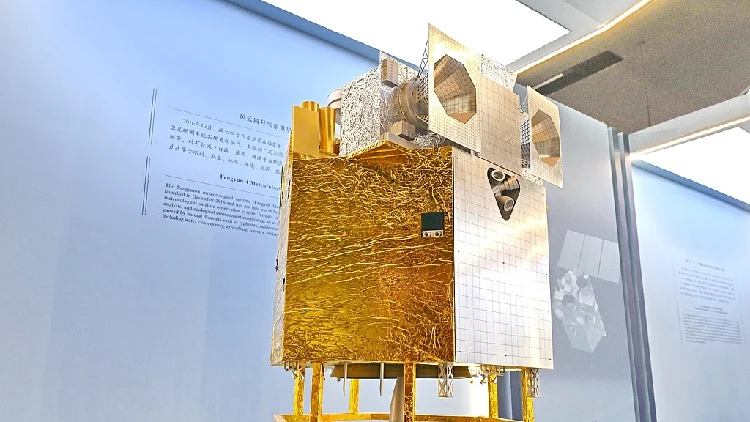
AI Models Enhance Extreme Weather Forecasting with Fengyun Satellites
China has taken a significant step forward in its ability to monitor and predict extreme weather events by releasing its first set of artificial intelligence (AI) models specifically designed for the Fengyun meteorological satellites. These advanced models aim to significantly improve the accuracy and speed of forecasting for phenomena like typhoons and severe convection, offering better protection and preparedness for communities worldwide. The development marks a crucial advancement in leveraging cutting-edge technology to understand and combat the growing challenges posed by climate change and its impact on weather patterns.
The China Meteorological Administration (CMA) announced the release of these AI models at a recent users’ conference. This initiative represents a fusion of space-based observation capabilities with the power of machine learning, promising to unlock new levels of insight from the vast amounts of data collected by China’s Fengyun satellite network. By automating complex analysis and accelerating prediction times, these AI models are set to become indispensable tools for meteorologists and disaster management agencies.
Understanding the Fengyun Satellite System
The Fengyun meteorological satellites form a cornerstone of China’s comprehensive weather observation infrastructure. These satellites are equipped with sophisticated instruments designed to capture detailed information about Earth’s atmosphere, including cloud cover, temperature, humidity, and wind patterns. Over the years, China has launched a series of Fengyun satellites, each iteration building upon the capabilities of its predecessors, enhancing resolution, frequency of observation, and the types of data collected.
Currently, China operates ten Fengyun meteorological satellites in orbit, providing continuous global coverage. This extensive network ensures that vital weather data is consistently gathered, forming a rich dataset that is essential for both short-term forecasting and long-term climate research. The data from these satellites is not confined to domestic use; it is made openly available to 141 countries and regions across the globe, underscoring China’s commitment to international cooperation in meteorological science and disaster risk reduction.
The sheer volume of data generated by these satellites is immense. Traditionally, analyzing this data to identify critical weather patterns and predict their evolution required significant human effort and time. This is where the integration of AI becomes transformative. AI models can process this massive data stream far more efficiently than human analysts, identifying subtle patterns and anomalies that might otherwise be missed. This capability is particularly critical when dealing with rapidly developing and potentially devastating weather events.
The Power of AI in Meteorological Forecasting
Artificial intelligence, especially machine learning, excels at recognizing complex patterns within large datasets. In the context of meteorology, this means AI can learn to associate specific atmospheric conditions observed by satellites with particular types of weather events. By training AI models on historical satellite imagery and corresponding weather outcomes, these systems can develop the ability to predict future weather with remarkable accuracy.
The application of AI to satellite data is not just about speed; it’s also about depth of analysis. AI models can go beyond simple pattern recognition to understand the dynamics of weather systems. For instance, they can analyze the structure and intensity of storm clouds, track the movement of weather fronts, and even detect precursors to extreme events that might be too subtle for human observation alone. This enhanced analytical capability is crucial for improving the reliability of weather forecasts.
Furthermore, AI can help in standardizing the interpretation of satellite data. Different analysts might interpret the same imagery slightly differently, leading to variations in forecasts. AI models, once trained, apply a consistent set of criteria, ensuring a more uniform and objective analysis. This consistency is vital for building trust in weather predictions and for coordinating responses to weather-related emergencies.
Key AI Models for Extreme Weather
The recent release by China includes two primary AI models that highlight the potential of this technology in tackling extreme weather:
Intelligent Typhoon Cloud Imagery Interpretation Model
Typhoons are among the most destructive weather phenomena, capable of causing widespread devastation through high winds, heavy rainfall, and storm surges. Accurate and timely monitoring of typhoons is essential for issuing effective warnings and enabling evacuations. This new AI model is designed to automate the analysis of typhoon-related cloud imagery.
The intelligent typhoon cloud imagery interpretation model can automatically identify and analyze key characteristics of typhoons. This includes determining their position, understanding their internal structure, assessing their intensity, and tracking their evolution over time. By performing these analyses rapidly, the model provides crucial information for forecasters.
A significant feature of this model is its ability to generate standardized interpretation text and visualized products. This means that the complex data derived from satellite imagery is translated into easily understandable reports and visual aids, which are critical for decision-makers. The model currently covers seven types of typhoon features, demonstrating a robust capability in analyzing different aspects of these powerful storms.
The speed of analysis is another impressive aspect. The model performs an interpretation every 15 minutes, and the resulting interpretation text is generated within a mere 27 seconds. This rapid processing capability is a game-changer for typhoon monitoring and forecasting, allowing for quicker updates and more agile responses to changing storm conditions.
Severe Convection Nowcasting Warning Model
Severe convection refers to atmospheric conditions that lead to intense thunderstorms, often accompanied by heavy rain, hail, strong winds, and lightning. These events can occur rapidly and with little warning, posing significant risks to life and property. Nowcasting, which focuses on very short-range weather forecasts (typically for the next few hours), is particularly important for these types of events.
The severe convection nowcasting warning model utilizes continuous observations from the Fengyun-4 meteorological satellite. By analyzing a two-hour sequence of satellite imagery, the model can predict how cloud formations will evolve in the near future. This predictive capability allows it to identify areas where severe convection is likely to develop.
The primary benefit of this model is its ability to advance the warning lead time for severe convection. By forecasting potential cloud imagery evolution up to four hours in advance, it provides meteorologists with a crucial window to issue warnings and prepare for the onset of severe weather. This extended lead time can make a substantial difference in mitigating the impact of these events.
The model’s reliance on continuous satellite observations ensures that it is constantly updated with the latest atmospheric information. This real-time data feed is vital for accurately tracking the dynamic processes that drive severe convection.
Enhancing Monitoring and Warning Capabilities
The introduction of these AI models represents a significant leap forward in China’s meteorological observation and warning system. By integrating AI with the powerful capabilities of the Fengyun satellites, the CMA is enhancing its ability to:
- Monitor Extreme Weather Events: The AI models can continuously scan satellite data for signs of developing extreme weather, such as rapidly intensifying typhoons or burgeoning severe thunderstorm cells. This automated monitoring reduces the chance of missing critical early indicators.
- Improve Forecasting Accuracy: By analyzing vast amounts of data and recognizing complex patterns, the AI models can provide more accurate predictions of storm intensity, track, and potential impact. This improved accuracy is vital for effective disaster preparedness.
- Accelerate Warning Dissemination: The speed at which the AI models can process data and generate interpretations means that warnings can be issued much faster. In situations where every minute counts, this acceleration can save lives and reduce damage.
- Provide Detailed Insights: The AI models offer more than just a warning; they provide detailed analysis of storm structures, intensity, and evolution. This deeper understanding helps emergency responders and the public make more informed decisions.
- Support Decision-Making: The standardized interpretation text and visualized products generated by the AI models make complex meteorological information more accessible to a wider range of users, including government officials, emergency managers, and the public.
The Future of Weather Forecasting with AI and Satellites
The development and deployment of these AI models for Fengyun satellites are indicative of a broader trend: the increasing reliance on advanced technologies to address global challenges. As weather patterns become more unpredictable due to climate change, the need for sophisticated forecasting tools will only grow.
The success of these initial AI models is likely to spur further innovation. Future developments could include AI models that can predict other types of extreme weather, such as floods, droughts, or heatwaves, using satellite data. There is also potential for AI to be integrated with other data sources, such as ground-based weather stations and radar systems, to create even more comprehensive and accurate forecasting systems.
Moreover, the open sharing of Fengyun satellite data with over 140 countries suggests a commitment to global collaboration. By providing access to this valuable data and the AI tools that can interpret it, China is contributing to the global effort to build resilience against extreme weather events. This international cooperation is essential, as weather systems do not respect national borders.
The ongoing advancements in AI and satellite technology promise a future where weather forecasts are not only more accurate but also more timely and actionable. This will empower individuals, communities, and governments to better prepare for, respond to, and recover from the impacts of extreme weather, ultimately contributing to a safer and more sustainable planet. The Fengyun satellite AI models are a testament to this promising future.
Conclusion
The introduction of the first Fengyun satellite AI models for extreme weather forecasting marks a pivotal moment in meteorological science. By harnessing the power of artificial intelligence, China is significantly enhancing its capacity to monitor, analyze, and predict dangerous weather phenomena like typhoons and severe convection. These models, capable of rapid interpretation and advanced prediction, will bolster the effectiveness of the Fengyun satellite network, providing critical support for disaster preparedness and response efforts both domestically and internationally. As the world grapples with the increasing frequency and intensity of extreme weather events, these technological advancements offer a beacon of hope, promising more accurate warnings and greater resilience in the face of nature’s most formidable challenges. The ongoing commitment to developing and sharing such technologies underscores the vital role of innovation in safeguarding lives and livelihoods across the globe.


Conversation
0 Comments