

Beyond Protected Areas: Diverse Stakeholders Drive Biodiversity Conservation in China
Biodiversity conservation is a global challenge that requires more than just designated protected areas. In China, a growing understanding recognizes that effective conservation relies on the collaboration of various stakeholders, including local communities, researchers, businesses, and government agencies. These diverse groups are working together to safeguard the nation’s rich natural heritage, demonstrating that conservation efforts can thrive beyond traditional boundaries. This approach is crucial for meeting ambitious global targets and ensuring the long-term health of ecosystems.
The Expanding Role of Stakeholders in Conservation
Historically, protected areas have been the cornerstone of conservation strategies worldwide. However, it is increasingly clear that these areas alone cannot encompass all critical habitats or address the complex threats to biodiversity. Recognizing this, China is actively exploring and implementing “Other Effective Area-based Conservation Measures” (OECMs). These measures are designed to complement protected areas by recognizing and supporting conservation efforts that occur outside formal designations. The success of OECMs hinges on the active participation of a wide range of stakeholders, each bringing unique skills, resources, and local knowledge to the table.
The concept of OECMs is gaining international recognition, notably within the Kunming-Montreal Global Biodiversity Framework. Target 3 of this framework aims to effectively conserve at least 30% of the world’s land, inland waters, coastal, and marine areas by 2030. Achieving this ambitious goal will necessitate innovative approaches that go beyond traditional protected areas. As Madhu Rao, chair of the International Union for Conservation of Nature (IUCN) World Commission on Protected Areas, noted, OECMs are vital because they acknowledge the stewardship of nature by non-state actors, a crucial element often overlooked in conventional conservation models.
Community-Led Conservation Efforts
Local communities are often the first line of defense for biodiversity, possessing intimate knowledge of their environments and a direct stake in their health. In China, many conservation successes are rooted in the dedication of local residents who have taken it upon themselves to protect the natural resources around them. These communities are not just passive beneficiaries of conservation; they are active participants, driving initiatives and contributing significantly to ecological preservation. Their involvement is essential for the sustainability of conservation efforts, as they are the ones living and working within these landscapes daily.
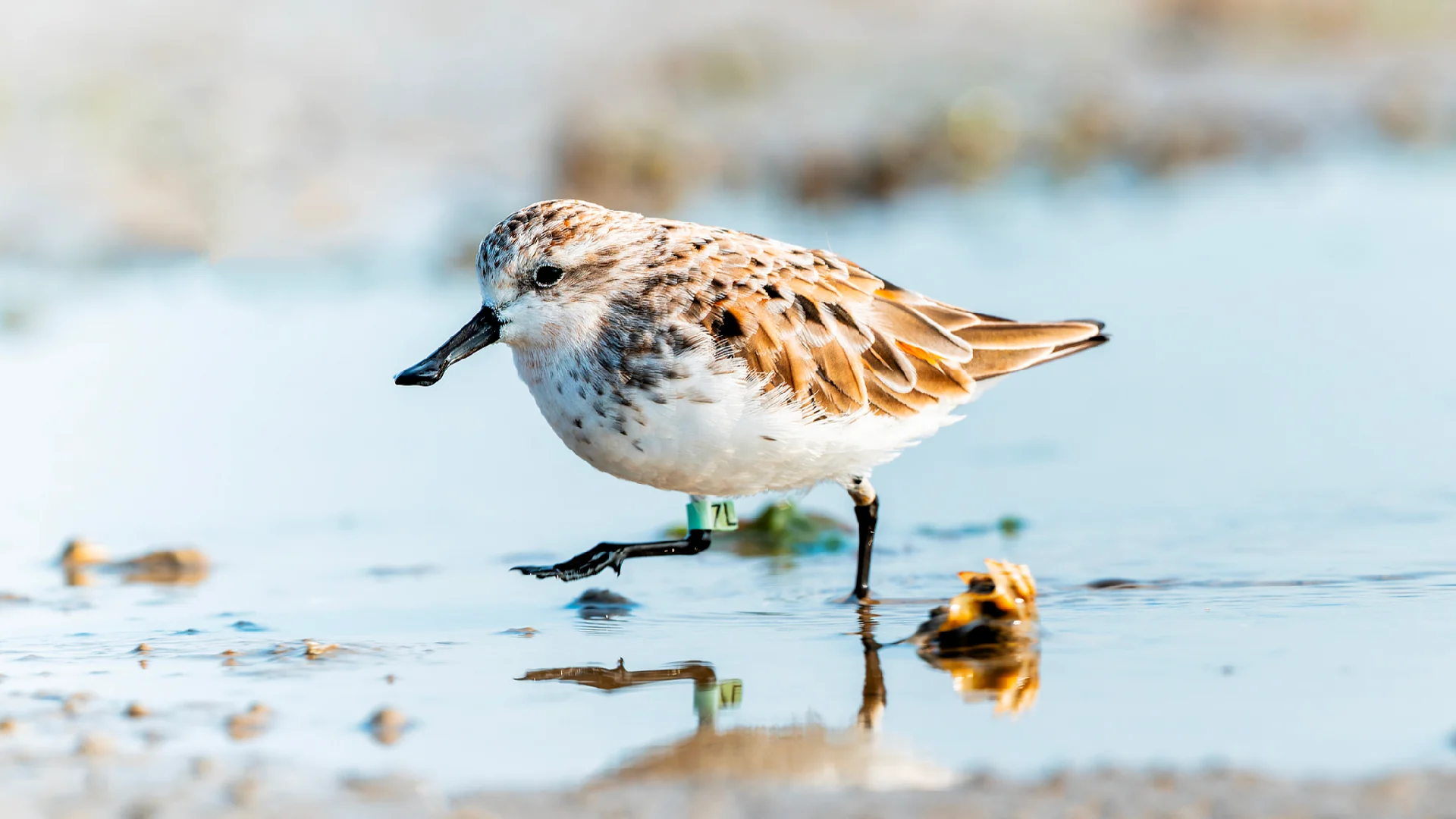
One compelling example of community-driven conservation is found at Weitou Bay Wetland in Quanzhou, southeast China’s Fujian Province. This vital coastal area, though not a designated protected zone, has become a critical wintering ground for the critically endangered spoon-billed sandpiper. Each year, over 1% of the species’ estimated global population relies on Weitou Bay for survival during the non-breeding season. The spoon-billed sandpiper undertakes a remarkable migration, traveling thousands of kilometers along the East Asian-Australasian Flyway. However, a significant challenge for this species is that only a small fraction of its essential intertidal habitats are located within protected areas.
The conservation of Weitou Bay Wetland began organically, largely driven by local bird-watching volunteers who recognized the ecological importance of the area. Their passion and dedication laid the groundwork for more organized efforts. In March 2025, this grassroots movement gained formal support when the Mangrove Conservation Foundation (MCF), in partnership with local bird-watching groups and government departments, established a dedicated conservation station. This station serves as a hub to coordinate protection activities, enhancing the effectiveness of on-the-ground efforts.
Through this collaborative structure, bird-watching groups now conduct regular monitoring and patrols, providing valuable data on the sandpiper population and the health of the wetland ecosystem. Local prosecutors have also become involved, contributing to habitat protection through public-interest litigation, ensuring legal frameworks support conservation goals. Furthermore, villagers are actively forming their own patrol teams, demonstrating a deep commitment to safeguarding their local environment. This multi-stakeholder approach, initiated by local volunteers and supported by various organizations, highlights how effective conservation can flourish outside formal protected areas.
Another inspiring instance of community involvement is taking place in Sanniang Bay, located in Qinzhou, south China’s Guangxi Zhuang Autonomous Region. Here, fishermen in a community situated outside a nature reserve are playing a crucial role in protecting horseshoe crabs. These ancient marine creatures are often accidentally caught in fishing nets. Instead of viewing them as bycatch, the local fishermen, with support from conservation networks, have become active participants in their rescue and release.
In 2021, local residents established a dedicated rescue and release group. This initiative allows fishermen to safely return accidentally caught horseshoe crabs to the sea, significantly reducing mortality rates for the species. This community-led action directly addresses a threat to horseshoe crab populations, demonstrating a practical and effective conservation measure.
The involvement of scientists and conservationists further strengthens these local efforts. Researchers, like those from Song’s team, noticed reports of declining numbers of horseshoe crabs in local fishermen’s nets. This observation prompted surveys that confirmed the presence of adult and subadult horseshoe crabs in Sanniang Bay. However, their research also revealed that the critical spawning grounds and juvenile habitats are located further east, near the Dafeng River estuary. This discovery underscores the importance of extending conservation efforts beyond the immediate vicinity of Sanniang Bay, highlighting the interconnectedness of marine ecosystems and the need for a broader conservation strategy.
The Role of Research and Scientific Expertise
Scientific research plays a pivotal role in identifying conservation priorities, understanding ecological processes, and evaluating the effectiveness of conservation interventions. In China, universities and research institutions are collaborating with conservation organizations and local communities to provide the scientific backbone for biodiversity protection efforts. Their expertise helps to pinpoint critical habitats, track species populations, and develop evidence-based conservation strategies.
Beijing Forestry University, for example, has been a key partner in the spoon-billed sandpiper conservation project. Since 2018, the university, in collaboration with the MCF, has been conducting extensive surveys across southern China. These surveys, carried out from 2019 to 2026, have been instrumental in identifying additional wintering sites for the spoon-billed sandpiper. Crucially, many of these newly identified sites lie outside of existing protected areas, reinforcing the argument for expanding conservation strategies beyond the traditional protected-area network.
The scientific data gathered through these surveys provides a clear picture of the habitat needs of migratory species like the spoon-billed sandpiper. It highlights that conservation planning must consider the entire flyway and all critical stopover and wintering locations, not just those within formally designated zones. This research empowers conservationists to advocate for the protection of these vital, often unprotected, habitats.
Similarly, in Sanniang Bay, scientific surveys led by researchers like Song were essential in understanding the full habitat requirements of horseshoe crabs. By identifying spawning grounds and juvenile habitats away from the immediate bay area, their work provided the scientific basis for advocating for broader conservation measures that encompass these additional critical zones. This scientific insight is crucial for developing effective, landscape-level conservation plans that account for the full life cycle and habitat needs of the species.
The integration of scientific expertise with on-the-ground conservation actions ensures that efforts are targeted, efficient, and based on the best available knowledge. This partnership between researchers and practitioners is a hallmark of modern conservation, enabling adaptive management and continuous improvement of strategies.
Corporate and Governmental Partnerships
Beyond community efforts and scientific research, the involvement of businesses and government agencies is indispensable for scaling up conservation initiatives and ensuring their long-term sustainability. Corporate social responsibility programs can provide much-needed funding and resources, while government policies and support create an enabling environment for conservation.
The establishment of the conservation station at Weitou Bay Wetland exemplifies the power of governmental and corporate partnerships. The MCF, a non-governmental organization, collaborated with local bird-watching groups and government departments to create this vital coordination center. This partnership demonstrates how different sectors can align their efforts towards a common conservation goal. The involvement of government departments lends authority and resources to the initiative, while the MCF provides organizational expertise and funding.
Local prosecutors, by engaging in public-interest litigation, represent another critical governmental contribution. This legal mechanism helps to enforce environmental protection laws and hold accountable those who harm natural habitats. It provides a powerful tool for safeguarding biodiversity, ensuring that legal frameworks are used to protect natural resources.
The broader governmental commitment to conservation is evident in China’s active pursuit of OECMs. By recognizing and supporting these measures, the government is signaling a willingness to embrace innovative approaches that extend conservation beyond traditional protected areas. This policy shift is crucial for meeting national and international biodiversity targets. The thematic event where these conservation efforts were highlighted, held at the China Pavilion during the 17th meeting of the Conference of the Parties to the Convention on Biological Diversity (COP17), further underscores the government’s commitment to promoting these inclusive conservation strategies on a global stage.
Businesses also have a significant role to play. While not detailed extensively in the provided research, the general principle of corporate environmental stewardship is increasingly recognized. Companies can contribute through direct funding of conservation projects, adopting sustainable business practices that minimize their environmental footprint, or engaging in partnerships that support biodiversity initiatives. The inclusion of businesses in conservation efforts can unlock new sources of funding and expertise, accelerating progress towards conservation goals.
Urban Biodiversity Conservation
Conservation efforts are not limited to remote natural landscapes; they are also extending into urban environments. Cities, often perceived as concrete jungles, can harbor surprising biodiversity and offer unique opportunities for conservation. By integrating nature into urban planning and management, cities can become more resilient, livable, and supportive of wildlife.
Nanjing Hongshan Forest Zoo in east China’s Jiangsu Province serves as an excellent example of urban biodiversity conservation. This zoo is not just a place for public display; it is actively involved in conserving native wildlife. According to Wei Ye, director of sustainability at the zoo, nearly 700 species of native wildlife, including around 130 bird species, have been recorded within its grounds. This highlights the potential for urban green spaces to support a diverse range of species.
The zoo has undertaken significant ecological restoration projects. One notable initiative involved the restoration of an artificial lake that was previously lined with hardened banks. By creating more natural shorelines and improving the connection between the water body and the surrounding vegetation, the zoo has transformed the area into a more ecologically functional habitat. This restoration has yielded positive results, with Chinese water deer observed giving birth near the restored lake, indicating that the habitat is now suitable for breeding.
These urban conservation efforts demonstrate that even in highly developed areas, there are opportunities to enhance biodiversity. By focusing on habitat restoration, creating green corridors, and managing urban green spaces with ecological principles in mind, cities can contribute significantly to overall biodiversity conservation. This approach also helps to connect urban dwellers with nature, fostering greater appreciation and support for conservation efforts.
The Significance of Other Effective Area-Based Conservation Measures (OECMs)
The examples from China underscore the growing importance of Other Effective Area-based Conservation Measures (OECMs) as a vital complement to traditional protected areas. OECMs are defined as a conserved area that achieves specific conservation outcomes for biodiversity. They are distinct from protected areas but contribute to the global conservation estate. The recognition and implementation of OECMs are critical for achieving ambitious conservation targets, such as the 30% by 2030 goal set by the Kunming-Montreal Global Biodiversity Framework.
Meeting Global Biodiversity Targets
The global community has set ambitious goals to halt and reverse biodiversity loss. The Kunming-Montreal Global Biodiversity Framework, adopted in December 2022, provides a roadmap for achieving these goals. Target 3, in particular, calls for the effective conservation and equitable management of at least 30% of terrestrial, inland water, and coastal and marine areas by 2030. This target is often referred to as “30×30.”
Achieving the 30×30 target solely through the expansion of traditional protected areas is a significant challenge. Many areas that are critical for biodiversity may not be suitable for designation as protected areas due to existing land uses, socio-economic factors, or governance structures. OECMs offer a flexible and inclusive pathway to contribute to this target. They allow for the recognition of conservation efforts that are already in place, often driven by local communities, indigenous peoples, or private landowners, and ensure that these efforts deliver measurable biodiversity outcomes.
Recognizing Diverse Stewardship Models
A key advantage of OECMs, as highlighted by Madhu Rao, is their ability to recognize the stewardship of nature by non-state actors. This is particularly relevant in contexts like China, where local communities and foundations are actively engaged in conservation outside formal protected areas. By acknowledging these diverse stewardship models, OECMs encourage broader participation in conservation and foster a sense of shared responsibility for protecting biodiversity.
The case of Weitou Bay Wetland is a prime example. The conservation efforts there were initiated and sustained by local bird-watching volunteers and later supported by the MCF and government departments. Without the framework of OECMs, these valuable conservation actions might have gone unrecognized or uncounted towards global targets. OECMs provide a mechanism to integrate these efforts into the larger conservation landscape, validating the contributions of all stakeholders.
Challenges and Opportunities for OECMs
While OECMs offer significant opportunities, their effective implementation also presents challenges. These include developing clear criteria for identifying and reporting OECMs, ensuring that they deliver genuine and long-term conservation outcomes, and establishing robust monitoring and reporting mechanisms. There is also a need for capacity building and knowledge sharing to support stakeholders in implementing and managing OECMs effectively.
However, the opportunities presented by OECMs are immense. They can unlock new conservation finance, promote innovative governance models, and foster greater collaboration among diverse actors. By embracing OECMs, countries can develop more comprehensive and effective conservation strategies that are tailored to their specific ecological and socio-economic contexts. China’s experience with initiatives like those at Weitou Bay Wetland and Sanniang Bay demonstrates a promising path forward, showcasing how a multi-stakeholder approach, supported by scientific research and governmental commitment, can lead to significant biodiversity conservation gains beyond the boundaries of protected areas.
Conclusion
The conservation of biodiversity is a complex and multifaceted endeavor that extends far beyond the traditional confines of protected areas. China’s experiences at Weitou Bay Wetland and Sanniang Bay, along with urban conservation efforts in Nanjing, vividly illustrate the power of a collaborative, multi-stakeholder approach. By bringing together local communities, researchers, businesses, and government agencies, China is demonstrating that effective conservation can be achieved through diverse, area-based measures that complement formal protected areas.
These initiatives highlight the critical role of “Other Effective Area-based Conservation Measures” (OECMs) in achieving global biodiversity targets, such as the 30×30 goal. OECMs not only expand the reach of conservation efforts but also recognize and validate the vital contributions of non-state actors and local communities in stewarding nature. As the world strives to halt biodiversity loss, the inclusive and adaptive strategies being pioneered in China offer valuable lessons and a hopeful vision for a future where conservation is a shared responsibility, benefiting both people and the planet.



Conversation
0 Comments