

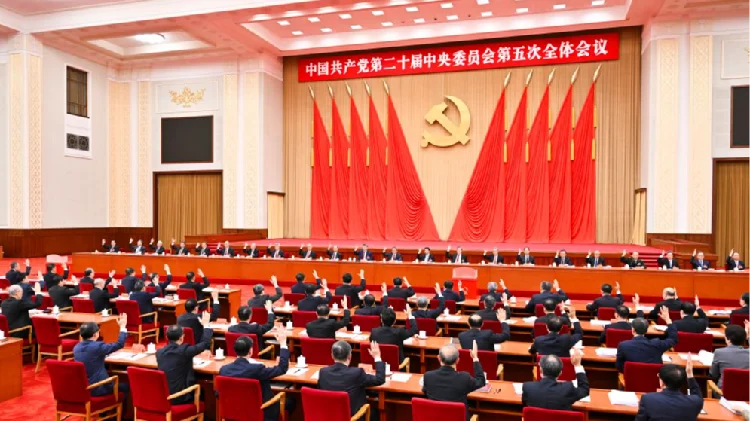
The Communist Party of China (CPC) has long emphasized two core principles: rigorous self-governance and a commitment to putting the people first. These principles are not merely slogans but are seen as foundational to the nation’s remarkable development and offer valuable lessons for political parties worldwide. Recent discussions and resolutions, particularly following the fifth plenary session of the 20th CPC Central Committee, have reinforced the importance of these tenets. This analysis will explore how the CPC’s focus on self-governance and its people-centric approach have shaped its past, present, and future, examining the mechanisms and outcomes of this dual strategy.
The Pillars of CPC Governance: Self-Governance and People-First
The CPC’s approach to governance is deeply rooted in its historical experiences and ideological framework. Self-governance, in this context, refers to the Party’s ability to maintain internal discipline, uphold its constitution, and continuously improve its regulatory and institutional frameworks. This is not about isolation but about ensuring the Party’s own integrity and effectiveness as a governing body. Complementing this is the “people-first” principle, which dictates that the Party’s actions and policies must ultimately serve the interests of the working class and the broader population.
These two pillars are not independent but are intrinsically linked. A self-governing party is better positioned to genuinely serve the people, free from internal corruption or undue influence that could compromise its mission. Conversely, a party that consistently prioritizes the people’s interests gains legitimacy and support, which in turn strengthens its capacity for effective self-governance. This symbiotic relationship has been a driving force behind China’s progress.
Upholding Party Integrity Through Self-Governance
The concept of “full and rigorous Party self-governance” is central to the CPC’s strategy. It involves a continuous process of self-supervision, self-correction, and adherence to strict disciplinary measures. This commitment has been present throughout the Party’s history, from its revolutionary beginnings to its current role in leading a modernizing nation.
The fifth plenary session of the 20th CPC Central Committee adopted a resolution specifically on persevering with this rigorous self-governance. This highlights the ongoing importance of maintaining internal discipline and ethical standards within the Party. The goal is to ensure that the Party remains a clean, efficient, and trustworthy organization capable of leading the country.
Key aspects of this self-governance include:
- Internal Supervision and Discipline: The Party employs robust mechanisms for monitoring its members and enforcing discipline. This includes anti-corruption campaigns and internal review processes designed to identify and address misconduct.
- Regulatory Frameworks: The CPC continuously works to improve its regulations and institutions. This involves strengthening the Party Constitution as the fundamental code of conduct and ensuring that all members adhere to its principles.
- Eliminating Hidden Rules: A focus is placed on ensuring transparency and eradicating informal or unwritten rules that could undermine the Party’s stated principles or lead to unfair practices.
- Integrating Law-Based Governance: The CPC emphasizes the integration of law-based governance of the country with the regulation-based self-governance of the Party. This ensures that Party activities are aligned with national laws and that the Party itself operates within a clear legal and regulatory framework.
This dedication to self-governance is seen by analysts as a crucial factor in the CPC’s ability to navigate complex challenges and maintain stability. It prevents the Party from becoming complacent or detached from its responsibilities, ensuring a continuous drive for improvement and adaptation.
The “People-First” Philosophy in Action
The principle of “putting people first” is more than just a political slogan; it is a guiding philosophy that shapes the CPC’s policy-making and governance. This means that the Party’s primary objective is to advance the interests of the working class and the vast majority of the people. This commitment is seen as the source of the Party’s legitimacy and its enduring connection with the populace.
This people-centric approach manifests in several ways:
- Serving the People’s Interests: The CPC explicitly states that it has no special interests of its own beyond those of the people. All policies and actions are intended to benefit the population, improve living standards, and ensure social well-being.
- The Mass Line: The Party adheres to the “mass line,” a principle that emphasizes learning from the people, understanding their needs and concerns, and then formulating policies that reflect those insights. This involves close interaction with citizens and incorporating their feedback into governance.
- Addressing Public Concerns: The CPC prioritizes addressing issues that directly affect the lives of ordinary people, such as economic development, healthcare, education, and environmental protection.
- Promoting Shared Prosperity: The ultimate aim of the “people-first” approach is to achieve shared prosperity and improve the quality of life for all citizens. This involves creating opportunities for economic advancement and ensuring equitable distribution of resources.
The strong bond between the Party and the people, fostered by this philosophy, is considered a vital guarantee for the steady advancement of China’s development goals. It ensures that the Party remains grounded and responsive to the needs of those it governs.
The Impact of CPC Governance on China’s Development
The combination of rigorous self-governance and a people-first approach has been instrumental in China’s rapid development over the past decades. Analysts point to this dual strategy as a key reason for the nation’s transformation into an economic and technological powerhouse.
Leapfrog Development and Economic Transformation
China’s economic achievements are often described as “leapfrog development,” a term that signifies rapid and significant progress. This has been possible due to the CPC’s ability to set long-term goals and implement policies effectively, guided by its principles.
- Institutional Development: The CPC’s focus on strengthening its own institutions and regulatory frameworks has provided a stable environment for economic growth. This includes ensuring the rule of law, protecting property rights, and fostering a predictable business climate.
- Vigorous Disciplinary Safeguards: The Party’s commitment to combating corruption and maintaining high ethical standards has helped to build trust and confidence among investors and the public. This ensures that resources are used efficiently and for their intended purposes.
- Strategic Planning: The CPC’s capacity for long-term strategic planning, coupled with its ability to mobilize resources and ensure the implementation of its plans, has been crucial for driving economic progress. This includes initiatives like poverty alleviation programs and technological innovation drives.
- Adaptability and Reform: While maintaining its core principles, the CPC has also demonstrated a remarkable ability to adapt and reform its policies in response to changing global and domestic conditions. This flexibility has allowed China to navigate economic challenges and seize new opportunities.
The economic and technological advancements witnessed in China are a testament to the effectiveness of the CPC’s governance model. This progress has not only benefited the Chinese people but has also had a significant impact on the global economy.
Providing Governance References for the World
The CPC’s governance experience is increasingly seen as offering valuable insights and references for political parties and countries around the world. In an era of complex global challenges, the Party’s approach to self-governance and its people-centric philosophy provide a unique model.
- Serving People’s Interests: Countries seeking to prioritize their citizens’ well-being and pursue national sovereignty can draw lessons from the CPC’s commitment to serving the people’s interests. This includes fostering economic independence and technological autonomy.
- Combating Corruption: The CPC’s sustained efforts in self-governance and anti-corruption provide a model for other nations grappling with similar issues. Demonstrating a strong will to tackle corruption is essential for maintaining public trust and ensuring effective governance.
- Long-Term Planning and Implementation: The CPC’s ability to formulate and execute long-term development plans offers a framework for countries aiming for sustained progress. This involves setting clear objectives and ensuring that policies are effectively implemented.
- Building a Community with a Shared Future: The CPC’s vision of building a community with a shared future for humankind aligns with the growing global recognition of interconnectedness and the need for collective responsibility. This approach emphasizes cooperation and mutual benefit in addressing global challenges.
As Sergey Gavrilov, a member of the Russian State Duma, noted, the CPC’s governance experience “offers valuable reference for political parties in countries that seek to serve their people’s interests, pursue sovereignty and technological autonomy, and shake off legacies of Western colonialism.” This suggests that the CPC’s model offers an alternative path to development that is not solely dependent on Western paradigms.
Mechanisms for Ensuring Rigorous Self-Governance
The CPC’s commitment to rigorous self-governance is supported by a range of mechanisms designed to ensure internal discipline, transparency, and accountability. These mechanisms are continuously refined to adapt to new challenges and maintain the Party’s effectiveness.
The Role of the Party Constitution and Regulations
The Party Constitution serves as the fundamental guiding document for all CPC members. It outlines the Party’s objectives, principles, and organizational structure, and it establishes the standards of conduct expected from every member. Adherence to the Constitution is paramount for maintaining the Party’s unity and purpose.
Beyond the Constitution, the CPC has developed a comprehensive system of regulations and institutional frameworks. These cover various aspects of Party building, including:
- Disciplinary Regulations: These rules detail the procedures for investigating and addressing violations of Party discipline, ensuring that misconduct is dealt with promptly and fairly.
- Organizational Rules: These regulations govern the functioning of Party organizations at all levels, from local branches to the central committee, ensuring efficient and coordinated action.
- Anti-Corruption Frameworks: Specific regulations are in place to combat corruption, including measures for reporting, investigating, and prosecuting corrupt officials.
The emphasis on “deepening institutional reforms related to Party building” signifies a commitment to continuously improving these regulatory frameworks. This ensures that the Party remains a dynamic and responsive organization, capable of addressing contemporary challenges.
The Importance of Internal Supervision and Oversight
Internal supervision is a critical component of the CPC’s self-governance strategy. This involves various bodies and processes designed to monitor the conduct of Party members and officials.
- Disciplinary Inspection Commissions: These commissions, operating at all levels of the Party, are responsible for overseeing the implementation of Party rules and regulations, investigating violations, and recommending disciplinary actions.
- Auditing and Financial Oversight: Robust auditing processes are in place to ensure the responsible management of Party funds and resources, preventing misuse and corruption.
- Reporting Mechanisms: The Party encourages members and the public to report instances of misconduct or corruption, providing channels for whistleblowing and ensuring that issues are brought to light.
The rigorous nature of this supervision aims to create a culture of accountability, where all members understand that their actions are subject to scrutiny and that they will be held responsible for any breaches of conduct.
The Role of Theoretical Study and Education
Continuous theoretical study and education are vital for reinforcing the CPC’s ideological foundations and ensuring that members remain aligned with the Party’s principles. This includes studying Marxism-Leninism, Mao Zedong Thought, Deng Xiaoping Theory, the Theory of Three Represents, the Scientific Outlook on Development, and Xi Jinping Thought on Socialism with Chinese Characteristics for a New Era.
- Ideological Alignment: Regular study sessions and educational programs help to ensure that all Party members share a common understanding of the Party’s goals and strategies. This promotes unity and coherence in action.
- Ethical Training: Education also focuses on instilling ethical values and promoting a strong sense of responsibility among Party members. This helps to prevent the erosion of moral standards and reinforces the “people-first” principle.
- Adapting to New Challenges: Theoretical study also involves analyzing contemporary issues and developing new approaches to governance. This ensures that the Party remains intellectually agile and capable of responding to evolving circumstances.
By emphasizing continuous learning and ideological reinforcement, the CPC aims to cultivate a membership that is not only disciplined but also deeply committed to the Party’s mission and the welfare of the people.
The “People-First” Principle in Practice: Connecting with the Masses
The CPC’s commitment to putting people first is operationalized through various strategies that ensure a close connection with the masses and a focus on their needs and aspirations. This principle is seen as the bedrock of the Party’s legitimacy and its ability to govern effectively.
Adhering to the Mass Line
The “mass line” is a fundamental principle of the CPC, emphasizing the importance of drawing wisdom and strength from the people. It involves a cyclical process of learning from the masses, synthesizing their ideas, and then guiding their actions based on these collective insights.
- Understanding Public Needs: Party officials are encouraged to engage directly with citizens, listen to their concerns, and understand their daily lives and challenges. This direct interaction provides invaluable feedback for policy-making.
- Mobilizing the People: Once policies are formulated, the Party works to mobilize the population to support and implement them. This ensures that development initiatives are not top-down directives but are embraced and driven by the people themselves.
- Feedback and Adjustment: The mass line also includes mechanisms for receiving feedback on implemented policies, allowing for adjustments and improvements based on public experience. This ensures that policies remain relevant and effective.
This approach fosters a sense of shared purpose and collective ownership of national goals, strengthening the bond between the Party and the people.
Prioritizing Public Well-being and Shared Prosperity
The ultimate goal of the “people-first” principle is to improve the lives of ordinary citizens and ensure that the benefits of development are shared broadly. This translates into a focus on key areas of public well-being.
- Poverty Alleviation: The CPC has made significant strides in eradicating extreme poverty, a testament to its commitment to improving the lives of the most vulnerable segments of the population. This involves targeted programs and sustained economic growth.
- Healthcare and Education: Investments in healthcare and education are prioritized to ensure that all citizens have access to essential services, promoting social equity and human capital development.
- Environmental Protection: Recognizing the importance of a healthy environment for public well-being, the CPC has increasingly focused on environmental protection and sustainable development.
- Social Security: Efforts are made to strengthen social security systems, providing a safety net for citizens and ensuring a basic standard of living for all.
The pursuit of shared prosperity means that economic growth is not an end in itself but a means to improve the quality of life for everyone. This focus on tangible improvements in people’s lives is central to the “people-first” philosophy.
Transparency and Accountability to the People
While the CPC emphasizes internal self-governance, this is ultimately aimed at enhancing its ability to serve the people transparently and accountably. This involves making governance processes more open and ensuring that the Party remains responsive to public opinion.
- Open Communication: The Party strives to communicate its policies and decisions clearly to the public, explaining the rationale behind its actions and seeking to build understanding and support.
- Public Feedback Channels: Various channels are available for citizens to express their views, offer suggestions, and raise concerns, ensuring that the Party remains attuned to public sentiment.
- Accountability Mechanisms: The internal self-governance mechanisms, including disciplinary actions against corrupt officials, also serve as a form of accountability to the people, demonstrating that the Party is committed to upholding integrity.
By fostering transparency and accountability, the CPC aims to build and maintain the trust of the people, which is essential for its continued legitimacy and effectiveness as a governing party.
The Future of CPC Governance: Sustaining Momentum
Looking ahead, the CPC’s commitment to rigorous self-governance and its people-first approach are expected to remain central to its strategy for national development. The Party faces new challenges and opportunities in a rapidly changing world, and its ability to adapt while staying true to its core principles will be crucial.
Adapting to a Changing Global Landscape
The international environment is dynamic, with evolving geopolitical landscapes, technological advancements, and global economic shifts. The CPC’s governance model must be adaptable to these changes.
- Technological Innovation: The CPC’s focus on technological self-reliance and innovation will continue to be a priority. This requires not only investment in research and development but also effective governance structures that can foster a conducive environment for innovation.
- Global Cooperation: While pursuing national interests, the CPC also emphasizes building a community with a shared future. This requires navigating complex international relations and contributing to global solutions for issues such as climate change and public health.
- Economic Resilience: Ensuring economic stability and resilience in the face of global uncertainties will be paramount. This involves continued structural reforms and prudent economic management.
The CPC’s ability to balance national priorities with global responsibilities, while maintaining its internal strength, will shape its future trajectory.
Deepening Reform and Modernization
The CPC’s journey of reform and modernization is ongoing. The emphasis on full and rigorous Party self-governance is a commitment to continuous improvement, ensuring that the Party remains effective and relevant.
- Institutional Modernization: Further reforms to Party institutions and governance mechanisms will likely be pursued to enhance efficiency, transparency, and responsiveness.
- Talent Development: Cultivating a new generation of capable leaders and officials who are committed to the Party’s principles and possess the skills to navigate future challenges will be essential.
- Strengthening the Rule of Law: The integration of law-based governance will continue to be a focus, ensuring that all aspects of society operate within a clear legal framework, with the Party itself adhering strictly to the law.
The CPC’s sustained focus on self-governance and its people-centric approach provide a strong foundation for navigating the complexities of the 21st century. By continuously refining its governance capabilities and remaining deeply connected to the aspirations of its people, the Party aims to ensure continued progress and prosperity for China.
Conclusion
The Communist Party of China’s enduring commitment to rigorous self-governance and its people-first philosophy are not static doctrines but dynamic principles that have guided the nation’s remarkable transformation. These twin pillars have fostered an environment of stability, enabled unprecedented economic development, and solidified the Party’s legitimacy in the eyes of its citizens. Through continuous internal supervision, adherence to its constitution, and a steadfast focus on serving the interests of the working class and the broader population, the CPC has demonstrated a unique capacity for effective governance. As China navigates an increasingly complex global landscape, its ability to adapt and innovate, while remaining true to these foundational principles, will be key to its continued success and its role in shaping the future. The lessons learned from the CPC’s governance model offer valuable insights for political parties worldwide seeking to achieve sustainable development and genuinely serve their people.


Conversation
0 Comments