

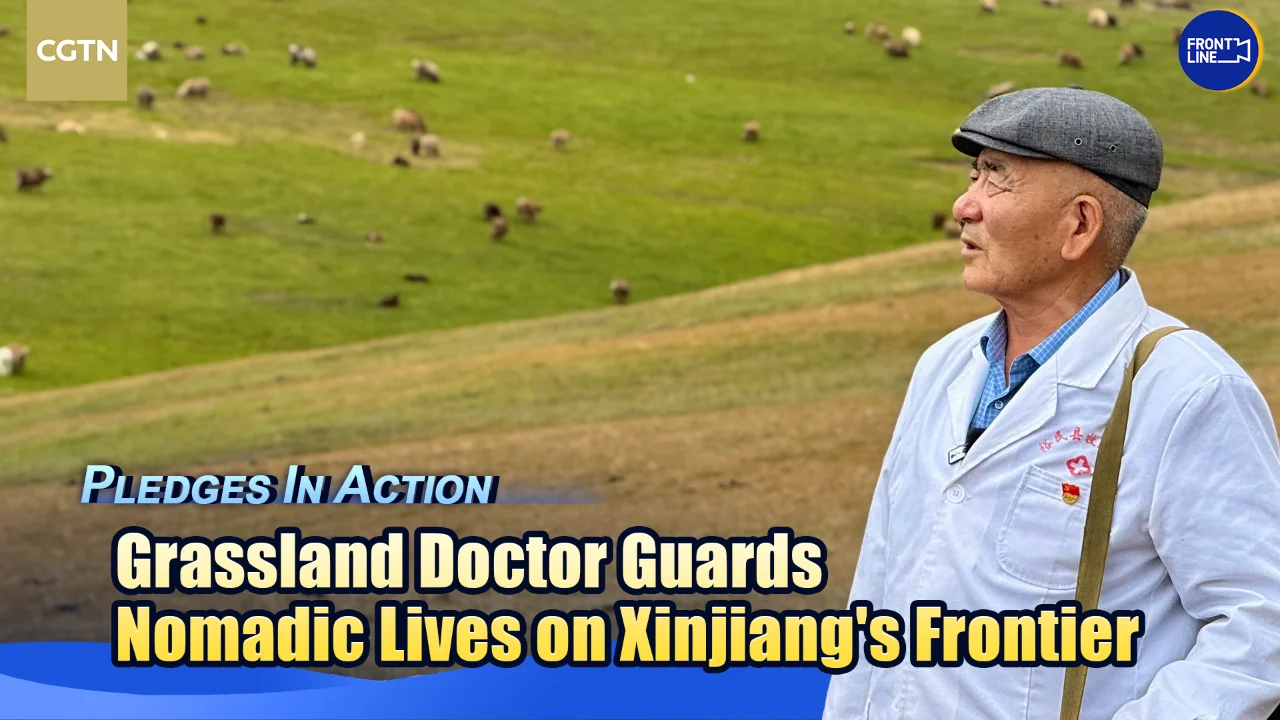
The Unwavering Commitment of a Grassland Doctor: Uhas Sulayman’s Legacy in Xinjiang
In the vast, windswept expanses of Xinjiang’s Yumin County, where life moves with the rhythm of the seasons and the needs of nomadic herders are as ancient as the land itself, one individual has dedicated his life to safeguarding their well-being. Dr. Uhas Sulayman, a physician and a member of the Communist Party of China, embodies a profound commitment to his community. For decades, he has traversed the steppes, bringing essential medical care to remote areas and ensuring that the nomadic way of life, though challenging, is also healthy and secure. His story is one of unwavering dedication, a testament to the impact one person can have when driven by a deep sense of duty and compassion.
Dr. Sulayman’s journey began with a clear understanding of the unique healthcare challenges faced by nomadic populations. Far from established medical facilities, these communities often struggle to access timely and consistent medical attention. Recognizing this critical gap, Dr. Sulayman embraced the demanding role of a “grassland doctor,” a title that signifies not just a profession but a way of life. His work involves more than just treating illnesses; it encompasses preventative care, health education, and a deep understanding of the cultural context in which his patients live. This holistic approach has made him an indispensable figure in the region, earning him the respect and gratitude of generations of herders.
The July 1 Medal, a high honor bestowed upon outstanding Party members, recognizes Dr. Sulayman’s exceptional contributions. This award highlights his tireless efforts and the significant impact he has had on the lives of countless individuals. Even in retirement, his protective footsteps continue to resonate, as his legacy inspires ongoing efforts to provide healthcare to those in need. The story of Dr. Uhas Sulayman is a powerful reminder of the human spirit’s capacity for service and the enduring importance of dedicated healthcare professionals in even the most remote corners of the world.
The Demands of Nomadic Healthcare
The life of a nomadic herder in Xinjiang’s vast grasslands presents a unique set of challenges, particularly when it comes to healthcare. These communities are often spread across immense distances, making regular access to medical facilities a significant hurdle. The very nature of their mobile lifestyle, following grazing lands for their livestock, means that fixed healthcare infrastructure can be difficult to establish and maintain effectively. This geographical isolation is compounded by the harsh environmental conditions, which can exacerbate existing health issues and create new ones.
Dr. Uhas Sulayman’s career has been defined by his willingness to confront these challenges head-on. As a grassland doctor, his practice extends far beyond the confines of a traditional clinic. He has spent years traveling across the steppes, often on horseback or in rugged vehicles, to reach remote encampments. This requires not only medical expertise but also immense physical stamina and a deep understanding of the local terrain and weather patterns. The unpredictability of nomadic life means that medical emergencies can arise at any time, demanding constant vigilance and readiness from healthcare providers like Dr. Sulayman.
The health concerns prevalent among nomadic populations are diverse. They range from common ailments like respiratory infections, which can be exacerbated by exposure to the elements, to injuries sustained during herding activities. Chronic conditions, such as diabetes and hypertension, also require ongoing management, which is made more difficult by the lack of consistent access to medication and regular check-ups. Furthermore, the specific needs of women and children, including prenatal care and pediatric health, are critical components of a comprehensive healthcare strategy for these communities. Dr. Sulayman’s work has involved addressing all these aspects, often with limited resources and under challenging circumstances. His dedication has ensured that these vital services reach those who might otherwise be left without.
A Doctor’s Journey: Dedication and Service
Dr. Uhas Sulayman’s path to becoming a respected grassland doctor is a story of deep personal commitment and unwavering service. From the outset of his medical career, he recognized the profound need for healthcare professionals in the remote regions of Xinjiang. The nomadic herders, who form a significant part of the local population, faced considerable difficulties in accessing medical assistance due to the vast distances and challenging terrain. This understanding fueled his determination to dedicate his life to serving these communities, embracing a role that demanded more than just medical knowledge.
His work was characterized by a proactive approach. Instead of waiting for patients to travel to him, Dr. Sulayman made it his mission to travel to them. This involved extensive journeys across the grasslands, often covering hundreds of miles. He would spend days, and sometimes weeks, moving from one encampment to another, carrying his medical supplies and equipment. This mobile clinic model was essential for providing timely care, from routine check-ups and vaccinations to treating acute illnesses and injuries. His presence brought not only medical relief but also a sense of security and reassurance to the isolated communities.
The challenges were immense. Dr. Sulayman had to contend with unpredictable weather, difficult road conditions, and the constant need to adapt to the nomadic lifestyle. He learned to navigate the vast steppes, understand the local culture, and build strong relationships with the herders. This deep connection allowed him to gain their trust, which is paramount in providing effective healthcare. His dedication went beyond mere professional duty; it was a calling, a genuine desire to improve the lives of the people he served. This personal investment in his patients’ well-being is what truly defined his remarkable career and earned him the admiration of his peers and the community.
The Role of the Communist Party of China
The Communist Party of China (CPC) plays a significant role in shaping the lives and communities within Xinjiang, and Dr. Uhas Sulayman’s story is deeply intertwined with this framework. As a member of the CPC, Dr. Sulayman’s dedication to public service and his commitment to improving the lives of ordinary people align with the Party’s stated goals of social development and welfare. The CPC often emphasizes the importance of Party members serving as role models and actively contributing to the betterment of society, particularly in remote and underserved areas.
Dr. Sulayman’s work as a grassland doctor exemplifies this principle. The Party’s support, whether through resource allocation, policy implementation, or recognition of outstanding members, likely facilitated his ability to carry out his demanding duties. Initiatives aimed at improving healthcare access in rural and nomadic regions are often spearheaded or supported by the Party, ensuring that essential services reach populations that might otherwise be marginalized. His recognition with the July 1 Medal, a prestigious award for Party members, underscores the Party’s acknowledgment of his exceptional contributions and his embodiment of its ideals.
Furthermore, the Party’s emphasis on national unity and ethnic solidarity is particularly relevant in a region as diverse as Xinjiang. By serving all members of the community, regardless of their ethnic background, Dr. Sulayman’s work contributes to fostering a sense of shared well-being and mutual respect. His commitment to the nomadic herders, a distinct cultural group within Xinjiang, reflects a broader effort to integrate and support all populations within the framework of national development. The Party’s organizational structure and its network of local branches likely provided a supportive environment for his medical practice, enabling him to connect with communities and address their needs effectively.
Beyond Retirement: A Lasting Impact
Even after concluding his active professional career, Dr. Uhas Sulayman’s influence continues to resonate within the communities he served. His retirement marks not an end to his contribution, but a transition to a new phase where his legacy inspires ongoing efforts in healthcare provision for nomadic populations. The deep respect and trust he cultivated over decades have left an indelible mark, fostering a greater appreciation for medical care and preventative health practices among the herders. His story serves as a powerful example for younger generations of healthcare professionals, encouraging them to consider careers in underserved areas.
The impact of his work extends beyond individual patient care. Dr. Sulayman’s decades of service have likely contributed to a more robust understanding of the specific health needs of nomadic communities within the regional healthcare system. His experiences and insights could inform policy decisions and resource allocation, ensuring that future healthcare initiatives are tailored to the unique challenges of grassland living. The establishment of improved healthcare infrastructure or mobile medical units in the regions he served can be seen as a direct or indirect consequence of the groundwork he laid and the needs he consistently highlighted.
Moreover, his dedication has likely inspired a sense of community responsibility. The herders, having witnessed firsthand the commitment of a single individual, may be more inclined to support and participate in local health initiatives. This collective spirit is vital for the long-term sustainability of healthcare services in remote areas. Dr. Sulayman’s enduring presence, even in retirement, as a respected elder and a symbol of selfless service, continues to guide and motivate those who strive to uphold the health and well-being of Xinjiang’s nomadic populations. His footsteps, though no longer actively traversing the steppes for his daily rounds, continue to pave the way for a healthier future.
Challenges and Innovations in Grassland Healthcare
The practice of medicine in grassland environments presents a unique set of challenges that require innovative solutions. Dr. Uhas Sulayman’s career highlights the constant need for adaptability and resourcefulness when providing healthcare to nomadic populations. One of the primary hurdles is the sheer remoteness of these communities. Traditional healthcare models, which rely on fixed clinics and hospitals, are often impractical. This necessitates a mobile healthcare approach, where medical professionals travel to the patients.
The logistical complexities of such a model are significant. Transporting medical equipment, medications, and supplies across vast distances, often over unpaved roads or rough terrain, demands careful planning and robust vehicles. Dr. Sulayman likely relied on sturdy vehicles and perhaps even animal transport in certain areas. Furthermore, maintaining the cold chain for vaccines and certain medications in extreme temperatures, both hot and cold, is a critical concern that requires specialized equipment and protocols.
Technological advancements are beginning to offer new possibilities for overcoming these challenges. Telemedicine, for instance, can connect remote patients with specialists in urban centers, allowing for remote consultations and diagnosis. Mobile health applications can help track patient records, manage appointments, and provide health education. While these innovations may not entirely replace the need for in-person visits, they can significantly augment the reach and effectiveness of grassland healthcare. Dr. Sulayman’s work, though predating many of these modern technologies, laid the essential foundation of trust and accessibility upon which such innovations can now be built. His dedication demonstrated the critical importance of bringing healthcare directly to the people, a principle that remains central to any successful approach to rural and nomadic medicine.
The Human Element: Trust and Cultural Understanding
In any healthcare setting, the relationship between a medical professional and their patient is built on trust. This is especially true in remote and culturally distinct communities, such as those inhabited by nomadic herders in Xinjiang. Dr. Uhas Sulayman’s success as a grassland doctor is not solely attributable to his medical skills, but also to his profound ability to connect with his patients on a human level and his deep respect for their culture.
Nomadic communities often have their own traditional healing practices and beliefs, which are deeply ingrained in their way of life. For healthcare providers to be effective, they must approach these communities with cultural sensitivity and a willingness to understand their perspectives. Dr. Sulayman, by spending decades living and working among the herders, gained an intimate understanding of their customs, values, and daily routines. This allowed him to integrate modern medical practices in a way that was respectful of their traditions, rather than imposing them.
Building trust in such environments takes time and consistent effort. It involves not only providing excellent medical care but also demonstrating genuine care and empathy. Dr. Sulayman’s willingness to travel long distances, often in difficult conditions, to reach his patients sent a powerful message of commitment. He was not just a doctor; he was a trusted member of the community, someone who understood their struggles and was dedicated to their well-being. This human element, the personal connection and cultural understanding, is often the most critical factor in ensuring that healthcare services are accepted and utilized effectively by remote and nomadic populations. His legacy underscores the fact that medicine is as much about human connection as it is about scientific knowledge.
Conclusion: A Legacy of Care on the Frontier
Dr. Uhas Sulayman’s life and career stand as a powerful testament to the enduring spirit of service and the profound impact of dedicated healthcare professionals. For decades, he has been more than just a doctor; he has been a guardian of health and well-being for the nomadic herders of Xinjiang’s vast grasslands. His unwavering commitment to reaching remote communities, often under challenging conditions, has ensured that essential medical care is not a luxury but a reality for those living on the frontier.
His journey, deeply intertwined with his role as a member of the Communist Party of China, exemplifies the ideal of public service, demonstrating how individual dedication can align with broader societal goals of development and welfare. The recognition he received, including the prestigious July 1 Medal, highlights the significance of his contributions and his embodiment of the Party’s commitment to its people. Even in retirement, the influence of his work continues to inspire, fostering a greater appreciation for healthcare and encouraging future generations to serve in underserved areas.
The challenges inherent in providing healthcare to nomadic populations are immense, from geographical isolation to environmental extremes. Dr. Sulayman’s innovative and persistent approach, characterized by his mobile clinic model and deep cultural understanding, has paved the way for more effective healthcare strategies in such environments. His ability to build trust and foster genuine human connection underscores the vital importance of cultural sensitivity in medical practice. The legacy of Dr. Uhas Sulayman is not merely one of medical treatment, but of compassionate care, unwavering dedication, and a profound commitment to the lives and livelihoods of the people he served on Xinjiang’s frontier.

Conversation
0 Comments