

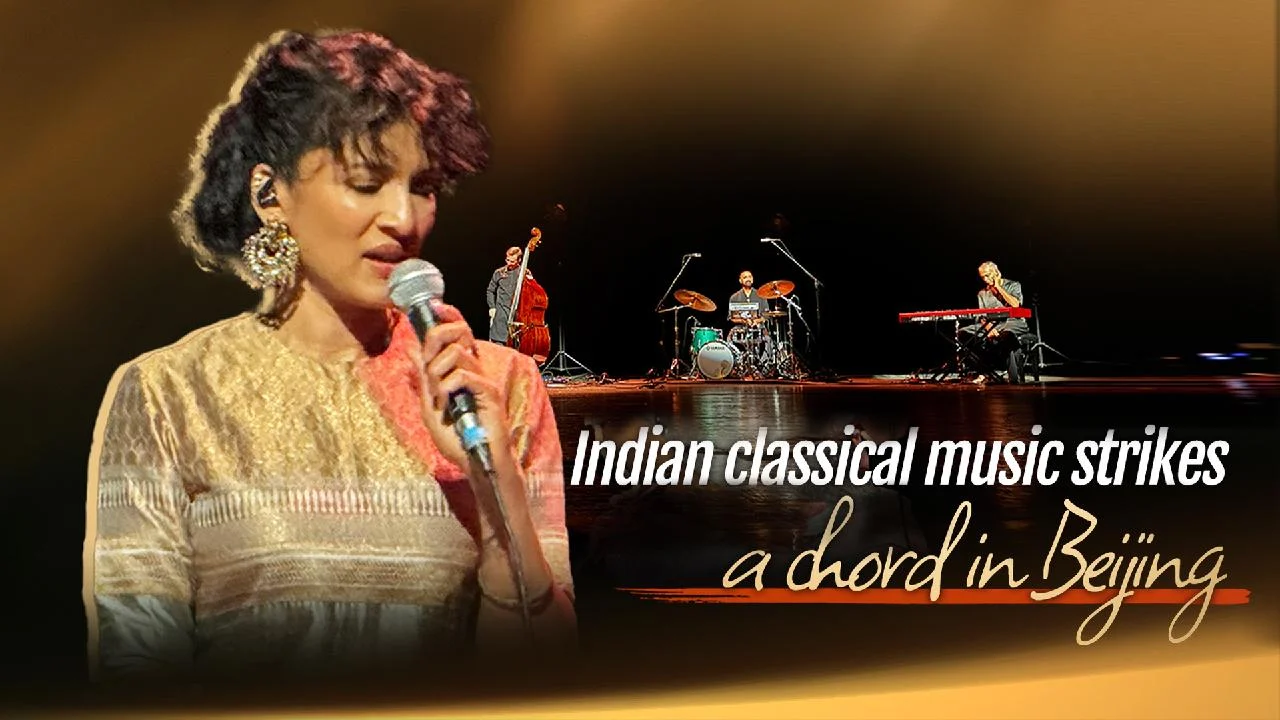
The world of music is a vast and diverse landscape, with traditions that span continents and centuries. While Western classical music and popular genres often dominate global attention, many other rich musical heritages exist, offering unique sounds, structures, and emotional depths. Among these is Indian classical music, a tradition with a history stretching back thousands of years. This ancient art form, characterized by its complex melodic and rhythmic frameworks, is increasingly finding new ears and appreciation beyond its native land.
Recently, the 29th Beijing Music Festival showcased the captivating power of Indian classical music when sitar virtuoso Anoushka Shankar performed. Her concert, which blended traditional Indian melodies with contemporary influences, resonated with audiences in Beijing, drawing praise from both seasoned enthusiasts and newcomers. This event highlights a growing interest in diverse musical traditions and the ways in which they can connect with global audiences. Understanding the core elements of Indian classical music, its historical context, and its modern adaptations can shed light on why it continues to strike a chord with people from different cultural backgrounds. This article will explore the fundamental aspects of Indian classical music, its evolution, and its appeal in a globalized world, examining how it maintains its essence while embracing new forms of expression.
The Foundations of Indian Classical Music
Indian classical music is not a monolithic entity but rather a broad term encompassing two major traditions: Hindustani music from North India and Carnatic music from South India. While they share a common ancient root, they have developed distinct characteristics over centuries of regional evolution. Both traditions are built upon a sophisticated system of melody and rhythm that is profoundly different from Western musical structures.
Raga: The Melodic Framework
At the heart of Indian classical music lies the concept of the raga. A raga is far more than just a scale; it is a melodic framework that defines a specific set of notes, their characteristic ascending and descending movements, and specific phrases or motifs that are unique to it. Each raga is associated with a particular mood, time of day, or season, imbuing the music with a deep emotional and spiritual dimension. For instance, Raga Yaman is often performed in the evening and evokes a sense of peace and devotion, while Raga Bhairav, typically sung in the early morning, conveys a more somber and introspective feeling.
The performance of a raga is not a rigid recitation but a creative exploration. Musicians improvise within the established rules of the raga, allowing for a spontaneous and personal expression of its essence. This improvisational aspect is a key differentiator from many Western musical forms, where adherence to a written score is paramount. The musician’s skill lies in their ability to understand the raga deeply and to present its nuances in a way that is both technically brilliant and emotionally resonant. The subtle ornamentation, the slides between notes (known as meend), and the characteristic melodic turns are all integral to conveying the raga’s identity and mood.
Tala: The Rhythmic Cycle
Complementing the melodic structure of the raga is the rhythmic framework known as tala. A tala is a cyclical rhythmic pattern that provides the pulse and structure for the music. Talas vary in length and complexity, ranging from simple cycles of four beats to elaborate patterns with many more beats, often divided into sections with different stresses. The most common talas in Hindustani music include Teentaal (16 beats), Keherwa (8 beats), and Dadra (6 beats). In Carnatic music, popular talas include Adi Tala (8 beats) and Rupaka Tala (3 beats).
The percussionist, often playing the tabla in Hindustani music or the mridangam in Carnatic music, is responsible for maintaining the tala. However, the vocalist or instrumentalist also engages with the tala, improvising melodies that fit within its structure and often creating intricate rhythmic dialogues with the percussionist. This interplay between melody and rhythm is a hallmark of Indian classical music, creating a dynamic and engaging listening experience. The rhythmic complexity can be astonishing, with musicians often performing “jugalbandi” (duels) where they showcase their mastery by creating complex rhythmic patterns and improvisations that fit within the overarching tala.
Drone and Harmony
A distinctive feature of Indian classical music is the presence of a constant drone, typically provided by a tanpura. The tanpura plays the tonic note (Sa) and often the fifth note (Pa) or fourth note (Ma) of the raga. This continuous harmonic background creates a stable sonic environment against which the melody unfolds, grounding the listener and enhancing the meditative quality of the music. Unlike Western music, which relies heavily on chord progressions and harmonic changes, Indian classical music focuses on the linear development of melody over a fixed harmonic base. This emphasis on melody and rhythm, supported by the drone, creates a unique sonic texture that is both ancient and timeless.
The Two Streams: Hindustani and Carnatic Music
While sharing a common ancestry, Hindustani and Carnatic music have evolved along distinct paths, influenced by geographical, historical, and cultural factors.
Hindustani Music
Hindustani music, prevalent in North India, has been significantly influenced by Persian and Arabic musical traditions, particularly during the Mughal era. This influence is evident in the ornamentation, the vocal styles, and the development of instruments like the sitar and sarod. Hindustani music is characterized by its emphasis on improvisation and the exploration of the raga’s mood and emotional depth. The performance often begins with a slow, meditative section called alap, where the musician gradually introduces the notes and phrases of the raga without any rhythmic accompaniment. This is followed by jor, where a pulse is introduced, and then jhala, a faster section with rhythmic strumming. The main part of the performance is the gat, a composed melody that serves as a basis for improvisation within a specific tala.
Hindustani music features a wide array of instruments, including the sitar, sarod, tabla, bansuri (bamboo flute), and violin (adapted to Indian classical styles). Vocal styles are diverse, with forms like khyal, dhrupad, and thumri each offering a unique approach to expressing ragas and emotions. Khyal is the most popular form today, known for its elaborate improvisations and emotional depth. Dhrupad is an older, more austere form, emphasizing devotional themes and a slower, more meditative presentation. Thumri is a lighter, more lyrical form, often expressing romantic themes.
Carnatic Music
Carnatic music, dominant in South India, has remained more closely aligned with its ancient roots, with less external influence compared to its northern counterpart. It is known for its intricate compositions, its emphasis on vocal music, and its structured approach to improvisation. While improvisation is present, it is often more composition-based, with musicians elaborating on pre-existing compositions. The core of Carnatic music lies in its kritis, a form of devotional song that is central to performances. These compositions are highly structured and often contain complex rhythmic and melodic passages.
The primary instruments in Carnatic music include the violin, mridangam, veena, flute, and ghatam (a clay pot). Vocal music is highly revered, with singers often performing elaborate improvisations called raga alapanai (melodic exploration) and kalpanaswaram (improvisation using solfege syllables) within the framework of a composition. The system of ragas and talas in Carnatic music is highly codified, with a vast repertoire of compositions and a systematic approach to teaching and learning. The emphasis is on the clarity of the melody and the precision of the rhythm, often leading to a more intellectually engaging experience for the listener.
The Appeal of Indian Classical Music in a Global Context
The performance by Anoushka Shankar in Beijing is a testament to the growing global appeal of Indian classical music. Several factors contribute to this cross-cultural resonance.
Emotional Depth and Universality
Despite the intricate structures and specific cultural contexts of ragas and talas, the emotional core of Indian classical music is often universally understood. The moods evoked by different ragas—joy, sorrow, peace, devotion—are human emotions that transcend cultural boundaries. Listeners may not understand the theoretical underpinnings, but they can connect with the feeling conveyed by the music. The meditative quality of the drone, the expressive nuances of the melody, and the dynamic interplay of rhythm can create a profound emotional experience for anyone, regardless of their background.
The Art of Improvisation
The improvisational nature of Indian classical music is a significant draw for audiences accustomed to more structured Western music. The idea of a musician creating music spontaneously, exploring the depths of a raga in real time, is captivating. It offers a glimpse into the artist’s mind and spirit, making each performance unique and alive. This element of surprise and discovery can be incredibly engaging, drawing listeners into the unfolding musical narrative. The risk and reward inherent in improvisation create a thrilling dynamic that can hold an audience spellbound.
Fusion and Modern Adaptations
The blending of Indian classical music with other genres, as exemplified by Anoushka Shankar’s work, is a key factor in its increasing accessibility. By incorporating elements of jazz, electronic music, or Western classical music, artists can create new sounds that appeal to a broader audience. These fusion forms often retain the essence of the raga and tala but present them in a more familiar sonic landscape. This approach allows listeners to gradually discover and appreciate the underlying Indian classical elements, acting as a gateway to the more traditional forms. Such collaborations bridge cultural divides and introduce traditional music to new generations and diverse audiences.
The Influence of Global Platforms
The internet and global media have played a crucial role in disseminating Indian classical music worldwide. Platforms like YouTube, streaming services, and international music festivals provide unprecedented access to performances, educational content, and artist profiles. This increased visibility allows people from all corners of the globe to discover and engage with the music. Documentaries, online courses, and virtual concerts further demystify the tradition and make it more approachable for those who might not have direct access to live performances or traditional learning environments.
Challenges and Opportunities
Despite its growing popularity, Indian classical music faces challenges in maintaining its traditional integrity while adapting to modern trends.
Preserving Authenticity
One of the primary concerns for purists is the potential dilution of the tradition through excessive fusion or commercialization. The depth and complexity of Indian classical music require dedicated study and practice. There is a risk that simplified or Westernized versions might overshadow the authentic art form, leading to a superficial understanding. Balancing innovation with tradition is a delicate act, requiring artists to be deeply rooted in the classical principles before venturing into experimental territories. The challenge lies in ensuring that adaptations serve to broaden appreciation without compromising the core values and aesthetic principles of the music.
Education and Accessibility
Making Indian classical music accessible to a wider audience requires effective educational strategies. Traditional learning often involves years of dedicated tutelage under a guru. While this guru-shishya parampara (master-disciple tradition) is invaluable, it can be a barrier for many. Developing modern pedagogical approaches, including online resources, workshops, and introductory courses, can help bridge this gap. The goal is to provide pathways for learning that are both rigorous and accessible, catering to different learning styles and time commitments.
The Role of Festivals and Institutions
Music festivals and cultural institutions play a vital role in promoting Indian classical music. Events like the Beijing Music Festival, where Anoushka Shankar performed, provide crucial platforms for artists to reach international audiences. Similarly, organizations dedicated to promoting classical music, both within India and abroad, are essential for fostering appreciation and supporting artists. These platforms not only showcase performances but also often host educational events, workshops, and discussions that deepen audience understanding and engagement.
The Future of Indian Classical Music
The future of Indian classical music appears promising, marked by a dynamic interplay between tradition and innovation. Artists are increasingly exploring new avenues for expression, collaborating with musicians from diverse backgrounds, and utilizing technology to reach global audiences. The success of artists like Anoushka Shankar demonstrates that this ancient art form has a vibrant present and a compelling future.
The continued interest in Indian classical music suggests a universal human need for profound artistic expression that connects with deep emotions and intricate structures. As the world becomes more interconnected, the appreciation for diverse cultural traditions, including their musical forms, is likely to grow. The ability of Indian classical music to evoke powerful feelings, engage the intellect through its rhythmic and melodic complexity, and inspire awe through its improvisational artistry ensures its enduring appeal. By embracing new forms of presentation and education, Indian classical music is poised to continue captivating hearts and minds across the globe for generations to come.
Conclusion
Indian classical music, with its rich history and sophisticated structures of raga and tala, offers a profound and captivating artistic experience. The recent performance by Anoushka Shankar in Beijing underscores its growing international appeal, demonstrating that its emotional depth and improvisational artistry resonate with audiences worldwide. While the Hindustani and Carnatic traditions have distinct characteristics, both share a common goal of exploring the expressive potential of melody and rhythm. As fusion forms and global platforms make this ancient art more accessible, the challenge lies in preserving its authenticity while fostering broader appreciation. The future of Indian classical music is bright, promising continued innovation and a deepening connection with a global audience eager to explore its timeless beauty.


Conversation
0 Comments