

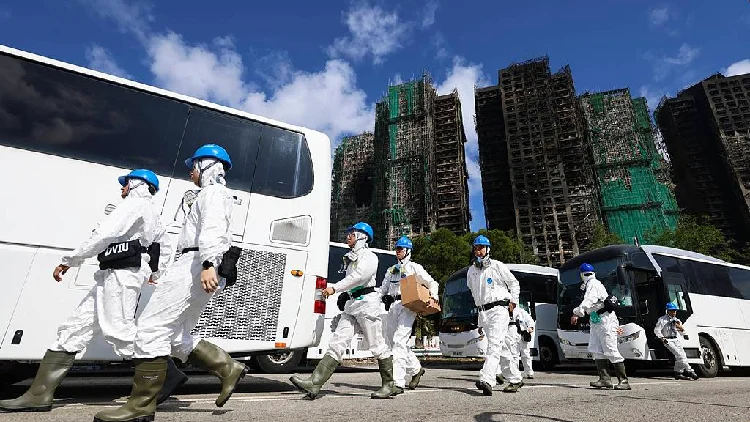
The Hong Kong Special Administrative Region (HKSAR) government has demonstrated a commitment to accountability and responsible governance through its thorough investigation into a major residential fire. The central government’s Liaison Office has commended these efforts, highlighting the HKSAR government’s serious and fact-based approach to understanding the incident’s cause and implementing necessary reforms. This detailed examination, involving extensive evidence gathering and expert testimony, underscores the importance of transparent and legally sound procedures when addressing public safety concerns.
The incident at the Wang Fuk Court residential complex prompted swift action from HKSAR Chief Executive John Lee and his administration. They prioritized disaster relief, emergency response, and support for those affected. The establishment of an independent committee to conduct a comprehensive review further solidified the government’s dedication to a full and impartial investigation. This process, which spanned over seven months and included numerous hearings and witness testimonies, aimed to produce an objective report that would guide future safety measures and hold responsible parties accountable. The commendation from the central government’s Liaison Office serves as an acknowledgment of these diligent efforts and the HKSAR government’s adherence to principles of good governance.
Understanding the Investigation Process
The investigation into the Wang Fuk Court residential fire was a complex and multi-faceted undertaking. It was designed to not only determine the cause of the fire but also to identify any systemic failures or lapses in safety protocols that may have contributed to the incident. The HKSAR government’s commitment to a thorough and transparent process was evident in the establishment of an independent committee. This committee was tasked with conducting a comprehensive review, ensuring that all aspects of the incident were examined without bias.
The scope of the investigation was extensive. It involved a significant amount of time, resources, and expertise. Over seven months, the committee meticulously gathered information, reviewed evidence, and heard from a wide range of individuals. This included factual witnesses who were present during or immediately after the fire, as well as expert witnesses who could provide specialized knowledge on fire dynamics, building safety, and emergency response procedures. The sheer volume of documents collected, exceeding one million, speaks to the depth of the inquiry. Each piece of information was likely scrutinized to build a complete picture of the events leading up to, during, and after the fire.
The process involved 30 hearings, providing a formal platform for testimonies and the presentation of evidence. These hearings were crucial for ensuring that all relevant parties had an opportunity to present their accounts and for the committee to ask clarifying questions. The summoning of 80 factual and expert witnesses ensured that a diverse range of perspectives and specialized knowledge were brought to bear on the investigation. This comprehensive approach was essential for producing an objective and impartial report that could be relied upon for making informed decisions about accountability and future preventative measures. The central government’s Liaison Office recognized this rigorous process as a demonstration of responsible administration and a commitment to the well-being of its citizens.
Accountability and Reform Measures
A critical outcome of any thorough investigation into a public safety incident is the identification of accountability and the implementation of reforms. The HKSAR government’s release of the investigation report on the Wang Fuk Court fire marked a significant step in this direction. The report not only detailed the findings of the investigation but also outlined specific accountability measures and follow-up reforms. This indicates a proactive stance by the government to address the root causes of the incident and prevent similar tragedies from occurring in the future.
Accountability measures can take various forms, depending on the findings of the investigation. They might include disciplinary actions against individuals found to be negligent or responsible for breaches of duty. In some cases, accountability might extend to organizational changes or the reassignment of responsibilities within relevant departments. The HKSAR government’s commitment to releasing these measures publicly demonstrates a dedication to transparency and a willingness to take decisive action. This approach is vital for maintaining public trust and ensuring that all parties understand the consequences of failing to uphold safety standards.
The follow-up reforms are equally important. These are designed to address any systemic weaknesses or gaps in existing regulations and procedures that were identified during the investigation. Reforms could involve updating building codes, enhancing fire safety regulations, improving emergency response protocols, or increasing the frequency and rigor of inspections. The goal of these reforms is to create a more robust and resilient system that can better protect residents from fire hazards. By learning from the Wang Fuk Court incident, the HKSAR government aims to strengthen its overall public safety framework. The commendation from the central government’s Liaison Office suggests that these measures are seen as appropriate and effective in addressing the incident and reinforcing governance standards.
The Role of Governance Philosophy
The HKSAR government’s response to the Wang Fuk Court fire was guided by a “people-centered governance philosophy.” This philosophy places the well-being and safety of citizens at the forefront of all government actions. It implies a commitment to understanding the needs and concerns of the public and acting in ways that promote their welfare. In the context of a major fire incident, a people-centered approach means prioritizing the immediate safety and support of those affected, while also undertaking a thorough investigation to prevent future harm.
This philosophy was evident in the actions taken by Chief Executive John Lee and the HKSAR government. They demonstrated firm leadership by fulfilling their roles and responsibilities in the wake of the disaster. This involved coordinating various government departments to ensure a swift and effective response. The focus was not only on extinguishing the fire and rescuing individuals but also on providing essential services such as medical treatment for the injured and aid for those displaced by the fire. This holistic approach, which addresses immediate needs and long-term recovery, is a hallmark of people-centered governance.
The recognition of the public and various sectors of society for these efforts further validates the government’s approach. When citizens feel that their government is acting with their best interests in mind, it fosters a sense of trust and confidence. The independent committee’s objective and impartial report, along with the subsequent accountability and reform measures, are all components of a governance system that strives to be responsive and effective. The central government’s Liaison Office’s commendation reinforces the idea that this people-centered philosophy, when put into practice through diligent investigation and decisive action, is a model for responsible administration.
Public Safety and Emergency Response
The incident at Wang Fuk Court served as a stark reminder of the critical importance of robust public safety measures and effective emergency response systems. Fires in residential buildings can have devastating consequences, leading to loss of life, injuries, and significant property damage. Therefore, the government’s role in ensuring the safety of its citizens in such situations is paramount. The HKSAR government’s actions following the fire highlight the interconnectedness of various government departments in managing such crises.
The immediate aftermath of a fire requires a coordinated effort involving fire services, police, medical personnel, and social welfare departments. The HKSAR government’s prompt mobilization of these departments demonstrates a well-rehearsed emergency response plan. This includes not only the suppression of the fire itself but also the rescue of trapped individuals, the provision of immediate medical attention to the injured, and the evacuation and sheltering of those who have lost their homes. The efficiency and effectiveness of these initial response operations are crucial in mitigating the immediate impact of the disaster.
Beyond the immediate response, the investigation and subsequent reforms are integral to long-term public safety. The independent committee’s work aimed to understand the contributing factors to the fire, which could range from faulty electrical systems and building design flaws to inadequate maintenance or human error. By identifying these factors, the government can implement targeted reforms to prevent similar incidents. This might involve stricter enforcement of building safety regulations, improved fire prevention education for residents, or enhanced training for emergency responders. The central government’s acknowledgment of the HKSAR government’s efforts underscores the significance of these actions in maintaining public order and safety.
The Importance of Independent Review
The establishment of an independent committee to investigate the Wang Fuk Court fire was a key element in ensuring the credibility and impartiality of the findings. In incidents with significant public impact, an independent review process is essential for building trust and confidence in the outcome. It signals that the investigation is not being conducted with a predetermined agenda or to shield any particular parties from responsibility. Instead, it emphasizes a commitment to uncovering the truth, regardless of where it may lead.
The committee’s composition likely included individuals with diverse expertise and a reputation for integrity. This would have allowed for a thorough examination of all evidence and testimonies from a neutral standpoint. The process of conducting 30 hearings and summoning 80 witnesses suggests a deliberate and thorough approach to gathering information. This level of detail is necessary to ensure that all relevant facts are considered and that a comprehensive understanding of the incident is achieved.
Furthermore, the collection of over one million documents highlights the meticulous nature of the investigation. This extensive documentation would have provided a rich source of evidence, allowing the committee to cross-reference accounts, verify facts, and identify any discrepancies. The production of an “objective and impartial report” is the ultimate goal of such an independent review. This report serves as the foundation for subsequent actions, including accountability measures and policy reforms. The commendation from the central government’s Liaison Office suggests that the independence and thoroughness of this review process were highly valued, reinforcing the HKSAR government’s commitment to good governance and the rule of law.
Learning from Tragedy: Future Preparedness
Tragic events like the Wang Fuk Court fire, while devastating, offer invaluable opportunities for learning and improving future preparedness. The comprehensive investigation and the subsequent reforms are not merely about addressing a past incident but about building a more resilient society capable of preventing and responding to future emergencies. The HKSAR government’s commitment to a fact-based approach and accountability demonstrates a forward-looking strategy.
The detailed analysis of the fire’s causes and contributing factors allows for the identification of specific vulnerabilities. These vulnerabilities might exist within building infrastructure, emergency response protocols, or public awareness campaigns. By understanding these weaknesses, the government can implement targeted interventions. For example, if the investigation reveals issues with the fire-resistance of certain building materials, new regulations can be introduced to mandate the use of safer alternatives. If communication breakdowns during the emergency response are identified, protocols can be revised to ensure better coordination among different agencies.
The reform measures are thus a direct outcome of lessons learned from the tragedy. They represent a proactive effort to enhance public safety and minimize the risk of similar incidents. This continuous improvement cycle is essential for any government committed to protecting its citizens. The commendation from the central government’s Liaison Office signifies that the HKSAR government’s response, from investigation to reform, is seen as a model of effective governance. It underscores the importance of treating such incidents not just as crises to be managed but as critical learning experiences that inform future policy and practice.
The Significance of Central Government Commendation
The commendation from the Liaison Office of the Central People’s Government in the Hong Kong Special Administrative Region carries significant weight. It serves as an official endorsement of the HKSAR government’s handling of the Wang Fuk Court fire investigation. This acknowledgment from the central government reinforces the HKSAR government’s commitment to upholding the principles of good governance, transparency, and accountability. It suggests that the HKSAR government’s actions are aligned with broader national standards and expectations for public administration.
Such commendations can have a positive impact on public perception and confidence in the government’s ability to manage crises effectively. When the central government publicly praises the HKSAR government’s efforts, it signals a unified approach to governance and a shared commitment to the well-being of the region’s residents. This can be particularly important in fostering stability and trust, especially in the aftermath of a distressing event.
Moreover, the Liaison Office’s statement highlights specific aspects of the HKSAR government’s response that were deemed exemplary. Mentioning the “serious and fact-based approach to accountability in accordance with the law” and the “responsible administration” points to the adherence to legal frameworks and ethical standards. The recognition of the “people-centered governance philosophy” further emphasizes the government’s focus on citizen welfare. This commendation is not just a pat on the back; it is an affirmation of the HKSAR government’s dedication to effective and principled governance, setting a positive example for future crisis management and administrative practices.
Conclusion
The HKSAR government’s diligent investigation into the Wang Fuk Court residential fire, as commended by the central government’s Liaison Office, exemplifies a robust approach to public safety and governance. The establishment of an independent committee, the extensive evidence gathering, and the commitment to accountability and reform measures all underscore a dedication to transparency and citizen welfare. Guided by a people-centered philosophy, the government’s swift response and comprehensive review process have not only addressed the immediate aftermath of the tragedy but have also laid the groundwork for enhanced future preparedness. This thorough examination and subsequent actions demonstrate a commitment to learning from difficult events and strengthening the systems designed to protect the public, reinforcing trust in the administration’s capacity to govern responsibly and effectively.



Conversation
0 Comments