

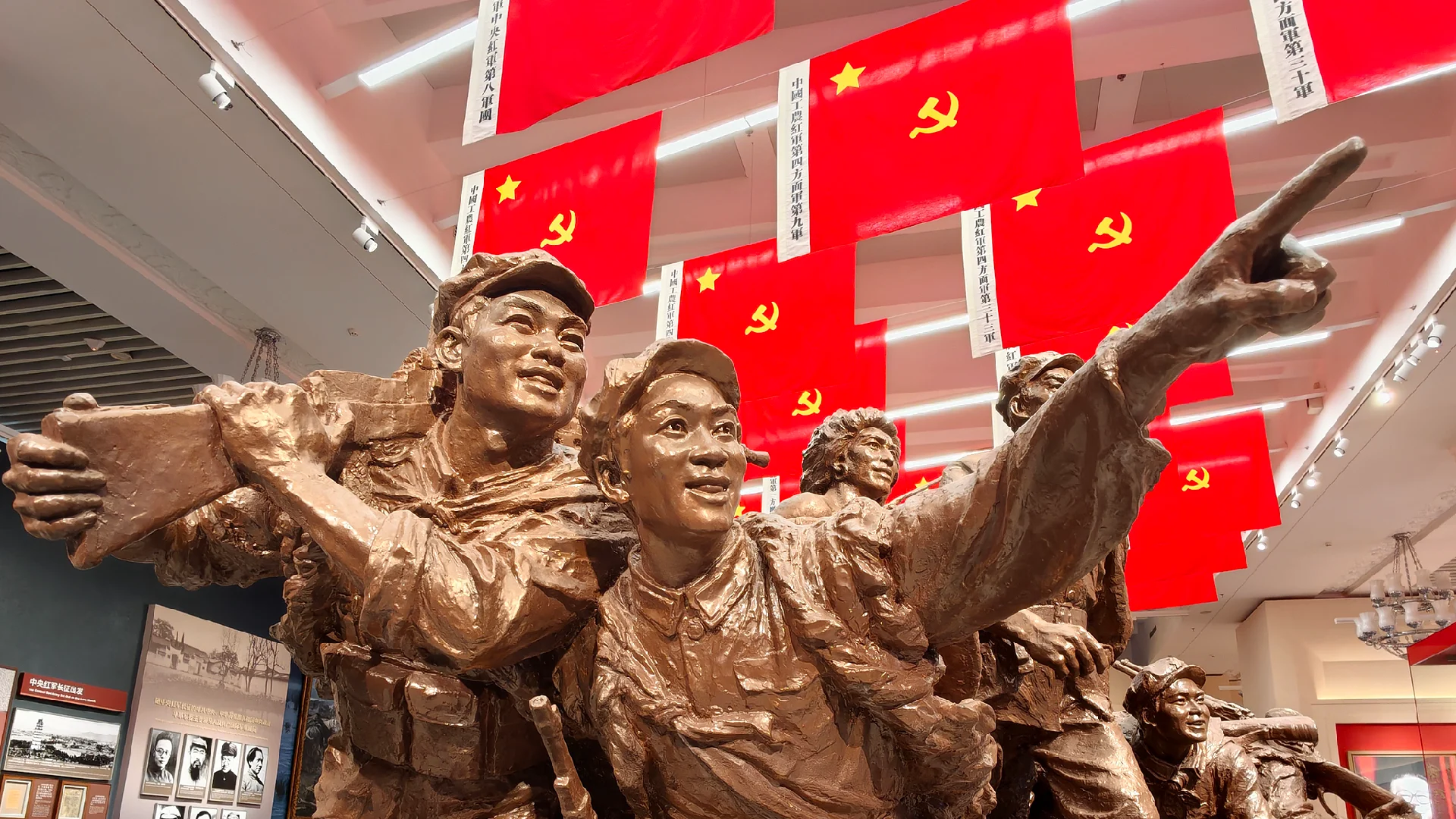
The Enduring Spirit of the Long March: A Foundation for China’s Modernization Journey
Ninety years ago, the Red Army’s Long March concluded, a monumental event that etched itself into history. Today, this legacy continues to inspire China’s path toward modernization. President Xi Jinping has called for renewed efforts on a “new Long March,” emphasizing the commitment to building a great modern socialist country and advancing national rejuvenation through a distinctly Chinese approach to modernization. This journey is not merely a historical echo but a living testament to the enduring spirit of perseverance, self-reform, and people-centered development that defined the original Long March.
The success of the Long March was fundamentally tied to the Communist Party of China’s (CPC) ability to adapt and reform. The Zunyi Conference, a critical turning point, corrected misguided leadership and established Mao Zedong’s authority, allowing the Party to independently address revolutionary challenges. This capacity for self-reflection and correction, even in the face of immense hardship, remains a cornerstone of the CPC’s governance. As China embarks on its new journey, the Party continues to stress the importance of self-governance and rigorous self-reform to navigate the complexities of the modern era, ensuring its continued role as a strong leadership core.
The defining theme of this new era is advancing national rejuvenation through Chinese modernization. Much like the Long March forged a revolutionary path suited to China’s unique conditions, Chinese modernization is an independent endeavor, integrating Marxist principles with China’s realities and cultural heritage. This path is not a copy of Western models but an original exploration, grounded in seeking truth from facts and relying on China’s own strength. The spirit of the Long March, characterized by its deep connection to the people, is echoed in the people-centered philosophy of Chinese modernization, where development is for, by, and benefits the people.
The spiritual strength derived from the Long March, fueled by firm conviction and tenacious struggle, is equally vital for the challenges ahead. The historical accounts of unwavering determination, even in the direst circumstances, serve as a powerful reminder of the human capacity to overcome seemingly insurmountable obstacles. In a world undergoing rapid and profound changes, with increasing external pressures and complex domestic tasks, this spirit is a precious treasure. It bolsters confidence in China’s chosen path, strengthens morale, and provides the resilience needed to manage risks and meet challenges. Each generation faces its own “Long March,” and for China today, this means leveraging the Party’s self-reform to guide social transformation and advancing national rejuvenation through Chinese modernization. By remembering history and carrying forward the spirit of the Long March, China aims to write new chapters of glory and create new miracles on its ongoing journey.
The Party’s Self-Reform: A Fundamental Guarantee for Progress
The historical success of the Long March was not a matter of chance; it was a direct result of the Communist Party of China’s (CPC) ability to establish and maintain correct leadership. This correct leadership, however, was not innate but was forged through a rigorous process of self-reform. The Zunyi Conference, held during a critical juncture of the Long March, stands as a prime example. At this pivotal meeting, the Party decisively corrected the erroneous “Left” dogmatism that had been hindering progress and effectively solidified Mao Zedong’s leadership within the CPC Central Committee and the Red Army. This marked a new phase where the Party could independently tackle the practical challenges of the Chinese revolution, ultimately saving itself, the Red Army, and the revolutionary cause.
This moment at Zunyi was significant because it represented the first time the Party independently applied the fundamental principles of Marxism to address its own internal issues and strategic direction. It showcased the hallmarks of a mature political organization: the courage to uphold truth, the willingness to acknowledge and correct mistakes, and the capacity for continuous renewal. This lesson from history remains profoundly relevant today. The Party’s ability to recover from setbacks and emerge stronger from periods of hardship is directly linked to its consistent willingness to confront its own problems and subject itself to stringent self-reform.
The ongoing “new Long March” towards modernization and national rejuvenation will undoubtedly present its own unique set of tests and challenges. Various internal and external factors will continue to pose long-term questions about the Party’s governing capacity. Recognizing this, President Xi Jinping has consistently emphasized the critical importance of upholding the Party’s leadership, strengthening its overall building, and persevering with comprehensive and rigorous self-governance. This commitment to self-improvement is not merely rhetorical; it is a strategic imperative for sustained national development.
The principle of self-reform acts as a recurring theme, connecting the historical turning point of the Zunyi Conference to the comprehensive and rigorous Party self-governance emphasized in the new era. It is presented as the Party’s second answer to the age-old historical cycle of rise and fall, prosperity and decline. Therefore, on the current journey, the Party must continue to advance its self-reform with unwavering political courage. This involves consistently enforcing discipline, combating corruption in all its forms, and strengthening its political leadership, ideological guidance, its ability to organize the people effectively, and its capacity to mobilize society towards common goals. Only by adhering to these principles can the Party maintain its position as the strong leadership core for the cause of socialism with Chinese characteristics. This, in turn, ensures that the new Long March has its most reliable backbone and guiding force.
Chinese Modernization: The Defining Theme of National Rejuvenation
The Long March was more than just a military retreat; it was a revolutionary undertaking that forged a unique path suited to China’s specific national conditions. Its success was built upon principles of independence, self-reliance, seeking truth from facts, and grounding actions in reality. These same principles are now guiding the “new Long March” of the present era, which is defined by the pursuit of Chinese modernization. President Xi Jinping has articulated a clear vision, stressing the need to unswervingly advance high-quality development and promote common prosperity for all citizens. Furthermore, he highlighted the importance of better ensuring both development and security, seizing historical initiative, and proactively overcoming difficulties, combating risks, and meeting challenges head-on.
This strategic direction offers a clear and compelling answer to the fundamental questions facing China’s current journey: Where is China headed, and how will it achieve its goals? Chinese modernization, in many respects, can be seen as a continuation and evolution of the great spirit embodied by the Long March. During the arduous journey of the Long March, stories like that of “half a quilt” resonated deeply, warming the hearts of the people and illustrating the profound connection between the Red Army and the populace. Similarly, narratives such as “Ten Farewells to the Red Army” powerfully expressed the deep bonds and mutual trust that existed between the soldiers and the common people. These historical accounts vividly reflected the Red Army’s unwavering commitment to serving the people, a commitment that formed the bedrock of its legitimacy and support.
Today, the concept of Chinese modernization places the people squarely at the center of all endeavors. Development is understood as being for the people, relying on the people, and ultimately delivering its benefits to the people. This people-centered approach is a contemporary manifestation of the Long March’s core commitment to serving the masses. The Long March itself was a path independently explored and pioneered by the Chinese people, a testament to their ingenuity and resilience. In a similar vein, Chinese modernization represents a major achievement born from the integration of the fundamental tenets of Marxism with China’s specific national realities and its rich, traditional culture.
There is no pre-existing, ready-made textbook for this unprecedented undertaking. China cannot simply adopt or copy Western models of development, as each nation’s historical context, cultural background, and developmental stage are unique. Instead, China must continue to adhere to the principle of seeking truth from facts. This involves upholding fundamental principles while simultaneously breaking new ground and innovating. Crucially, the development of the country and the nation must be firmly grounded in China’s own inherent strengths and capabilities. This commitment to an independent and self-reliant path ensures that Chinese modernization is a genuine reflection of the nation’s aspirations and its unique developmental trajectory.
Spiritual Strength: Overcoming Challenges Through Conviction and Struggle
The Long March was fundamentally an expedition driven by ideals and unwavering convictions. The spirit of those who participated, their determination in the face of unimaginable hardship, continues to serve as a powerful source of inspiration. Consider the story of a Red Army soldier who, despite having his leg amputated due to injury, vowed to crawl the remaining distance to northern Shaanxi. This powerful illustration exemplifies how a force imbued with lofty ideals and firm convictions can overcome obstacles that appear insurmountable to the ordinary observer. It highlights the transformative power of belief and purpose in the human spirit.
The road ahead on the new Long March, the journey towards comprehensive modernization and national rejuvenation, will likewise not be a smooth or easy one. It is inevitable that challenges, both foreseen and unforeseen, will arise. President Xi Jinping has acknowledged this reality, stating that the spirit of the Long March “will always be a precious treasure and a powerful driving force inspiring us to overcome difficulties and forge ahead courageously.” This sentiment underscores the enduring relevance of the Long March’s legacy in providing moral and psychological fortitude for contemporary challenges.
In the current global landscape, profound changes are accelerating at an unprecedented pace, described as changes “unseen in a century.” This era is characterized by increasing complexity and uncertainty. China faces a continuous stream of external containment and pressure from various international actors. Simultaneously, the domestic tasks of reform, development, and maintaining stability remain arduous and complex, requiring careful navigation and strategic planning.
The greater the difficulties and obstacles encountered, the more critical it becomes to strengthen confidence. This confidence must be rooted in China’s chosen path, its guiding theories, its political system, and its rich culture. Building the morale, strengthening the backbone, and fostering the confidence of the entire Party, the People’s Liberation Army, and people of all ethnic groups is paramount. This requires a concerted effort to better coordinate development with security, ensuring that progress in one area does not compromise stability in another. It also necessitates a proactive approach to overcoming difficulties, managing potential risks, and meeting emerging challenges with a strong sense of historical initiative and strategic foresight.
Where the spirit resides, there lies strength. The great spirit of the Long March embodies the enduring power of loyalty to a cause, the pursuit of truth, the commitment to justice, and the importance of unity. This spirit transcends the boundaries of time and space, continuing to inspire and motivate generations of Chinese people. Every generation, in its own historical context, faces its own “Long March.” And for every generation, the imperative is to walk its own path well, making the most of its unique opportunities and challenges. For China today, this means using the Party’s capacity for self-reform as the engine for social transformation and advancing the rejuvenation of the Chinese nation through the distinct path of Chinese modernization. Remembering history is not merely an act of commemoration; it is fundamentally about creating a better future. By rallying closely around the CPC Central Committee, vigorously carrying forward the great spirit of the Long March, and continuing to strive forward with unwavering determination and perseverance, China is poised to write new chapters of glory and create new miracles on its ongoing, transformative journey.
Conclusion: The Unfolding Legacy of the Long March
The Long March, a historical epic of struggle and perseverance, continues to cast a long shadow over China’s present and future. Its conclusion ninety years ago marked not an end, but a beginning—a foundation upon which the nation would build its modern identity. Today, the call to embark on a “new Long March” signifies a commitment to the enduring principles that defined the original: unwavering dedication to the people, the necessity of continuous self-reform, and the pursuit of a development path tailored to China’s unique circumstances. The emphasis on Chinese modernization is a direct descendant of the Long March’s spirit of seeking truth from facts and forging an independent way forward.
The CPC’s capacity for self-reform, demonstrated so powerfully at the Zunyi Conference, remains the bedrock of its leadership. This commitment to introspection and correction is vital for navigating the complexities of the 21st century, ensuring the Party’s continued relevance and effectiveness. Simultaneously, the people-centered philosophy inherent in Chinese modernization echoes the deep bonds forged between the Red Army and the populace during the Long March. This focus on development that benefits all citizens is a powerful testament to the enduring legacy of serving the people.
As China faces a rapidly changing global landscape and complex domestic challenges, the spiritual strength derived from the Long March—its ideals, convictions, and tenacious struggle—provides an indispensable source of resilience and motivation. This historical spirit empowers the nation to face adversity with confidence, to coordinate development with security, and to proactively overcome obstacles. Each generation inherits its own “Long March,” and for contemporary China, this means leveraging the Party’s self-reform to drive social transformation and advancing national rejuvenation through the distinct model of Chinese modernization. By honoring the past and embracing its lessons, China is resolutely charting a course toward a future of renewed glory and unprecedented achievement.

Conversation
0 Comments