

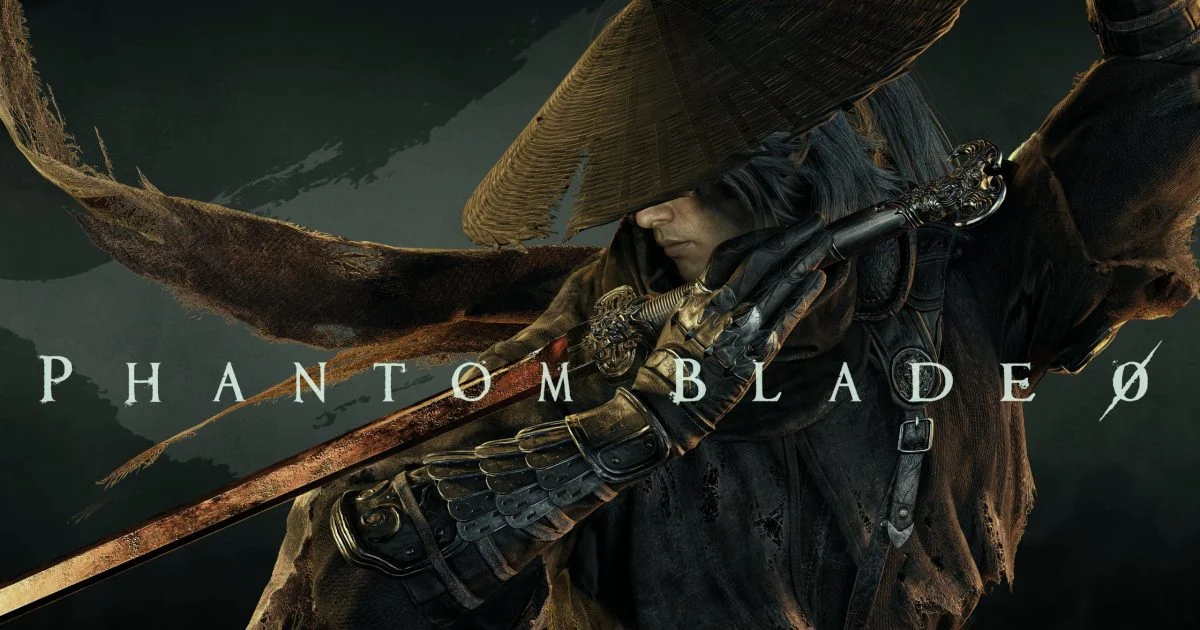
Phantom Blade Zero: A Deep Dive into Its Extraordinary Combat and Immersive World
The gaming world is abuzz with anticipation for Phantom Blade Zero, a title that has quickly captured the attention of players worldwide. Following its stunning 2023 reveal, which showcased fluid, kung-fu-inspired sword combat, the game has seen an overwhelming surge in player numbers, with hundreds of thousands concurrently playing on Steam. After sinking around 10 hours into this highly anticipated release, it’s clear that Phantom Blade Zero is not just living up to the hype; it’s setting a new standard for action combat. This analysis will explore the game’s captivating world, its groundbreaking combat system, challenging boss encounters, and performance aspects, offering a comprehensive look at what makes this game a potential game of the year contender.
A World That Captivates From the Start
From the moment you begin playing, Phantom Blade Zero immerses you in a visually stunning world. The game boasts some of the most impressive graphics seen across any genre, blending a timeless art style with cutting-edge fidelity. Few games manage to achieve this balance so effectively, creating an experience that is both beautiful and deeply engaging. The level of immersion is comparable to what players experienced in titles like Ghost of Tsushima, drawing you into its meticulously crafted environments.
One of the most striking aspects of Phantom Blade Zero‘s presentation is the deliberate absence of on-screen clutter. There are no HUD elements visible while exploring, and only the most essential information appears during combat. This minimalist approach ensures that nothing distracts from the game’s atmosphere and world-building. Players are left to absorb the rich details of S-GAME’s creation, allowing the environment and atmosphere to fully envelop them before the action even begins.
You step into the shoes of Soul, an elite assassin belonging to a clandestine organization known as “The Order.” His appearance as a wandering swordsman, complete with a wide-brimmed hat and dark, layered clothing, perfectly complements the game’s aesthetic. While the overarching narrative is still unfolding, the initial segments of the game employ a non-linear storytelling approach, jumping between timelines and events. Although this can sometimes be disorienting, the game gradually shifts to a more straightforward progression, which has been a welcome change as the story has advanced.
The memories experienced near the crane bells offer a more focused narrative element, distinct from the initial exposition. As the game progresses, the reliance on fragmented timelines diminishes, allowing the player to become more invested in Soul’s journey without constant narrative interruptions. This careful pacing ensures that the story elements enhance, rather than detract from, the overall player experience.
The sound design in Phantom Blade Zero is as remarkable as its visuals. The audio feedback for combat actions is incredibly satisfying. The sharp slash of blades, the clang of steel on steel, and the swift cutting sound of sickles slicing through the air create a visceral auditory experience. This sonic detail is crucial in conveying the lethality of attacks and the power of Soul’s defenses. The sound of parrying and blocking not only confirms the impact of strikes but also audibly communicates the strength Soul possesses to deflect them with a mere flick of his blade. This attention to audio detail significantly elevates the immersion and the feeling of impact in every encounter.
Combat: The Heartbeat of Phantom Blade Zero
The true draw of Phantom Blade Zero, as highlighted in its 2023 reveal, is its combat system. The promise of free-flowing battles, where players could engage in an elegant yet deadly dance of martial arts, blocking, parrying, and dodging, seemed almost too good to be true. Many games rely on quick-time events and scripted sequences to achieve such cinematic action. However, after nearly 10 hours of gameplay, it’s evident that the combat system delivers on every promise. It is genuinely astonishing that a studio primarily known for mobile games has managed to create what might be the best combat system experienced in a AAA title. The quick attacks and chained combos make players feel like true kung fu masters, embodying the grace and power of martial arts.
This exceptional combat is supported by a vast arsenal of weapons. Players can acquire numerous primary weapons, specialized “Phantom Edges” earned by defeating bosses, and various accessories. Phantom Edges are not just powerful offensive tools; they also unlock new movement techniques and ways to interact with the game world. Accessories further enhance both Soul’s abilities and his weapons, offering a deep layer of customization. Each weapon type possesses distinct characteristics, including reach, stamina consumption, power, poise break potential, and attack speed. While most weapons are viable against various enemy types, certain weapons are more effective against specific foes, encouraging players to experiment and adapt their loadouts.
The progression system in Phantom Blade Zero feels incredibly rewarding and directly contributes to the game’s escalating pace. A particularly appreciated mechanic, especially for players familiar with soulslike games, is the ability to refund weapon upgrades at any time. This allows for flexible experimentation with different weapon builds without penalty, a stark contrast to the more restrictive upgrade systems found in some other titles. The skill tree further expands player capabilities, allowing for the development of new combos and the application of status effects that were not initially part of Soul’s repertoire. This sense of growth and empowerment is a key driver of the game’s momentum, making each upgrade and skill acquisition feel meaningful.
Boss Fights That Raise the Bar
The true test of Phantom Blade Zero‘s combat prowess lies in its boss encounters. Each boss fight is designed to be a unique and challenging experience, pushing players to master the game’s mechanics. So far, the bosses encountered, including “The Hunt” and “Sixfold Scythe,” have each presented distinct combat patterns and strategies. The initial bosses offer a gradual introduction to the game’s difficulty, starting with a large, sword-wielding foe focused on basic attacks, followed by a larger, axe-wielding giant who incorporates area attacks and combo chains.
“The Hunt” introduces a more complex fighting style, utilizing sickles attached to long chains to maintain distance and control the battlefield. This fight has been particularly entertaining, showcasing the variety in boss design. None of the encounters have felt generic or uninspired, with each boss pushing the player to adapt and learn. The boss design consistently remains on point, and the encounters only seem to become more challenging and engaging as the game progresses.
As players delve deeper into the game, the boss encounters become even more intricate. Hua, the “Deadly Betrothed,” presents a formidable challenge with her use of summons, stun attacks, and stamina-draining area-of-effect abilities. She also employs rapid teleportation to close the distance and launch surprise attacks. After an initial failed attempt, Hua’s combat approach notably shifts. In the subsequent encounter, she heavily relies on unblockable attacks that proved most damaging previously, while minimizing the use of moves that were effectively parried.
This adaptive AI, particularly on higher difficulties like “Hellwalker,” appears to analyze player spacing, timing, and combat habits to dictate its attack patterns. This makes every attempt at a boss fight feel distinct in pace and style, preventing encounters from becoming repetitive. It’s important to note that this adaptive behavior seems most pronounced on “Hellwalker” difficulty, with an even more challenging “66 days” difficulty unlockable after completing the game.
While Phantom Blade Zero offers significant challenge, it is not as punishing as some soulslike games. It doesn’t aim to penalize players at every turn. The parry and dodge timings are forgiving in the early stages, gradually becoming tighter as players progress. However, this does not equate to an easy experience. On “Hellwalker” difficulty, many bosses possess one-shot kill attacks or moves that can deplete up to 75% of a player’s health bar. Furthermore, most bosses have substantial health pools, requiring sustained effort and strategic engagement to overcome.
Performance: A Mixed Bag with Promising Signs
Concerns regarding the game’s performance were present leading up to its release. S-GAME advised players to reserve over 300GB for the 140GB game and even recommended rolling back Nvidia drivers to avoid potential issues. The initial shader loading process could take a considerable amount of time, around 15-20 minutes, during which the CPU would operate at 100% load.
Despite these initial concerns and reports of bugs from early access reviews, the actual gameplay experience has been largely positive for many. Performance has been excellent, with no crashes reported on max settings, even with ray tracing enabled. A significant 5GB launch update appears to have effectively addressed many of the early-access complaints. Players have reported encountering zero glitches, stutters, collision traps, or geometry issues.
On a high-end PC configuration, such as a ZOTAC GeForce RTX 5070 Ti 16GB, AMD Ryzen 7 9800X3D, and 32GB of DDR5-6000 RAM, the game consistently achieves frame rates between 75 to 80 FPS at a 1440p resolution. This indicates that the game is well-optimized for powerful hardware, providing a smooth and visually rich experience. For those with less powerful systems, the provided system requirements offer a clear guideline for expected performance.
Minimum System Requirements:
- OS: Windows 10/11 (64bit required)
- Processor: Intel Core i7-8700K / AMD Ryzen 5 3600
- Memory: 16 GB RAM
- Graphics: NVIDIA GeForce GTX 1660 6GB / AMD Radeon RX 5500 XT 8GB
- DirectX: Version 12
- Storage: 145 GB available space
- Additional Notes: Target 1080p resolution at 30 FPS with upscaling enabled. SSD installation is required.
Recommended System Requirements:
- OS: Windows 10/11 (64bit required)
- Processor: Intel Core i5-10600K / AMD Ryzen 5 5600X
- Memory: 16 GB RAM
- Graphics: NVIDIA GeForce RTX 3060 Ti 8GB / AMD Radeon RX 6700 XT 12GB
- DirectX: Version 12
- Storage: 145 GB available space
- Additional Notes: Target 1440p resolution at 60 FPS with upscaling enabled. SSD installation is required.
These requirements suggest that while a powerful system is recommended for the best experience, the game is accessible to a wider range of players with the minimum specifications. The emphasis on SSD installation is common for modern games to ensure faster loading times, which is particularly important for a game with such detailed environments and demanding combat.
Conclusion
Phantom Blade Zero has successfully translated the promise of its reveal trailer into a tangible, exhilarating gaming experience. The game masterfully combines stunning visuals and immersive sound design with an action combat system that is both deep and incredibly satisfying. The challenging, yet fair, boss encounters continually test player skill, while the rewarding progression system ensures a constant sense of growth and accomplishment. Despite some initial performance concerns, the game appears to be well-optimized, offering a smooth experience for a wide range of hardware configurations. If Phantom Blade Zero maintains its current pace and quality throughout its entirety, it is undoubtedly a strong contender for game of the year, offering a masterclass in action-adventure design.
The official website for Phantom Blade Zero can be found at https://www.s-game.com/.


Conversation
0 Comments