

The advent of advanced drone technology is rapidly reshaping military capabilities, particularly in naval operations. The integration of unmanned aerial vehicles (UAVs) onto naval vessels offers significant advantages, from enhanced reconnaissance to strike potential. This article delves into the capabilities and implications of shipborne drones, focusing on recent developments and the future trajectory of this technology. We will explore how these unmanned systems are becoming indispensable assets for modern navies, providing a critical edge in surveillance, intelligence gathering, and operational flexibility. The ability to launch and recover sophisticated drones from naval platforms marks a pivotal moment in naval aviation and unmanned systems development.
The Rise of Shipborne Drones
Shipborne drones, also known as Unmanned Aerial Vehicles (UAVs) or Unmanned Aircraft Systems (UAS), are aircraft that operate without a human pilot on board. Their integration into naval operations represents a significant leap forward, offering a range of benefits that traditional manned aircraft cannot easily replicate. These benefits include reduced risk to human life in dangerous missions, extended operational endurance, and the ability to perform tasks in environments too hazardous for pilots. The development of specialized drones capable of operating from the confined spaces of ships, especially aircraft carriers and amphibious assault vessels, is a testament to the rapid advancements in aerospace and naval engineering.
The primary driver behind the increasing adoption of shipborne drones is their versatility. They can be equipped with a variety of sensors for intelligence, surveillance, and reconnaissance (ISR) missions, providing real-time data to commanders. Beyond ISR, advanced drones are now capable of carrying payloads for strike missions, electronic warfare, or even logistical support. This multi-role capability makes them highly valuable assets, capable of performing a wide array of tasks without the need for dedicated manned aircraft for each specific mission. The cost-effectiveness of drones compared to manned aircraft also plays a role, allowing navies to expand their operational reach and capabilities within budgetary constraints.
Furthermore, the development of stealth technology in drones adds another layer of strategic advantage. Stealth drones are designed to evade radar detection, allowing them to penetrate enemy airspace undetected for reconnaissance or strike missions. This capability is particularly important in contested environments where maintaining a tactical advantage is paramount. The combination of shipborne deployment, advanced sensor suites, strike capabilities, and stealth technology makes these drones a formidable component of modern naval power projection.
China’s GJ-21 Drone and the Type 076 Amphibious Assault Ship
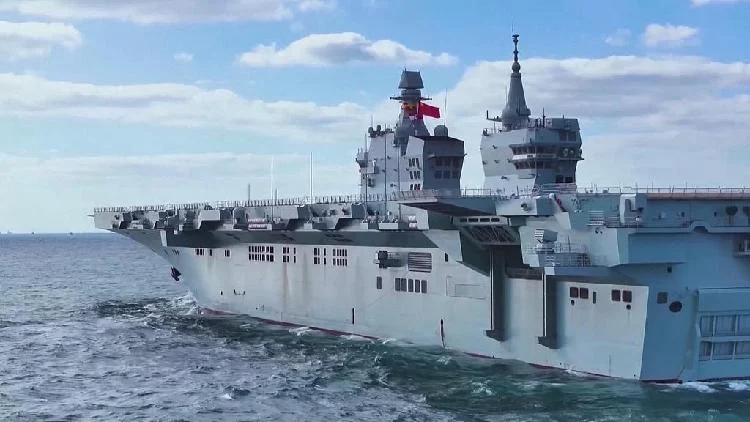
A recent significant development in this field is the successful takeoff and landing of China’s GJ-21 stealth reconnaissance-strike integrated drone aboard the Type 076 amphibious assault ship, named Sichuan. This event marks a crucial milestone, demonstrating China’s growing prowess in developing and operating advanced unmanned systems from large maritime platforms. The GJ-21 drone is designed to be a multi-role platform, capable of both gathering intelligence and executing strike missions, making it a valuable asset for naval operations.
The Type 076 amphibious assault ship, Sichuan, is a state-of-the-art vessel designed to support a wide range of naval operations, including troop transport, amphibious landings, and now, the operation of fixed-wing drones. Launched on December 27, 2024, the Sichuan boasts a full-load displacement of over 40,000 tonnes and features a modern design with a dual-island superstructure and a full-length flight deck. This design is optimized for the launch and recovery of various aircraft, including helicopters and fixed-wing drones.
Key technological advancements on the Sichuan include an automated landing guidance system, an integrated electric power system, and electromagnetic catapult and arrestor technologies. These systems are essential for efficiently launching and recovering fixed-wing aircraft, especially drones which may have different operational requirements than traditional manned aircraft. The electromagnetic catapult system, in particular, allows for rapid and efficient launch of drones, enhancing the ship’s operational tempo. The ship’s design also accommodates amphibious equipment, further broadening its mission capabilities.
The successful integration of the GJ-21 drone onto the Sichuan signifies that the Chinese Navy has achieved a significant capability in operating fixed-wing stealth drones from large maritime combat platforms. This capability enhances the navy’s ability to conduct long-range reconnaissance, intelligence gathering, and precision strikes, extending its operational reach and effectiveness in maritime environments. The ongoing sea trials of the Sichuan, which began in November 2025, have been systematically testing and debugging its various systems, ensuring overall operational stability and readiness.
Technological Advancements Enabling Shipborne Drones
The successful operation of drones like the GJ-21 from naval vessels is underpinned by several critical technological advancements. These innovations address the unique challenges of operating aircraft from a moving platform at sea, often in demanding weather conditions.
Electromagnetic Catapult and Arrestor Systems
One of the most significant advancements is the development of electromagnetic catapults and arrestor systems. Traditional steam catapults, while effective, are complex, heavy, and require substantial steam power. Electromagnetic catapults, on the other hand, use linear motors to accelerate aircraft to launch speed. This technology offers several advantages: it is more precise, energy-efficient, and allows for a smoother launch, which is beneficial for both manned aircraft and drones. Similarly, electromagnetic arrestor systems provide a controlled and efficient means of decelerating and stopping aircraft upon landing. These systems are crucial for enabling fixed-wing aircraft, including drones, to operate from the relatively short flight decks of amphibious assault ships and carriers. The Type 076’s adoption of these technologies highlights its modern design and its focus on supporting advanced drone operations.
Automated Landing Guidance Systems
Navigating and landing an aircraft on a ship, especially in adverse weather or at night, is a complex task. Automated landing guidance systems significantly enhance safety and efficiency. These systems use a combination of sensors, GPS, inertial navigation, and advanced algorithms to guide the aircraft precisely onto the landing area. For drones, which often lack the sophisticated piloting skills of humans, these automated systems are indispensable. They ensure that the drone can approach the ship, align itself with the landing deck, and execute a safe landing with minimal human intervention. This automation is key to achieving high operational tempo and reliability for shipborne drone operations.
Integrated Electric Power Systems
Modern naval vessels are increasingly relying on integrated electric power systems. These systems provide a centralized and efficient way to manage the ship’s power needs, from propulsion to onboard systems and the operation of advanced equipment like electromagnetic catapults and arrestors. An integrated electric power system can dynamically allocate power to where it is needed most, ensuring that the launch and recovery of drones do not compromise other critical ship functions. This enhanced power management is vital for supporting the high energy demands of advanced aviation operations at sea.
Advanced Drone Design and Materials
The drones themselves have undergone significant development. The GJ-21’s stealth characteristics, for instance, are achieved through specific airframe shaping and the use of radar-absorbent materials. This design reduces its radar cross-section, making it harder for enemy air defense systems to detect and track. Furthermore, the use of lightweight yet strong composite materials in drone construction contributes to their performance, allowing for greater payload capacity and longer flight times. The ability to integrate sophisticated sensors and weapon systems into a compact and aerodynamic airframe is also a critical aspect of modern drone design.
Communication and Data Links
Reliable communication between the drone and the ship is paramount. Advanced data links are required to transmit real-time sensor data, flight telemetry, and control commands. These links must be secure, robust, and capable of maintaining a connection even at long ranges or in electronically contested environments. The development of satellite communication capabilities and secure line-of-sight data links ensures that the ship’s command center has continuous situational awareness and can effectively manage the drone’s mission.
Strategic Implications of Shipborne Drones
The integration of advanced shipborne drones like the GJ-21 has profound strategic implications for naval warfare and power projection. These unmanned systems are not merely supplementary tools; they are fundamentally changing how navies operate and achieve their objectives.
Enhanced ISR Capabilities
Shipborne drones significantly extend a navy’s intelligence, surveillance, and reconnaissance (ISR) capabilities. They can loiter over areas of interest for extended periods, gathering detailed information on enemy movements, infrastructure, and capabilities. Unlike manned aircraft, drones can be deployed for longer durations without crew fatigue, providing persistent surveillance. The data collected by these drones can be relayed in real-time to command centers, enabling faster decision-making and more effective responses to evolving situations. This persistent ISR capability is invaluable for monitoring vast maritime areas, tracking naval fleets, and identifying potential threats.
Expanded Strike Reach and Precision
The reconnaissance-strike integrated nature of drones like the GJ-21 means they can not only gather intelligence but also act upon it. Equipped with precision-guided munitions, these drones can conduct targeted strikes against enemy assets, including ships, land-based targets, and air defense systems. The stealth capabilities of some drones allow them to penetrate defended airspace, delivering payloads with a reduced risk of detection and interception. This capability enhances a navy’s ability to project power far from its shores, engaging targets with greater precision and less risk to manned platforms.
Force Multiplier Effect
Shipborne drones act as a force multiplier, augmenting the capabilities of existing naval assets. By taking on roles such as reconnaissance, electronic warfare, or even air defense suppression, drones free up manned aircraft and warships to focus on their primary missions. This allows navies to achieve more with their existing resources, increasing operational efficiency and effectiveness. For example, a drone could be tasked with identifying enemy air defenses, allowing a manned strike package to proceed with a reduced threat level.
Reduced Risk to Personnel
One of the most significant advantages of using drones is the reduction of risk to human life. Missions that involve operating in highly dangerous environments, such as contested airspace, minefields, or areas with significant enemy presence, can be assigned to drones. This removes the inherent danger associated with putting pilots in harm’s way, allowing for more aggressive mission profiles and increasing the overall survivability of naval forces.
Adaptability and Future-Proofing
The modular nature of many drone systems allows for rapid adaptation to new threats and mission requirements. Sensors and payloads can be swapped out, and software can be updated to enhance capabilities. This adaptability ensures that naval forces can remain effective against evolving threats. Furthermore, the ongoing development in artificial intelligence and autonomous systems suggests that future drones will possess even greater levels of autonomy and decision-making capability, further enhancing their strategic value.
Amphibious Operations Enhancement
For amphibious assault ships like the Type 076, shipborne drones offer a new dimension to operations. They can provide crucial intelligence during amphibious landings, identifying landing zones, assessing enemy defenses, and guiding assault forces. Their strike capabilities can also be used to soften enemy positions before troops land, increasing the chances of a successful operation. The ability to launch and recover these drones from an amphibious platform means that this enhanced capability is available across a wider range of naval deployments.
Challenges and Considerations
Despite the significant advantages, the widespread adoption of shipborne drones also presents several challenges and considerations that navies must address.
Integration and Interoperability
Integrating new drone systems into existing naval command and control structures can be complex. Ensuring seamless interoperability between drones, manned aircraft, ships, and shore-based command centers is crucial for effective operations. This requires standardized communication protocols, data formats, and robust network infrastructure. The development of common operating pictures that incorporate data from all assets, manned and unmanned, is essential for cohesive fleet operations.
Maintenance and Logistics
Operating drones at sea introduces unique maintenance and logistical challenges. The harsh maritime environment, with its salt spray, humidity, and corrosive elements, requires specialized maintenance procedures and materials. Ensuring a steady supply of spare parts, fuel or power sources, and trained maintenance personnel for drone systems at sea is a significant logistical undertaking. The design of ships must also accommodate the space and facilities needed for drone maintenance and repair.
Training and Skill Development
Operating and maintaining advanced drones requires specialized skills. Navies need to invest in comprehensive training programs for pilots, sensor operators, maintenance technicians, and mission planners. The skills required for drone operations are different from those for manned aviation, and developing a skilled workforce is critical for maximizing the potential of these systems. This includes training in data analysis, cyber security for drone systems, and understanding the ethical and legal implications of autonomous operations.
Cybersecurity Threats
As drones become increasingly networked and reliant on data links, they become potential targets for cyberattacks. Enemy actors could attempt to jam communication signals, hack into drone control systems, or spoof sensor data to mislead operators. Protecting drone systems from cyber threats requires robust cybersecurity measures, including encryption, secure authentication, and continuous monitoring for malicious activity. The vulnerability of data links is a particular concern, as compromising them could lead to loss of control or the transmission of false information.
Regulatory and Ethical Frameworks
The increasing autonomy of drones raises complex regulatory and ethical questions. Issues such as rules of engagement for armed drones, accountability for autonomous actions, and the potential for unintended escalation need to be carefully considered. Developing clear international and national frameworks to govern the development and deployment of autonomous weapon systems is an ongoing process. Ensuring that drone operations comply with international humanitarian law and ethical principles is paramount.
Cost and Investment
While drones can be more cost-effective than manned aircraft in certain aspects, the initial investment in advanced drone technology, associated infrastructure, and training can be substantial. Navies must carefully balance the benefits of drone capabilities against the costs and prioritize investments that offer the greatest strategic advantage. The lifecycle costs, including maintenance, upgrades, and eventual replacement, also need to be factored into procurement decisions.
The Future of Shipborne Drones
The trajectory of shipborne drone technology points towards even greater integration and sophistication. Several key trends are likely to shape the future of this domain.
Increased Autonomy and AI Integration
Future drones will likely feature higher levels of autonomy, driven by advancements in artificial intelligence (AI) and machine learning. AI will enable drones to make more complex decisions in real-time, adapt to changing battlefield conditions, and operate more effectively in environments where communication links may be intermittent or denied. This could include autonomous target recognition, mission planning, and even cooperative operations between multiple drones.
Swarming Capabilities
The concept of drone swarms, where large numbers of drones operate cooperatively, is a significant area of research and development. Swarms could overwhelm enemy defenses through sheer numbers or conduct complex, coordinated missions that would be impossible for individual drones. Shipborne platforms could serve as launch points for these drone swarms, extending their operational reach and impact.
Hybrid Manned-Unmanned Teaming
The future of naval aviation will likely involve closer collaboration between manned and unmanned systems. Manned aircraft could act as command platforms for drone swarms, providing oversight and making high-level decisions, while drones handle the more dangerous or repetitive tasks. This “manned-unmanned teaming” approach aims to combine the strengths of both human decision-making and the endurance and risk tolerance of drones.
Specialized Drone Roles
Beyond ISR and strike, we can expect to see the development of drones specialized for a wider range of naval roles. This could include drones for mine countermeasures, anti-submarine warfare, electronic warfare support, aerial refueling of other drones or even manned aircraft, and maritime security patrols. The ability to deploy these specialized drones from ships will significantly enhance the navy’s overall operational flexibility.
Advanced Propulsion and Endurance
Research into new propulsion systems, such as hybrid-electric or advanced jet engines, will lead to drones with longer endurance and higher speeds. This will allow them to cover greater distances, stay on station for longer periods, and respond more rapidly to emerging threats. The development of more efficient energy storage solutions will also be critical for extending flight times.
Integration with Other Unmanned Systems
Shipborne drones will increasingly be integrated with other unmanned systems, such as unmanned surface vehicles (USVs) and unmanned underwater vehicles (UUVs). This creates a fully integrated unmanned naval force capable of conducting complex operations across the air, surface, and subsurface domains. For instance, a drone could provide aerial reconnaissance for a UUV conducting mine detection operations.
The ongoing development and deployment of systems like China’s GJ-21 drone on advanced platforms like the Type 076 amphibious assault ship are clear indicators of this future. As technology continues to advance, shipborne drones will undoubtedly play an ever-more critical role in naval strategy, power projection, and maintaining maritime security in the years to come. Their ability to enhance ISR, expand strike capabilities, and act as force multipliers makes them an indispensable component of modern naval power.
Conclusion
The integration of advanced drones onto naval platforms represents a transformative shift in military capabilities. The successful operations of the GJ-21 stealth reconnaissance-strike integrated drone aboard the Type 076 amphibious assault ship, Sichuan, exemplify this evolution. These unmanned systems offer unparalleled advantages in intelligence gathering, strike precision, and operational flexibility, all while reducing risks to human personnel. As technology progresses, with advancements in AI, autonomy, and specialized roles, shipborne drones are poised to become even more integral to naval strategy. While challenges in integration, maintenance, and cybersecurity remain, the strategic benefits and future potential of these technologies are undeniable, shaping the future of maritime power projection and global security.



Conversation
0 Comments