

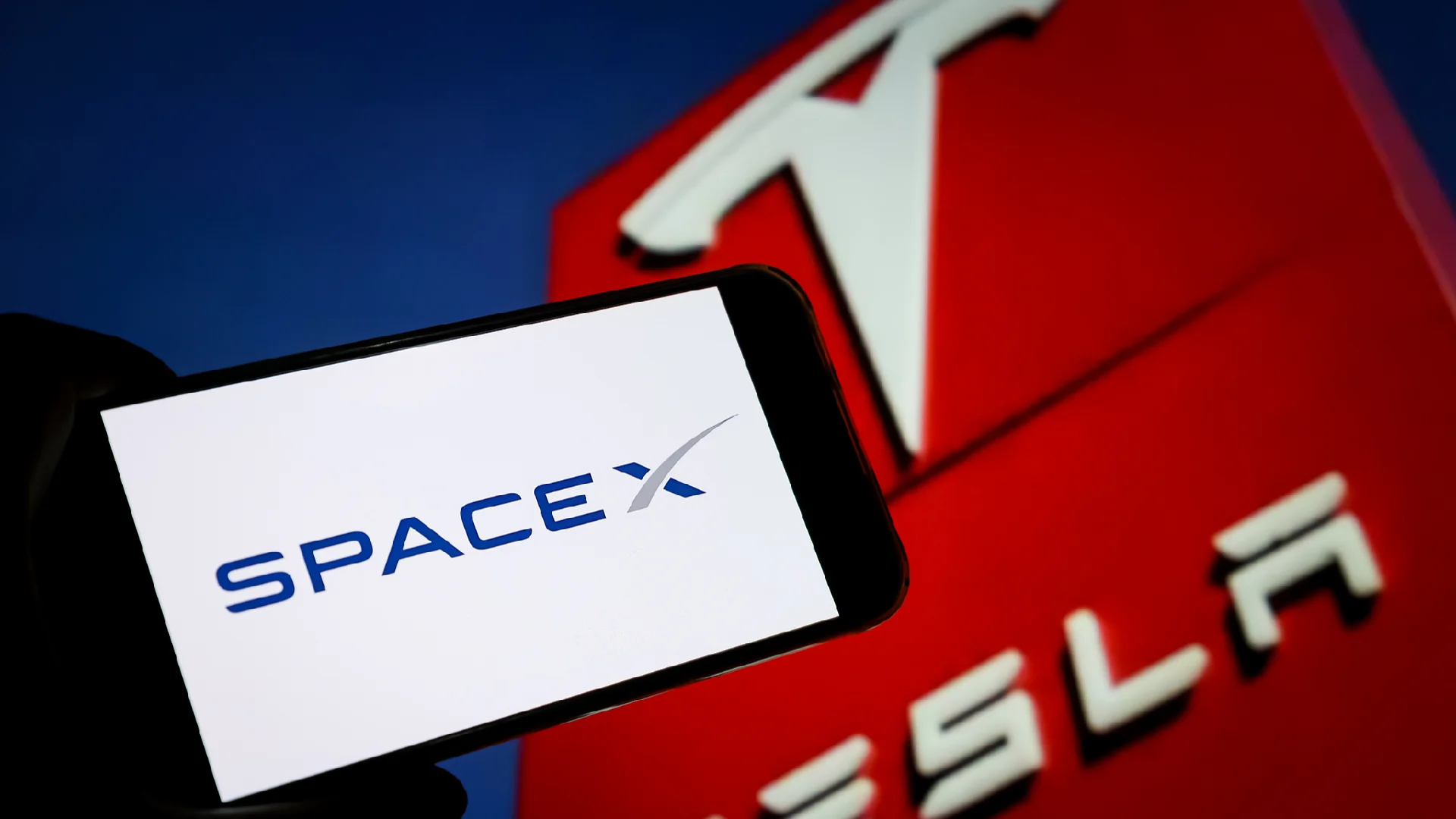
The potential merger of SpaceX and Tesla, two titans of industry led by Elon Musk, has sparked considerable discussion. This idea, while complex, is being explored by special committees at both companies. The driving force behind this consideration, beyond Musk’s personal vision, is the recent financial performance of SpaceX, particularly its AI division. This analysis will explore the factors contributing to SpaceX’s profitability, the potential synergies of a merger, and the challenges that lie ahead for such a monumental undertaking.
SpaceX’s Turnaround: AI Division Drives Profitability
SpaceX, primarily known for its groundbreaking work in space exploration and satellite internet, has recently reported its first quarterly profit since going public. This significant financial achievement is largely attributed to the impressive performance of its Artificial Intelligence (AI) division, now referred to as “Super Intelligence.” This unit has seen a dramatic increase in revenue, surpassing even the established Starlink satellite internet business.
The AI division’s success is fueled by several key developments. New cloud services agreements have brought in substantial business, with major tech companies signing on for significant computing power. For instance, Anthropic has committed nearly $45 billion over three years for access to SpaceX’s powerful Colossus data centers. Google has also secured a deal, agreeing to pay $920 million monthly from October through June 2029. The wider adoption of SpaceX’s Grok chatbot and the acquisition of Cursor, an AI coding startup, have further bolstered this division’s revenue streams.
This surge in AI-related business has transformed SpaceX’s financial outlook. The AI unit achieved an operating profit of $431 million in the July-September period, a stark contrast to a $1.7 billion loss in the same period last year. This turnaround highlights the strategic importance of AI infrastructure and services in today’s technological landscape. Despite the profitability, SpaceX continues to invest heavily in this sector, with capital spending for the first nine months of the year reaching $48 billion, a significant portion of which is dedicated to AI development and infrastructure. The company’s computing capacity has expanded dramatically, reaching 1.7 gigawatts, with plans to add another 10 gigawatts in 2027.
Starlink and Starship: Continued Growth and Ambitions
While the AI division has become the primary profit driver, SpaceX’s other core businesses continue to show robust growth and strategic importance. The Starlink satellite internet unit saw its revenue grow by 69% to $5.2 billion. The number of consumer subscribers has reached 13.6 million, demonstrating the expanding reach of global internet access. However, the average monthly revenue per consumer has seen a slight decrease, falling to $69 from $83 a year prior. This suggests a focus on expanding subscriber numbers, potentially through more accessible pricing tiers.
Furthermore, SpaceX has achieved a significant milestone with the first revenue-generating flight of its Starship rocket. This giant rocket is central to Musk’s long-term ambitions, including the colonization of Mars and the large-scale deployment of satellites. The successful flight carried 26 next-generation Starlink satellites into orbit, showcasing Starship’s capability for complex orbital missions. This achievement is a critical step towards realizing the full potential of SpaceX’s ambitious space programs.
The Case for a SpaceX-Tesla Merger: Synergies and Vision
Elon Musk’s endorsement of a potential merger between SpaceX and Tesla is rooted in a vision of synergistic growth and technological advancement. He believes that combining the two companies could yield significant benefits, particularly in areas like AI software, chip design, robotics, and space-based computing.
Tesla, a leader in electric vehicles and energy solutions, has a strong foundation in AI, particularly in its autonomous driving systems and robotics development, such as its Optimus humanoid robot. SpaceX, with its burgeoning AI division and its unique position in space, offers a complementary set of capabilities. A merger could allow for the sharing of AI expertise, the co-development of advanced chip designs for both terrestrial and space applications, and the integration of AI into a broader range of products and services.
For example, advancements in AI software developed for Tesla’s vehicles could be adapted for use in SpaceX’s autonomous systems, and vice versa. Similarly, the massive computing power being developed by SpaceX for its AI clients could potentially be utilized to accelerate Tesla’s AI research and development efforts. The concept of space-based computing, where data processing occurs in orbit, could also open new frontiers for both companies, enabling faster communication and more efficient data handling for terrestrial applications.
Musk also pointed to the potential for collaboration on robotics. Tesla’s work on humanoid robots could be enhanced by SpaceX’s expertise in advanced materials and propulsion systems, potentially leading to robots capable of operating in extreme environments, including space. The shared focus on innovation and pushing technological boundaries makes a merger an appealing prospect from a strategic standpoint, aligning with Musk’s overarching goal of advancing humanity’s future.
Navigating the Merger Minefield: Challenges and Hurdles
Despite the potential benefits, the path to a SpaceX-Tesla merger is fraught with significant challenges. Musk himself described the process as “tap dancing through a minefield,” acknowledging the complexities involved. One of the primary hurdles is the inherent conflict of interest. Musk serves as CEO of Tesla and is also the chairman and chief technology officer of SpaceX, holding substantial ownership stakes in both companies. This concentration of power and influence necessitates a rigorous and transparent process to ensure fairness to all shareholders.
To address this, special committees of independent directors have been established at both SpaceX and Tesla to study the merger idea. These committees are tasked with evaluating the terms of any potential deal, free from direct influence by Musk. However, Musk has stated that he cannot participate in their discussions due to his conflict of interest. This means the committees must operate with a high degree of autonomy and diligence.
The financial and regulatory hurdles are also substantial. Any merger would require the backing of a majority of all Tesla shares, not just those cast in a vote. This is a high bar, given the diverse ownership structure of a publicly traded company like Tesla. Furthermore, the valuation of each company, especially considering SpaceX’s recent IPO and its evolving business model, would need to be meticulously determined. The integration of two massive, complex organizations with distinct corporate cultures and operational structures would be an immense undertaking, requiring careful planning and execution.
Shareholder approval is paramount. While Musk holds significant voting power in SpaceX, Tesla’s shareholders would need to be convinced that the merger is in their best interest. This would involve a detailed presentation of the strategic rationale, financial projections, and the expected benefits of the combined entity. The committees will need to present a compelling case that outweighs any potential risks or concerns about market concentration or governance.
The Role of AI in the Merger Discussion
The recent financial success of SpaceX’s AI division has undoubtedly amplified the conversation around a potential merger. The company’s ability to generate substantial profits by renting out computing power to AI firms demonstrates a significant market opportunity. This capability, coupled with its ambitious plans for expanding computing capacity, positions SpaceX as a key player in the AI infrastructure landscape.
For Tesla, the implications are equally profound. Access to SpaceX’s advanced AI infrastructure and computing resources could accelerate its own AI development, particularly in areas like autonomous driving, robotics, and battery management. The synergy between Tesla’s AI-driven products and SpaceX’s AI services could create a powerful competitive advantage. Imagine Tesla vehicles leveraging real-time data processed by SpaceX’s orbital computing facilities, or SpaceX’s AI optimizing Tesla’s energy grid solutions.
The concept of space-based computing, while still nascent, represents a frontier where both companies could lead. By combining their expertise, they could develop systems that process vast amounts of data in orbit, enabling new applications in areas like Earth observation, climate monitoring, and advanced communication networks. This could also lead to more efficient satellite operations for Starlink and potentially reduce the latency for certain types of data transmission.
The acquisition of Cursor, an AI coding startup, by SpaceX further underscores the company’s commitment to AI. This acquisition likely brings in specialized talent and technology that can be integrated into both SpaceX’s and potentially Tesla’s AI development pipelines. The focus on AI is not just about generating revenue; it’s about building the foundational technology that will drive future innovation across all of Musk’s ventures.
Financial Performance: A Closer Look at SpaceX’s Numbers
SpaceX’s financial report for the July-September period reveals a remarkable turnaround. The company posted a net income of $4.4 billion, a substantial improvement from a loss of $1.1 billion in the same period last year. Revenue surged by 161% to $14.6 billion. This performance follows a more challenging start on Wall Street after its IPO, where it reported a second-quarter revenue of $7.8 billion and a net loss of $541 million.
The AI division, “Super Intelligence,” was the primary engine of this profit growth. Its revenue increased more than ninefold year-over-year to $7.6 billion, eclipsing the Starlink business. The AI unit achieved an operating profit of $431 million, a significant leap from a $1.7 billion loss in the prior year. This demonstrates the scalability and profitability of its cloud computing services and AI offerings.
Despite the profitability, SpaceX continues to make substantial investments. Capital spending for the first nine months of the year reached $48 billion, with $16.4 billion allocated to AI. This aggressive investment strategy reflects a long-term vision for dominating the AI infrastructure market. The company’s computing capacity has expanded significantly, and plans are in place to further increase it in the coming years.
The Starlink business also contributed positively, with revenue growing 69% to $5.2 billion. The expansion of its subscriber base to 13.6 million consumers highlights the growing demand for its satellite internet services. However, the decrease in average monthly revenue per consumer suggests a strategic shift towards broader market penetration.
The successful revenue-generating flight of Starship marks another critical development. This achievement not only validates the rocket’s capabilities but also opens up new revenue streams for satellite deployment and potentially future space missions. The combination of strong performance in its AI division, continued growth in Starlink, and advancements in its launch capabilities paints a picture of a company rapidly evolving and diversifying its revenue base.
The Future of Space-Based Computing and AI
The concept of space-based computing, where data centers and processing power are located in orbit, is a key area of interest for both SpaceX and Tesla. As AI models become increasingly complex and data-intensive, the need for massive computing resources will only grow. SpaceX’s development of large-scale data centers and its ability to provide cloud computing services to AI firms positions it at the forefront of this emerging field.
By leveraging its Starship program, SpaceX could potentially deploy and service computing infrastructure in orbit, offering unique advantages such as lower latency for certain applications and access to vast amounts of data from space-based sensors. This could revolutionize fields like Earth observation, climate science, and global communication. Imagine AI models trained and running on servers in orbit, analyzing satellite imagery in real-time or managing global communication networks with unprecedented efficiency.
For Tesla, space-based computing could offer new avenues for innovation. For instance, data from Tesla’s fleet of vehicles could be processed more efficiently in orbit, leading to faster updates for autonomous driving systems or improved fleet management. Furthermore, the development of AI for space exploration, a core mission for SpaceX, could benefit from Tesla’s expertise in robotics and AI software.
The potential merger could accelerate the development of these space-based computing capabilities by pooling resources and expertise. It could allow for the creation of integrated systems that seamlessly connect terrestrial AI applications with orbital processing power. This would represent a significant leap forward in the field of AI and could unlock a new era of technological advancement. The synergy between SpaceX’s space infrastructure and Tesla’s AI prowess could create a powerful engine for innovation, driving progress in both terrestrial and extraterrestrial applications.
Conclusion: A Bold Vision with Significant Obstacles
The prospect of a SpaceX-Tesla merger is a bold vision, driven by Elon Musk’s ambition to create a synergistic powerhouse in technology and space exploration. SpaceX’s recent profitability, largely fueled by its burgeoning AI division, has brought this idea into sharper focus. The potential for shared advancements in AI, chip design, robotics, and space-based computing presents a compelling case for consolidation.
However, the path forward is undeniably complex. The inherent conflicts of interest, the substantial financial and regulatory hurdles, and the need for broad shareholder approval represent significant challenges. The independent committees tasked with evaluating the merger will face the difficult task of navigating these complexities to ensure a fair and beneficial outcome for all stakeholders.
Ultimately, the success of any such merger would depend on the ability to effectively integrate two distinct corporate cultures and operational structures, while realizing the promised synergies. If successful, it could redefine the landscape of technological innovation, pushing the boundaries of what is possible in both artificial intelligence and space exploration. The journey from discussion to reality will be closely watched, as it represents one of the most ambitious corporate strategies of our time.
Conversation
0 Comments