

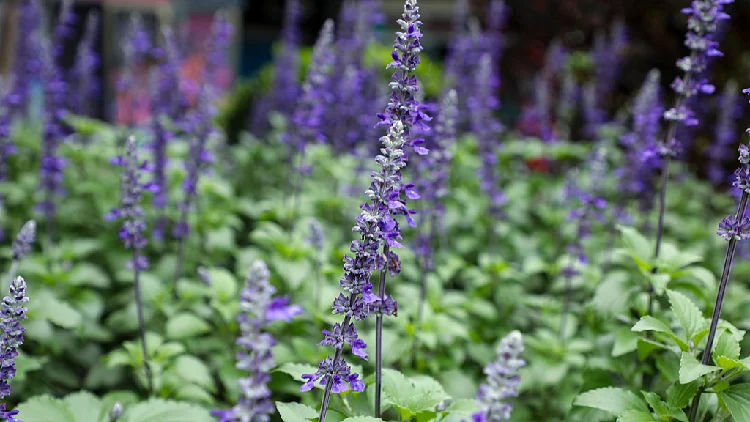
Discovering New Sage Species in China’s Hengduan Mountains: A Look at Biodiversity Hotspots
The Hengduan Mountains, a vast and rugged region in southwest China, continue to reveal their botanical treasures. Recent discoveries have added two new species to the Salvia genus, commonly known as sage. These findings highlight the incredible biodiversity of this unique geographical area and underscore the importance of ongoing scientific exploration. The Salvia genus itself is a large and diverse group within the mint family, boasting around 1,000 species worldwide, many of which are recognized for their valuable medicinal, culinary, ornamental, and aromatic properties.
This article will explore the recent discovery of these two new sage species, Salvia zayuensis and Salvia toxantha, within the Hengduan Mountains. We will delve into the characteristics that distinguish them, the process of their identification, and the significance of the Hengduan Mountains as a center for sage diversity. Furthermore, we will touch upon the broader importance of the Salvia genus and the role of institutions like the Shanghai Chenshan Botanical Garden in plant conservation and research.
The Hengduan Mountains: A Cradle of Biodiversity
Stretching across parts of Sichuan and Yunnan provinces and the Xizang Autonomous Region, the Hengduan Mountains form a critical ecological corridor. Situated along the southeastern edge of the Qinghai-Xizang Plateau, this region is characterized by dramatic elevation changes, deep river valleys, and a complex mosaic of habitats. This varied topography creates a wide range of microclimates, supporting an astonishing array of plant and animal life.
The Hengduan Mountains are renowned globally as a biodiversity hotspot. This means the area has a high concentration of endemic species, many of which are found nowhere else on Earth. The region’s geological history, including its formation and subsequent climatic shifts, has played a significant role in driving speciation and the evolution of unique plant communities. For botanists and ecologists, the Hengduan Mountains represent a frontier for discovery, with new species being identified regularly.
The specific conditions within the Hengduan Mountains are particularly conducive to the diversification of certain plant groups, including the Salvia genus. The varied altitudes, from subtropical valleys to alpine meadows, provide distinct ecological niches that allow closely related species to diverge and adapt. This makes the region a key focus for researchers studying plant evolution and biodiversity. The discovery of new sage species here is not an isolated event but rather a testament to the area’s ongoing botanical significance.
Introducing Two New Sage Species
The recent scientific exploration in the Hengduan Mountains has led to the identification of two distinct new sage species: Salvia zayuensis and Salvia toxantha. These discoveries were made by researchers from the Shanghai Chenshan Botanical Garden, who have been actively surveying the region’s rich flora.
Salvia zayuensis: A Distinctive Find
The first new species, Salvia zayuensis, was first encountered by researchers during a field expedition in April 2019. The location was Zayu County, situated in the Xizang Autonomous Region at the western edge of the Hengduan Mountains. This particular plant caught the attention of the botanists due to its unique physical characteristics that set it apart from known sage varieties.
While it bore some resemblance to Salvia cyclostegia, Salvia zayuensis possessed notably larger leaves. A key distinguishing feature was the dense covering of grayish-white, woolly hairs found on its young stems, the undersides of its leaves, and its bracts. Bracts are specialized leaves that often surround flowers. In the early stages of development, the flower cluster of Salvia zayuensis was observed to be enveloped by layers of broad, egg-shaped bracts. This arrangement gave the developing flower cluster an unusual appearance, likened to an elongated peach. These specific morphological traits were crucial in recognizing it as a species previously unknown to science.
Salvia toxantha: Another Unique Discovery
The second new species identified was named Salvia toxantha. This discovery occurred in August 2023, when the research team collected specimens in Songpan County, located in the northern part of the Hengduan Mountains in Sichuan Province. This plant also presented a unique set of characteristics that differentiated it from existing species.
Salvia toxantha shared some similarities with Salvia smithii. However, it notably lacked the distinct lemon scent characteristic of Salvia smithii. Further examination revealed other differences: the flowers of Salvia toxantha had a curved, bow-like shape, and its stamens, the male reproductive parts of the flower, were shorter compared to those of Salvia smithii. These subtle yet significant differences in scent, flower morphology, and reproductive structures were vital in confirming its status as a new species.
The Scientific Process of Identification
Identifying new plant species is a rigorous scientific process that combines detailed observation with advanced analytical techniques. For Salvia zayuensis and Salvia toxantha, the researchers followed a multi-faceted approach to confirm their distinctiveness.
Morphological Analysis
The initial step in identifying a new species involves careful examination of its physical characteristics, known as morphology. This includes studying the shape, size, color, and arrangement of various plant parts, such as leaves, stems, flowers, and fruits. As described earlier, the researchers noted specific differences in leaf size, hairiness, bract shape, flower curvature, and stamen length for the two new sage species. These detailed observations provided the first clues that they were dealing with something new.
Molecular Evidence
In modern botanical research, morphological data is often complemented by molecular evidence. This involves analyzing the plant’s DNA to understand its genetic makeup and evolutionary relationships. For these sage species, researchers utilized chloroplast DNA to construct an evolutionary family tree. Chloroplasts are the parts of plant cells responsible for photosynthesis, and their DNA evolves at a relatively predictable rate, making it useful for tracing evolutionary history.
By comparing the DNA sequences of the newly discovered plants with those of known Salvia species, scientists could determine how closely related they were to other members of the genus. This molecular data provided strong support for the morphological findings, helping to establish the evolutionary lineage and distinctness of Salvia zayuensis and Salvia toxantha. The combination of physical traits and genetic information is essential for definitively classifying a new species.
Publication and Naming
Once the evidence strongly indicated that the plants were indeed new to science, the researchers proceeded with formally describing and naming them. The findings were recently published in the international journal PhytoKeys. This peer-reviewed publication ensures that the scientific community can scrutinize the research and that the new species are officially recognized.
The naming of new species follows specific rules set by international botanical nomenclature codes. The species discovered in Zayu County was appropriately named Salvia zayuensis, referencing its place of discovery. The species found in Songpan County was named Salvia toxantha. The scientific name Salvia toxantha likely derives from Greek or Latin roots, possibly relating to a characteristic of the plant, though the provided excerpt does not specify the etymology.
The Significance of the Salvia Genus
The Salvia genus, commonly known as sage, is a remarkably diverse and globally significant group of plants. Belonging to the Lamiaceae family, which also includes mint, rosemary, and thyme, Salvia species are found on nearly every continent, with the highest diversity concentrated in Central and South America, and the Mediterranean region. The discovery of new species in China further expands our understanding of its global distribution and evolutionary pathways.
Diverse Uses and Applications
Many Salvia species have a long history of use by humans, owing to their varied properties. Some of the most well-known applications include:
- Medicinal Uses: Perhaps the most famous is Salvia miltiorrhiza, known as danshen in traditional Chinese medicine. It is widely used to treat cardiovascular conditions, improve blood circulation, and manage liver diseases. Other sage species also possess antimicrobial, anti-inflammatory, and antioxidant properties, making them subjects of ongoing pharmacological research.
- Culinary Applications: Certain sages are prized for their aromatic leaves, used as herbs in cooking. Common sage (Salvia officinalis) is a staple in Mediterranean cuisine, adding flavor to meats, stuffings, and sauces.
- Edible Seeds: Chia seeds, derived from Salvia hispanica, have gained immense popularity as a superfood. They are rich in omega-3 fatty acids, fiber, and protein, and are used in puddings, smoothies, and baked goods.
- Essential Oils and Perfumery: Clary sage (Salvia sclarea) is a key source of essential oils used in aromatherapy, perfumery, and cosmetics. Its oil is known for its relaxing and mood-lifting properties.
- Ornamental Value: Many sage species are cultivated for their attractive flowers, which come in a wide range of colors, including blue, purple, red, and white. Scarlet sage (Salvia splendens) is a common sight in gardens and urban flower beds for its vibrant red blooms.
The economic and cultural importance of the Salvia genus is substantial, driving both traditional practices and modern industries. The ongoing discovery of new species like Salvia zayuensis and Salvia toxantha adds to this rich tapestry, potentially revealing novel compounds or properties yet to be understood.
A Key Center of Sage Diversity
The Hengduan Mountains have been identified as a particularly important region for sage diversity within China. This designation means that a significant number of Salvia species are native to this area, and it may also be a center for their evolution and speciation. The unique environmental conditions, as previously discussed, create opportunities for plants to adapt and diversify, leading to a higher concentration of distinct species.
The presence of numerous sage species in the Hengduan Mountains underscores the ecological significance of this region. It also presents challenges and opportunities for conservation efforts. Understanding the distribution and specific needs of each species is crucial for protecting this valuable botanical heritage. The research conducted by institutions like the Shanghai Chenshan Botanical Garden plays a vital role in documenting and safeguarding this biodiversity.
The Role of Shanghai Chenshan Botanical Garden
The Shanghai Chenshan Botanical Garden is a leading institution dedicated to the study, conservation, and utilization of plants, with a particular focus on the Salvia genus. Their work on discovering and documenting new species in regions like the Hengduan Mountains is critical for advancing botanical knowledge.
Conservation Efforts
The garden actively works on the conservation of sage species from around the world. This includes maintaining living collections of plants outside their natural habitats, which serves as a safeguard against extinction in the wild. They house a national repository of genetic resources for plants in the mint family, which is invaluable for future research, breeding programs, and potentially for rediscovering lost medicinal properties. Currently, the garden maintains 78 species native to China, ensuring their survival and accessibility for scientific study.
Research and Exploration
The discovery of Salvia zayuensis and Salvia toxantha is a direct result of the garden’s commitment to field surveys and research. Teams regularly venture into biologically rich areas like the Hengduan Mountains to document flora, collect specimens, and identify new species. This ongoing exploration is essential for understanding the full scope of plant diversity on Earth and for identifying species that may be rare or endangered.
The researchers’ use of both morphological and molecular techniques demonstrates a modern approach to taxonomy. This ensures that new species are accurately identified and their evolutionary relationships are well-understood. The publication of their findings in international journals like PhytoKeys contributes to the global scientific record and allows other researchers to build upon their work.
Future Implications and Research Directions
The discovery of new species is not merely an academic exercise; it opens doors to further scientific inquiry and potential applications. The identification of Salvia zayuensis and Salvia toxantha prompts several avenues for future research.
Understanding Ecological Roles
Further studies can focus on the ecological roles these new sage species play within their native habitats in the Hengduan Mountains. This could involve investigating their interactions with pollinators, herbivores, and other plant species. Understanding these relationships is key to comprehending the health and resilience of the local ecosystem. For instance, are these new species crucial food sources for specific insects or birds? Do they have unique adaptations that help them thrive in particular microclimates within the mountains?
Investigating Chemical Compounds
Given the diverse medicinal and aromatic properties of many Salvia species, it is highly probable that Salvia zayuensis and Salvia toxantha possess unique chemical compounds. Future research could involve phytochemical analysis to identify these compounds and evaluate their potential pharmacological activities. This could lead to the discovery of new therapeutic agents or valuable ingredients for the cosmetic and food industries. The specific characteristics noted during their discovery, such as the dense hairs or unique flower shape, might be linked to specific chemical defenses or attractants.
Conservation Prioritization
With the identification of new species, there is an immediate need to assess their conservation status. Are these species rare? Are they facing threats from habitat loss, climate change, or other factors? This information is vital for developing targeted conservation strategies to protect them in their natural environment. The Shanghai Chenshan Botanical Garden’s role in maintaining genetic resources is a crucial part of this effort, but in-situ conservation within the Hengduan Mountains is equally important.
Expanding the Salvia Family Tree
The molecular data gathered during the identification process contributes to a broader understanding of the evolutionary history of the Salvia genus. Continued genetic research on these and other species can help refine our understanding of how and when different sage lineages diverged, and how they spread across the globe. This can provide insights into past climate changes and geological events that influenced plant distribution.
Conclusion
The discovery of Salvia zayuensis and Salvia toxantha in China’s Hengduan Mountains is a significant contribution to botanical science. It highlights the extraordinary biodiversity harbored within this unique mountain range and underscores the ongoing importance of field research and taxonomic studies. These new sage species, with their distinct morphological features, add to the rich tapestry of the Salvia genus, a group of plants with profound medicinal, culinary, and ornamental value worldwide.
The rigorous scientific process, combining detailed morphological analysis with molecular evidence, ensures the accurate classification of these new finds. Institutions like the Shanghai Chenshan Botanical Garden play a pivotal role in these discoveries, not only through exploration but also through dedicated conservation efforts and the maintenance of vital genetic resources. As we continue to explore and understand the plant life of regions like the Hengduan Mountains, we uncover not just new species, but also potential new resources and a deeper appreciation for the natural world’s complexity and resilience. The ongoing study of these new sages promises to yield further insights into plant evolution, ecological interactions, and potentially novel applications for human benefit.



Conversation
0 Comments